The SECURE 2.0 Act was a sprawling law with dozens of provisions, phased in over several years. That staggered rollout means a lot of savers are unsure what is actually live versus what is still coming. The short answer: several of the most useful changes are already in effect and quietly reshaping how you save for and draw down retirement.
This is a plain-language tour of the provisions that touch ordinary savers today. For the exact effective dates and figures, the IRS retirement plans pages are the authoritative source, and the IRS updates the dollar amounts each year.
The required-minimum-distribution age moved up
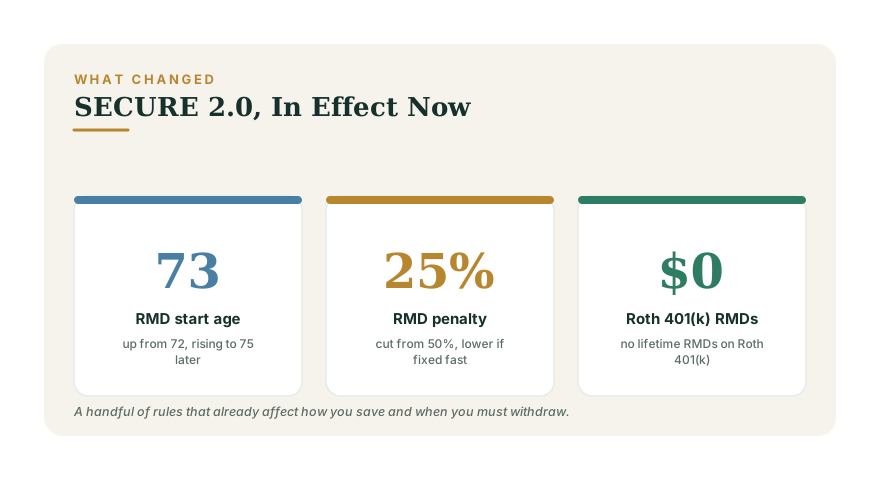
For years the government forced you to start drawing down tax-deferred accounts at age 72. SECURE 2.0 pushed the RMD start age to 73, and it is scheduled to rise to 75 later this decade. That gives your traditional 401(k) and IRA a little more time to grow untouched, and it widens the window for tax moves like Roth conversions in your late 60s and early 70s. If you are nearing this age, confirm exactly which year applies to you, because getting it wrong is costly. The mechanics of these forced withdrawals are covered in Required Minimum Distributions.
The penalty for a missed RMD got much smaller
Missing an RMD used to carry one of the harshest penalties in the tax code — a 50% excise tax on the amount you should have withdrawn. SECURE 2.0 cut that penalty to 25%, and to just 10% if you catch and correct the shortfall promptly. It is still a penalty worth avoiding entirely, but a single honest mistake is no longer catastrophic. You can estimate your own required withdrawal with the RMD Calculator.
Roth 401(k)s no longer have lifetime RMDs
Previously, Roth money inside an employer 401(k) was subject to lifetime RMDs even though a Roth IRA never was — an odd inconsistency that pushed many people to roll their Roth 401(k) into a Roth IRA just to escape the requirement. SECURE 2.0 eliminated lifetime RMDs on Roth 401(k)s, so that Roth balance can now stay put and keep growing tax-free for your entire life. If you have been weighing where to hold Roth dollars, see Roth 401(k) vs Traditional 401(k).
Automatic enrollment is becoming the default
Many newer employer plans are now required to automatically enroll eligible workers, with contributions that escalate over time unless you opt out. This is a nudge in your favor — inertia now works for your savings rather than against it — but you should still check that the default contribution rate and investment are right for you rather than accepting them blindly. How to pick sensibly is covered in How to Pick Funds in Your 401(k).
A new emergency-savings link and student-loan match
Two thoughtful provisions are rolling out through employers. Some plans can now offer a small emergency-savings sidecar inside the 401(k), giving you accessible cash without derailing retirement saving — a companion to a real emergency fund. Separately, employers may now match your student-loan payments with retirement contributions, so paying down debt no longer means missing the match. If either is offered at your job, use it.
What to actually do
- If you are in your early 70s, confirm your correct RMD start year and set a reminder so you never miss a withdrawal.
- If you hold a Roth 401(k), you no longer need to roll it out just to dodge RMDs — decide based on fees and investment options instead.
- Check whether your employer offers an emergency-savings feature or a student-loan match, and enroll if so.
- Revisit your Roth-conversion plan now that the RMD clock starts later.
Put it into your plan
SECURE 2.0 is mostly good news for savers: more time before forced withdrawals, gentler penalties, and features that make saving automatic. Fold the changes into your drawdown strategy and confirm you are on track with the Retirement Readiness check, then map the full picture at the planning hub.