There has never been a better time to manage your own money — index funds are cheap, brokerages are free to open, and a sensible portfolio can be built in an afternoon. And yet good advice has never been more valuable, because the mistakes are expensive and the decisions get harder as life gets more complicated. So which is right for you? The honest answer is that it depends, and this is a comparison, not a sales pitch.
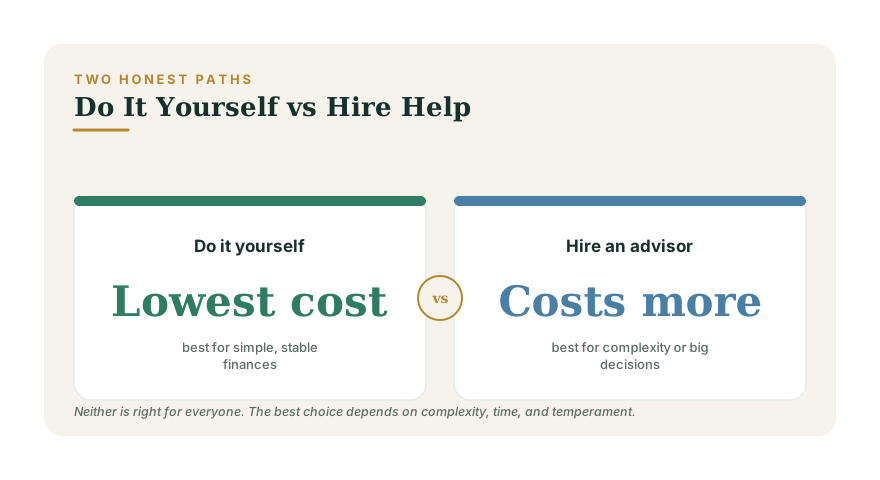
The case for doing it yourself
For a large share of people, the core of a sound financial life is genuinely simple: spend less than you earn, hold an emergency fund, capture your employer match, and put the rest into low-cost, broadly diversified index funds. That is not a secret advisors are hiding — it is the same advice most fee-only planners would give. If your finances are stable and your investing needs are basic, doing it yourself can save you a percentage point a year in fees, which compounds into real money over decades. The starting point is in How to Start Investing and The Three-Fund Portfolio.
Where DIY breaks down
Self-management works right up until it does not. The two failure points are behavior and complexity. On behavior: the biggest threat to a DIY investor is not fees, it is panic-selling in a downturn or tinkering out of boredom, both of which quietly destroy returns. On complexity: equity compensation, a business, a blended family, a windfall, estate planning, or a coordinated retirement drawdown involve moving parts where a single mistake can cost far more than years of advisor fees. If you find yourself avoiding decisions because they feel overwhelming, that avoidance has a cost too.
The case for hiring an advisor
A good advisor earns their keep in specific, high-stakes moments more than in day-to-day investing:
- Behavioral coaching. Talking you out of selling at the bottom is arguably the single most valuable thing an advisor does, and it is hard to do for yourself.
- Complex, irreversible decisions. When to claim Social Security, how to draw down accounts tax-efficiently, Roth conversions, exercising stock options — mistakes here are permanent.
- Time and delegation. Some people can manage their own money but would rather not, and their time is genuinely worth more elsewhere.
The catch is that the value depends entirely on getting a real fiduciary, not a salesperson — which is why understanding how advisors get paid comes first, and why fiduciary duty matters so much.
The hybrid path most people miss
The choice is not binary. Several middle options give you help without a permanent 1%-of-assets bill:
- A one-time or hourly fee-only planner. Pay for a plan or an hour of advice at a decision point, then implement it yourself. Fee-only networks and the National Association of Personal Financial Advisors list planners who work this way.
- A robo-advisor. Automated platforms handle allocation, rebalancing, and tax-loss harvesting cheaply — a solid fit for straightforward portfolios, compared in Robo-Advisors vs Human Advisors.
- DIY plus a checkup. Run your own money and hire a planner every few years to pressure-test it.
How to decide
Ask yourself three honest questions: Are my finances simple or complex? Do I have the discipline to stay the course in a crash? Do I want to spend time on this? Simple, disciplined, and willing points toward DIY. Complex, anxious, or uninterested points toward hiring help — and everyone else lands in the productive middle. Before you decide, check where you stand with the Financial Wellness assessment, and if you lean DIY, prove to yourself you can run the core numbers with the Retirement Planner and Net Worth Tracker.
The bottom line
Doing it yourself is cheaper and entirely doable for most simple situations; hiring help pays off when complexity or emotion enters the picture. Whichever you choose, the foundation is the same plan — start building yours with a one-page financial plan and map it out at the planning hub.