Ask most people if they have a financial plan and they picture an intimidating binder full of projections they will never read. That image is exactly why so many people never make one. But the truth is that a plan that fits on a single page is not only enough for most households — it is better, because you will actually look at it. A one-page plan forces clarity: if it does not fit, it probably is not essential. Here is how to build one.
Why one page beats a binder
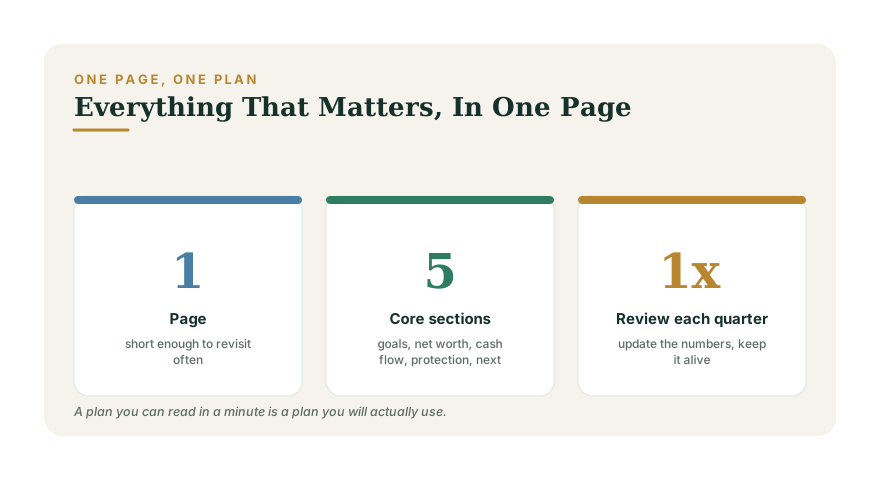
Complexity is where plans go to die. A hundred-page document gets made once, filed away, and forgotten, while your life keeps changing around it. A single page stays current because updating it takes minutes, and it fits in your head, which means it actually guides day-to-day decisions. The goal is not to capture every detail — it is to capture the handful of things that drive everything else. Think of it as the dashboard, not the engine schematic.
Section one: your goals
Start with where you are going, in plain language and with numbers and dates attached. Not "save more" but "build a six-month emergency fund by December" or "have $500,000 for retirement by age 60." Two or three near-term goals and one or two long-term ones are plenty. Vague goals produce vague results; specific goals tell you exactly what the rest of the page needs to accomplish. The method is in How to Set Financial Goals.
Section two: your net worth
One line for what you own, one for what you owe, and the difference between them. This single number is the truest measure of financial progress, because it captures both saving and debt paydown in one figure. Track it once a quarter and you will see the trend that a monthly budget alone hides. Pull your current figure with the Net Worth Tracker and drop it onto the page — the direction of travel matters more than the absolute number.
Section three: your cash flow
You do not need a line-item budget on your one-page plan — just the shape of your money. Roughly what comes in, roughly what goes out, and the most important figure of all: your savings rate, the percentage of income you keep. Savings rate is the lever that determines how fast everything else moves. If it is below where you want it, that becomes an obvious next step. The order in which to deploy that saved money is laid out in The Financial Order of Operations.
Section four: your protection
A quick inventory of what stands between you and disaster: how many months your emergency fund covers, whether you have adequate health, disability, and life insurance for your situation, and whether your basic estate documents exist. This section is easy to skip and expensive to ignore — one uninsured catastrophe can undo years of saving. You are just confirming the safety net is in place, not redesigning it.
Section five: your next moves
End with the three most important actions for the next ninety days. Not twenty things — three. Maybe "raise 401(k) to the full match," "open a high-yield savings account," and "write a will." Concrete, time-bound, and few enough to actually finish. When you complete one, replace it at your next review. This is the section that turns a plan from a snapshot into momentum.
Keep it alive
A one-page plan is only useful if you revisit it — a quarterly review of fifteen minutes is enough to update the numbers and refresh your next moves. Whether you build and maintain it yourself or with help depends on your situation, as discussed in DIY vs Hiring a Financial Advisor. Sketch your goals against the numbers with the Retirement Planner, benchmark your overall footing with the Financial Wellness assessment, and build the full version at the planning hub.