Before you take a single piece of advice, ask one question: how does this person get paid? The answer tells you more about the advice you are likely to receive than any credential on the wall. Financial advice is not free, and the way the money flows quietly steers what gets recommended. There are three main models, and the differences matter a great deal.
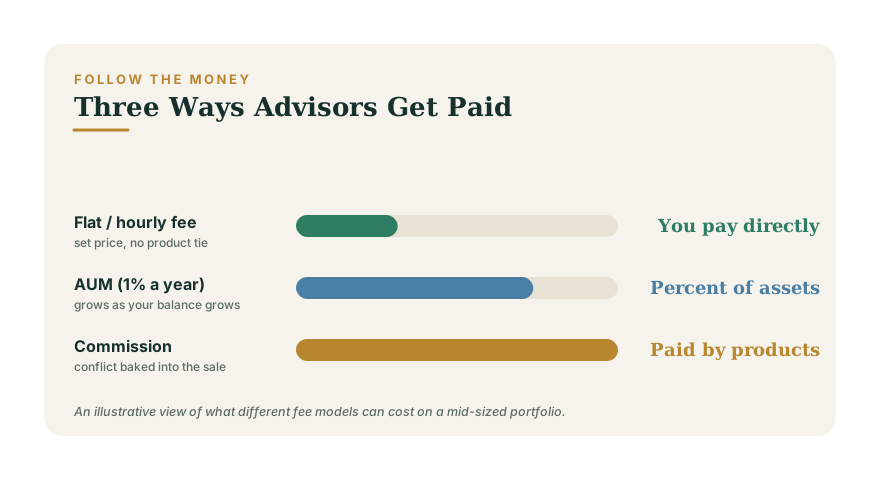
Why the payment model matters
Advice is only as good as the incentives behind it. An advisor paid to sell you a product has a reason to sell you that product; an advisor paid a flat fee for a plan has no reason to steer you anywhere in particular. This is the heart of the fiduciary question. Under standards set by the Securities and Exchange Commission, registered investment advisers owe a fiduciary duty to act in your best interest, while brokers historically operated under a lower bar. The SEC has narrowed that gap with its Regulation Best Interest rule, but the compensation model still shapes the pressure. You can read more on this in What Fiduciary Duty Actually Means and the SEC investor resources at sec.gov.
Fee-only: you pay directly
A fee-only advisor is paid solely by you — never by product companies. That fee can be a flat annual retainer, an hourly rate, or a one-time project fee for a plan. The appeal is clean incentives: because no commission rides on any recommendation, the advisor has little reason to push a particular fund, annuity, or insurance policy. This is the model most consumer advocates point to. The Consumer Financial Protection Bureau, at consumerfinance.gov, urges consumers to understand exactly how any adviser is compensated before hiring. The trade-off is that you feel the cost directly, which some people dislike even when it is the cheapest option overall.
AUM: a percentage of your portfolio
The most common model for ongoing management is assets under management, where the advisor charges a yearly percentage of the money they manage for you — often around 1% a year, sometimes less on larger balances. AUM is technically a fee-only structure and aligns the advisor with growing your portfolio. But two problems lurk. First, 1% a year is far more than it sounds: on a large portfolio held for decades, it can quietly consume a meaningful slice of your lifetime returns, as detailed in How Small Fees Destroy Wealth. Second, it creates subtle conflicts — an AUM advisor may be lukewarm on paying off your mortgage or buying an annuity, because either move shrinks the assets they bill on.
Commission: paid by the products
A commission-based advisor is paid by the companies whose products you buy — a cut of the mutual fund, the annuity, the life-insurance policy. To you, the advice can feel free, which is exactly the problem: the cost is embedded in the product and the incentive is to sell. This is where the worst conflicts live, and where high-commission products like permanent life insurance and expensive annuities tend to get pushed. Commission-based sales are not automatically bad, but you should know a sale is happening and understand what the product costs you over time.
Hybrid and fee-based models
Watch for the word fee-based, which sounds like fee-only but is not. A fee-based advisor can charge you a fee and earn commissions on products — a hybrid that reintroduces the conflicts fee-only avoids. It is a common source of confusion, and the label is chosen precisely because it blurs the line. If clean incentives matter to you, ask directly: do you ever receive commissions or third-party payments of any kind?
Questions to ask before you hire
- Are you a fiduciary at all times, in writing?
- Exactly how are you paid — fees, commissions, or both?
- What will this cost me in dollars this year, not just in percent?
- Do you earn anything if I buy a specific product?
Put a number on the cost
The right model depends on how much help you need and how complex your finances are — a subject explored in DIY vs Hiring a Financial Advisor. Before you sign anything, translate the fee into real dollars over time with the Lifetime Wealth projection, sanity-check where your money already stands using the Net Worth Tracker, and gauge your overall footing with the Financial Wellness assessment. Then map the whole picture at the planning hub.