Buying a home in 2026 means facing two headwinds at once: prices that never really came back down and mortgage rates far above the lows of the early 2020s. The Freddie Mac weekly survey and the Federal Reserve have both documented how sharply borrowing costs rose from those lows, and the result is a monthly payment that can feel out of reach for the same house that looked affordable a few years ago. That is real, but it does not mean you are stuck. It means the playbook changes.
The trap is treating the sticker rate as fixed and immovable. In practice, a buyer has several levers, and stacking a few of them together can turn a payment you cannot stomach into one you can live with — without overreaching.
Buy less house, on purpose
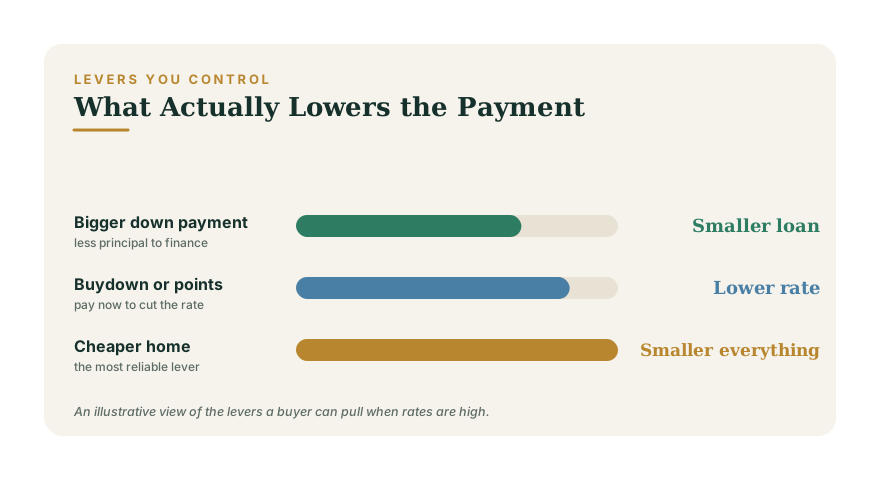
The single most reliable move in a high-rate market is the least glamorous: buy a cheaper home than the maximum a lender approves you for. A high rate magnifies every extra dollar of price, so shaving the purchase price cuts the loan, the interest, the property tax, and the insurance all at once. Preapproval tells you the ceiling; your own budget should set the number well below it. Run a realistic figure with the Home Affordability Calculator before you fall in love with a listing at the top of your range.
Rethink the down payment math
When rates are low, a smaller down payment and investing the difference can make sense. When rates are high, every dollar you borrow is expensive, so a larger down payment does double duty — it shrinks the loan and can help you drop private mortgage insurance sooner. That does not mean draining your emergency fund; it means weighing a larger down payment against other uses of the cash more seriously than you would in a cheap-money era. The details of dropping insurance are in PMI Explained: How to Drop It.
Buy the rate down
You can pay upfront to lower your rate, either temporarily or permanently. A temporary buydown eases you in with a lower rate for the first year or two; permanent points cut the rate for the life of the loan. In a high-rate market, sellers and builders sitting on unsold inventory will sometimes fund a buydown as a concession, which is often more valuable to you than a price cut. The full mechanics, and how to tell which kind is worth it, are in Mortgage Rate Buydowns, Explained and Mortgage Points, Explained.
Consider an assumable loan or an adjustable rate
Two structural options get overlooked. First, some government-backed loans are assumable, meaning you can take over a seller's existing low-rate mortgage — a rare chance to inherit a rate from the cheap-money years, covered in Assumable Mortgages. Second, an adjustable-rate mortgage can start lower than a fixed rate, which helps if you expect to move or refinance before it adjusts — but understand the reset risk first, laid out in Fixed vs Adjustable-Rate Mortgages.
Plan to refinance, but do not count on it
"Marry the house, date the rate" is the popular slogan: buy now and refinance when rates fall. There is truth in it — you can refinance later — but treat the refinance as a bonus, not the plan. Rates may not drop on your timeline, and refinancing has real closing costs. Only buy at a payment you can carry at today's rate. If rates do fall, check whether it pays to act with the Refinance Analyzer.
Offset the cost of ownership
If the payment is still tight, look at ways the home itself can help pay for it. Renting a spare bedroom, a basement unit, or an accessory dwelling can meaningfully cut your net housing cost — the approach known as house hacking, explained in House Hacking to Offset Your Mortgage. It is not for everyone, but it can be the difference between affording a home and waiting.
Buy for the right reasons
High rates make the buy-versus-rent question sharper, because a bigger share of your payment goes to interest rather than equity in the early years. Before committing, run the honest comparison in Rent vs Buy When Rates Are High. If the numbers and your timeline point to buying, stack the levers above, keep a healthy cushion, and map the full purchase at the planning hub. When you are ready to test your readiness, take the Mortgage Readiness assessment.