The hardest part of buying a first home is not any single step. It is not knowing the order, so you end up reacting to each stage as it surprises you instead of preparing for it. Buying a home is a sequence, and the people who feel calm through it are simply the ones who knew what came next.
Here is the full roadmap, in the order it actually happens.
Step 1: Get Pre-Approved, Not Just Pre-Qualified
These two words sound interchangeable and are not. A pre-qualification is a quick, informal estimate based on numbers you tell a lender, with nothing verified. A pre-approval is a documented review of your income, assets, debts, and credit, resulting in a letter stating how much the lender will actually lend. Sellers take pre-approval seriously and often ignore pre-qualification. Get pre-approved before you tour homes, so you shop in a realistic range and can make a credible offer fast.
Step 2: Understand Your Down Payment Options
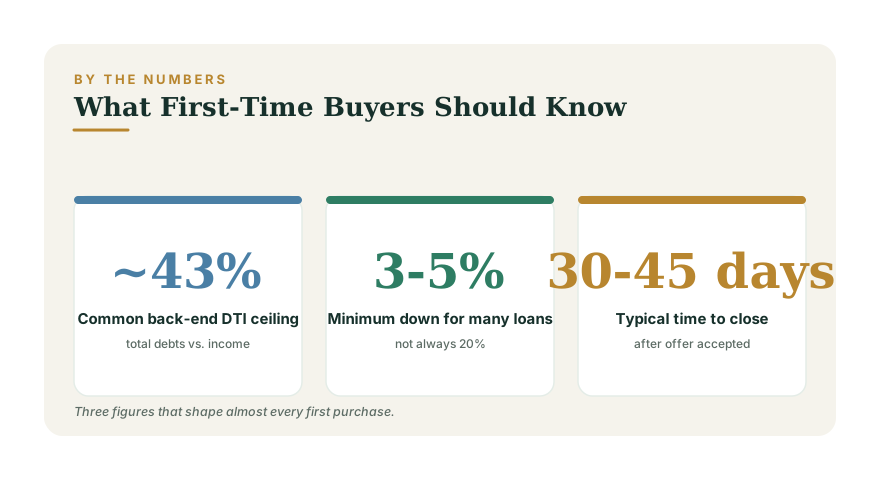
The myth that you need 20% down keeps people renting for years longer than necessary. Many conventional loans allow as little as 3% down, and government-backed programs go lower. Putting less than 20% down means paying mortgage insurance, which adds cost, but it can still be the right call if it gets you into a home sooner. Just keep a cash cushion after closing; emptying your savings to hit a bigger down payment is a classic first-time mistake.
Step 3: Know Your DTI
Your debt-to-income ratio is the single number lenders care about most after credit score. It compares your monthly debt payments to your gross monthly income. Lenders typically want your total debts, including the new mortgage, to stay under roughly 43%, though some programs go higher. If your DTI is too high, you have three levers: earn more, pay down debt, or buy less house. Paying off a car loan or card balance before applying can meaningfully raise what you qualify for.
Step 4: Choose an Agent Who Works for You
A good buyer's agent guides offers, negotiates, and flags problems you would miss. Interview more than one. Ask how many transactions they close, whether they know your target neighborhoods, and how they are compensated. Understand the commission arrangement up front; agent compensation has become more negotiable and more transparent, and you are allowed to ask exactly who pays what.
Step 5: Make an Offer and Go Under Contract
When you find the home, your agent helps you submit an offer with a price, contingencies, and an earnest money deposit that signals you are serious. Once the seller accepts, you are "under contract," and the clock starts on a series of deadlines. Two contingencies matter most for protecting you: the inspection and the appraisal.
Step 6: The Inspection
You hire an independent inspector to examine the home's structure, roof, systems, and safety. This is not the same as the appraisal. The inspection is for you, to learn what you are buying. Read the full report, not just the summary. Use it to negotiate repairs or a credit, or, if the problems are severe enough, to walk away while your contingency still protects your deposit.
Step 7: The Appraisal
Your lender orders an appraisal to confirm the home is worth what you agreed to pay, because the house is their collateral. If it appraises below your offer, you may have to make up the difference in cash, renegotiate, or use an appraisal contingency to exit. This is one of the most common deals snags, so do not be blindsided by it.
Step 8: Underwriting and Escrow
While inspection and appraisal happen, your loan goes through underwriting, where the lender re-verifies everything. The cardinal rule of this stage: change nothing financial. Do not open new credit, finance furniture, switch jobs, or move large sums between accounts. Any of these can derail your approval. Meanwhile, a neutral escrow or settlement agent holds funds and documents until every condition is met.
Step 9: Closing Day
You will receive a Closing Disclosure a few days before, listing every cost. Compare it to your original loan estimate and question any surprises. At closing you sign a stack of documents, pay your down payment and closing costs, and the home becomes yours. Closing costs commonly run roughly 2% to 5% of the price, so budget for them well in advance.
Putting It Together
- Pre-approval before touring, always.
- Keep cash in reserve after the down payment.
- Protect yourself with inspection and appraisal contingencies.
- Touch nothing financial during underwriting.
A first home is one of the largest financial moves you will ever make, so it is worth seeing how it fits into the rest of your plan. Before you start touring, map the purchase against your savings and goals with our tools, and think through the timing on our life events guides.