Millions of homeowners locked in mortgage rates during the cheap-money years that are far below anything available today. When those owners sell, that low rate normally disappears — the loan is paid off and the buyer takes out a fresh, expensive one. But with certain loans, the buyer can assume the seller's existing mortgage instead, inheriting the low rate along with the remaining balance. In a high-rate market, that can be one of the most valuable things a buyer stumbles into.
What "assuming" a mortgage means
Assuming a mortgage means you legally take over the seller's existing loan — its balance, its interest rate, and its remaining term — rather than getting your own. If the seller has a low fixed rate with many years left, you keep that rate. The seller is released from the debt, and you become the borrower. The house changes hands as usual; it is the financing that carries over.
Which loans are assumable
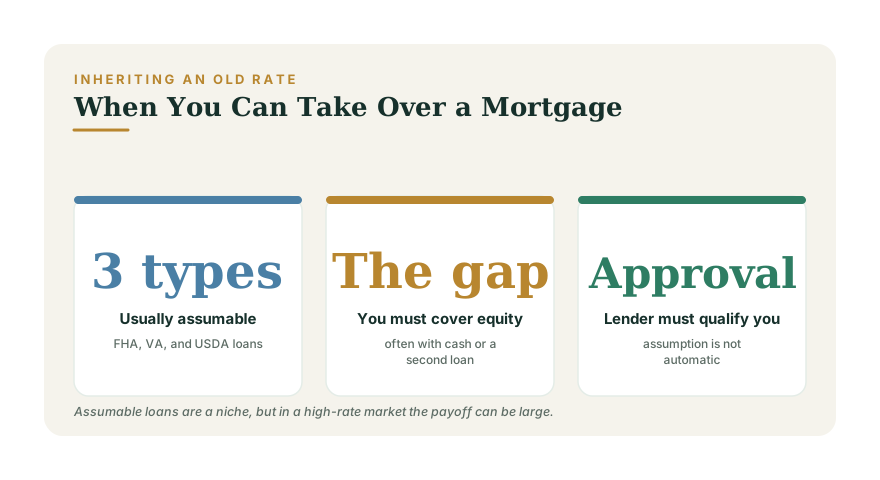
This is the key limitation. Most conventional mortgages contain a "due-on-sale" clause that blocks assumption. The loans that are generally assumable are government-backed:
- FHA loans are assumable with lender approval of the new borrower.
- VA loans are assumable, and the buyer does not have to be a veteran — though there are important considerations for the seller's future VA entitlement.
- USDA loans for rural properties can be assumable under program rules.
So the first question with any home is what kind of loan the seller has. If it is a conventional loan, assumption is almost certainly off the table.
The catch: covering the equity gap
Here is the part that surprises people. When you assume a loan, you take over the remaining balance, not the purchase price. If a seller bought for 300,000 dollars, owes 250,000, and is selling to you for 400,000, assuming the loan covers only that 250,000. You have to come up with the other 150,000 — the seller's equity — in cash or through a second loan. In markets where prices have risen a lot since the seller bought, that gap can be enormous, which is why assumptions are less common than the low rate alone would suggest. A large second mortgage at today's high rates can erode much of the benefit, so the math has to be run carefully.
You still have to qualify
Assumption is not a way around underwriting. The lender must approve you as the new borrower — credit, income, and debt-to-income all get reviewed, much like a normal mortgage. The process can be slow, and lenders sometimes have little incentive to move quickly on an assumption because it keeps a low-rate loan on their books. Expect paperwork, fees, and patience. If you are early in the home-buying process, the broader roadmap is in The First-Time Homebuyer Roadmap.
When it is worth chasing
An assumption shines when the seller's rate is dramatically below current rates, their remaining balance is close to your purchase price (a small equity gap), and you have the cash or financing to cover the difference cheaply. It fades when prices have run up so much that the equity gap forces a big, expensive second loan. Compare the all-in cost of an assumption against simply buying the rate down — the two approaches are weighed in Mortgage Rate Buydowns, Explained — and against an adjustable-rate strategy in Fixed vs Adjustable-Rate Mortgages. Run the total payment picture through the Home Affordability Calculator, and if rates later fall, revisit whether to refinance out of the assumed loan with the Refinance Analyzer.
A niche worth knowing
Assumable mortgages will not fit most purchases, but when the stars align they let you inherit a rate the market no longer offers. Ask early whether a home's loan is government-backed and assumable, size up the equity gap honestly, and get lender confirmation in writing before you count on it. See how it fits the broader high-rate playbook in Strategies for Buying When Rates Are High, and confirm your footing with the Mortgage Readiness assessment and the planning hub.