When mortgage rates are high, "buying down" the rate is one of the most talked-about tools — and one of the most misunderstood. A buydown simply means paying money upfront to get a lower interest rate. But there are two very different kinds, they solve different problems, and only some of them are worth your own cash. Getting the distinction right can save you thousands or stop you from wasting them.
Permanent buydowns: paying points
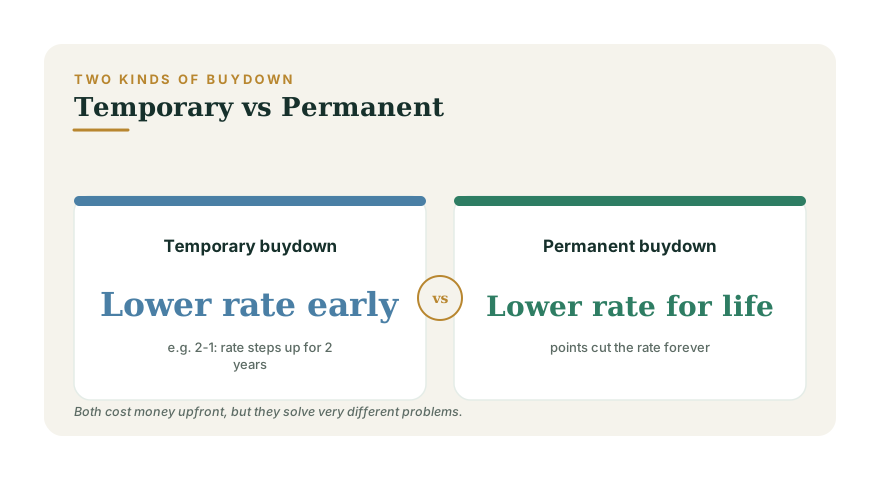
A permanent buydown is what most people mean by "buying points." You pay a fee at closing — typically expressed as a percentage of the loan — and in exchange the lender lowers your rate for the entire life of the loan. Because the lower rate lasts thirty years, the savings compound, but so does the break-even math: you need to keep the loan long enough for the monthly savings to repay the upfront cost. If you sell or refinance before that break-even point, you lose money on the deal. The full number-crunching lives in Mortgage Points, Explained.
Temporary buydowns: the 2-1 and the 3-2-1
A temporary buydown lowers your rate only for the first year or two, then it steps back up to the full note rate. The common structures are named for how they ramp:
- 2-1 buydown. Your rate is two percentage points lower in year one, one point lower in year two, then the full rate from year three onward.
- 3-2-1 buydown. Three points lower in year one, two in year two, one in year three, then the full rate.
- 1-0 buydown. A milder version: one point lower for the first year only.
The money to fund the discount is placed in an escrow-like account upfront and released each month to cover the gap. Crucially, you still qualify at the full note rate — the lender wants to know you can afford the payment once the discount expires.
Who should pay for it
Here is the part that changes everything: a temporary buydown is often most valuable when someone else pays for it. In a slow market, builders sitting on finished homes and sellers who cannot find buyers will frequently offer to fund a 2-1 buydown as a concession. For them, funding a buydown can be cheaper and more attractive than cutting the price, and for you it is a lower payment you did not pay for. A seller-paid buydown is close to free money. A buydown you fund yourself is really just a bet — you are prepaying interest, and if you refinance or sell early, you may not get full value.
Temporary buydown versus just refinancing later
A temporary buydown quietly assumes that rates will fall so you can refinance before the discount expires. That is the same bet behind "marry the house, date the rate." It might work, but rates do not fall on schedule. If you fund the buydown yourself and rates stay high, you have simply prepaid for a couple of low-payment years. If a seller funds it, you keep the low early payments regardless — and if rates fall, you refinance and come out further ahead. Either way, when rates do drop, run the decision through the Refinance Analyzer rather than assuming a refinance always pays; the timing rules are in When to Refinance Your Mortgage.
How to decide
A simple framework:
- Seller or builder offers a buydown? Take it, and compare it against an equivalent price cut — sometimes the price cut is worth more if you plan to stay a long time.
- Considering points with your own money and staying put for years? A permanent buydown can beat a temporary one; check the break-even.
- Considering a temporary buydown with your own money? Be skeptical. You are betting on a refinance that may not come.
Buydowns are one lever among several in a high-rate market. See how they fit alongside the others in Strategies for Buying When Rates Are High, and test the payment you would actually carry with the Home Affordability Calculator.
The bottom line
A buydown is not magic; it is prepaid interest with a break-even. Free buydowns from motivated sellers are among the best deals in a slow market. Buydowns you fund yourself deserve the same scrutiny as any prepayment. Map the whole purchase at the planning hub and confirm you are ready with the Mortgage Readiness assessment before you commit.