"Renting is throwing money away" is the most repeated line in personal finance, and when rates are high it is also the most misleading. The truth is that in the early years of a high-rate mortgage, a large share of every payment goes to interest, property tax, insurance, and maintenance — money that does not build equity, and that a renter simply does not pay. Buying can still be the better choice, but it is a real decision with real math, not a foregone conclusion.
Why high rates change the equation
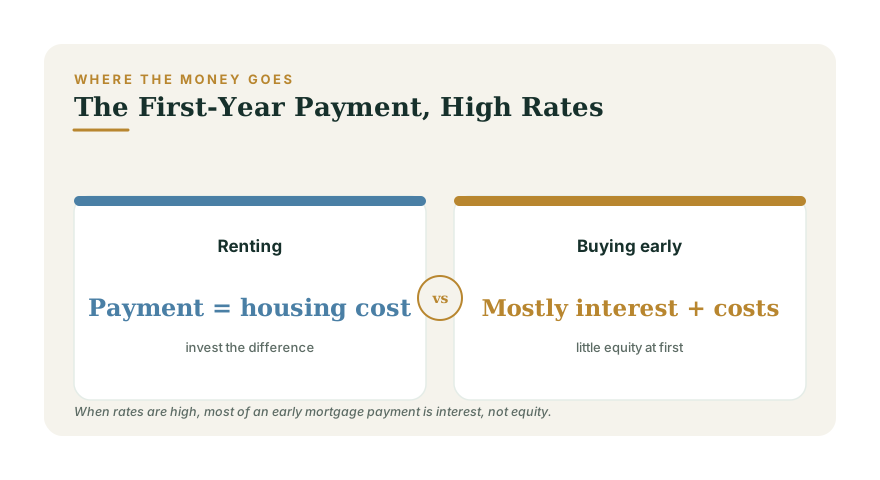
On a fresh mortgage, interest is charged on the full balance, so the first years of payments are overwhelmingly interest. The Federal Reserve and the Freddie Mac rate survey have documented how far rates rose from their historic lows, and the higher the rate, the more lopsided that split becomes — early on, you might build only a sliver of equity while most of the payment vanishes into interest. The mechanics of how that amortization works are in How Mortgage Interest Works. This is why the "throwing money away" framing collapses: a big chunk of a buyer's payment is also, in effect, a cost of shelter rather than savings.
What renting actually costs — and saves
A renter pays rent and renters insurance, and that is close to the full cost of their housing. They do not pay property tax, major repairs, or transaction costs. Just as important, a renter who buys a cheaper housing arrangement can invest the difference — the down payment they did not spend and any monthly savings. Over years, that invested money compounds, and any honest comparison has to credit the renter for it. Renting is only "throwing money away" if the renter also spends the difference instead of investing it.
What buying actually costs beyond the payment
Owners face costs that never show up in a mortgage quote: property taxes, homeowners insurance, maintenance that runs a meaningful percentage of the home's value every year, and one-time transaction costs to buy and eventually sell that can total a large slice of the price. The full accounting is in The True Cost of Homeownership. Against all that, owners get price appreciation (which is not guaranteed), forced savings through principal paydown, a payment that stops rising once fixed, and the intangible value of stability.
The number that decides it: how long you stay
Because buying carries heavy upfront and exit costs, the single biggest factor is your time horizon. The longer you own, the more those one-time costs get spread out and the more principal paydown and appreciation you accumulate. There is a rough break-even period — often several years, and longer when rates are high — below which renting almost always wins and above which buying tends to. If you might move within a few years, high rates tilt the answer hard toward renting.
Run your own numbers, not a rule of thumb
Slogans cannot answer this; your inputs can. A proper comparison weighs your local rent against the true all-in cost of the home you would buy, credits the renter for investing the difference, and accounts for how long you plan to stay. Do it with the Buy vs Rent Calculator, and if you are torn between buying now and waiting for conditions to shift, add the Buy Now vs Wait tool. If the answer is "buy," the levers to make it affordable are in Strategies for Buying When Rates Are High, and offsetting the payment with rental income is covered in House Hacking to Offset Your Mortgage.
A decision, not a doctrine
Buying a home is often a good long-term move, but "renting is throwing money away" is not a reason to overpay in a high-rate market. Run the real math for your situation, respect your time horizon, and only buy when the numbers and your plans both point that way. Start with the Buy vs Rent Calculator, check your standing with the Mortgage Readiness assessment, and build the full plan at the planning hub.