Refinancing a mortgage means replacing your existing home loan with a new one — typically with different terms, a different interest rate, or both. When rates drop significantly below your current rate, refinancing can reduce your monthly payment, shorten your payoff timeline, or reduce the total interest you pay over the life of the loan. When done at the wrong time or without understanding the full cost, it can end up costing more than it saves.
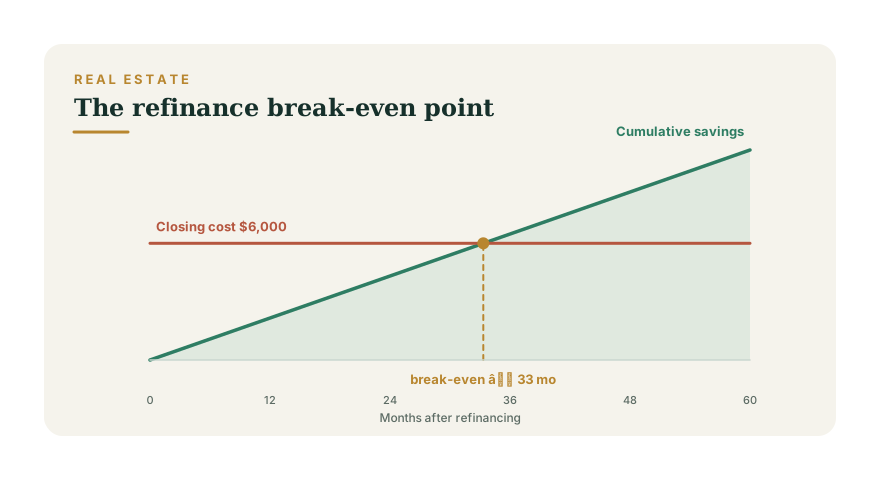
The Core Calculation: Break-Even Point
Every refinance involves closing costs — typically 2–5% of the loan amount, covering origination fees, title insurance, appraisal, and other lender and government charges. On a $400,000 mortgage, closing costs might run $8,000–$20,000. These costs are paid upfront (or rolled into the new loan, which increases your balance and reduces long-term savings).
The break-even point is how long you must stay in the home after refinancing to recover those closing costs through lower monthly payments.
Break-even calculation:
Break-even months = Total closing costs ÷ Monthly payment reduction
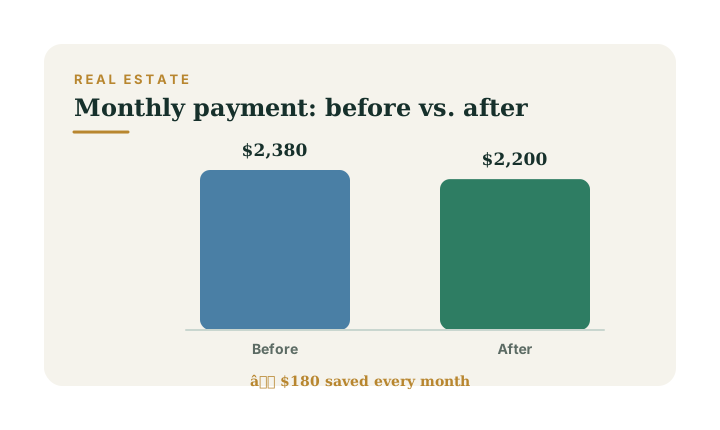
Example: You have a $400,000 mortgage at 7.5% with 25 years remaining. Current monthly payment (principal and interest): $2,957. You can refinance to 6.0% for the remaining 25 years. New payment: $2,584. Monthly savings: $373. Closing costs: $10,000.
Break-even: $10,000 ÷ $373 = 26.8 months — approximately 27 months, or about 2.25 years.
If you plan to stay in the home for at least 27 months after closing, the refinance saves money. If you expect to sell or move before then, you lose money on the transaction.
The Rate Reduction Rule of Thumb
The traditional "2% rule" — suggesting you should only refinance when you can reduce your rate by at least 2 percentage points — is outdated and too conservative for many situations. On a large mortgage balance, even a 0.5–0.75% rate reduction may justify refinancing if the break-even period is short and you plan a long stay.
A more reliable approach: calculate the actual break-even for your specific loan amount and closing costs, then decide based on your expected time in the home.
Types of Refinancing
Rate-and-term refinance: The most common type. You change your interest rate, your loan term, or both. Your loan balance remains roughly the same (adjusted for closing costs rolled in).
Cash-out refinance: You borrow more than your current mortgage balance and receive the difference as cash. This taps your home equity — useful for funding major renovations, consolidating high-interest debt, or large expenses. The trade-off: a higher loan balance, often a higher rate (cash-out refis typically cost slightly more), and restarting your amortization clock. Cash-out refinancing makes sense primarily when the interest rate on the new mortgage is significantly lower than the alternative (credit card rates, personal loan rates) and when the use of funds has a clear financial benefit.
Shortening the loan term: Refinancing from a 30-year to a 15-year mortgage typically offers a lower interest rate (lenders take less risk on shorter terms) and dramatically reduces total interest paid — but increases monthly payments. Evaluate this option based on whether the higher payment fits your budget and whether the interest saved justifies locking in higher obligations.
Costs You May Not Be Thinking About
Extending your timeline. If you have 22 years left on a 30-year mortgage and refinance into a new 30-year mortgage, you have extended your payoff date by 8 years. Even if the new monthly payment is lower, you may pay substantially more total interest over the life of both loans combined. Model the full-life cost, not just the monthly payment.
Prepaid interest and escrow. At closing, you typically prepay one to two months of mortgage interest and fund a new escrow account for property taxes and insurance. Your current escrow account is refunded, but the timing difference means you may need additional cash at closing beyond the stated closing costs.
Private mortgage insurance (PMI). If your current loan has PMI but your refinanced loan does not (because home appreciation has raised your equity above 20%), that savings is a real benefit to factor into your break-even calculation.
When Refinancing Is Clearly Worth It
- Your new rate is meaningfully lower (0.75%+ on most loan sizes) and you plan to stay at least 2–3 more years
- You can move from an adjustable-rate mortgage (ARM) to a fixed rate before your ARM adjusts upward
- You want to remove a co-borrower from the mortgage (divorce, death of a co-borrower)
- You can eliminate PMI through refinancing when you have at least 20% equity
- You are refinancing into a shorter term with a lower rate, and the payment increase is affordable
When Refinancing Probably Is Not Worth It
- You plan to sell the home within 1–2 years (unlikely to break even)
- The rate reduction is minimal and closing costs are high
- You are far into your mortgage amortization — refinancing resets the front-loaded interest portion of your payment, meaning more of your early payments go to interest again
- Your credit score has dropped significantly since the original mortgage — you may not qualify for the rates that made refinancing attractive
How to Get the Best Refinance Rate
Mortgage rates vary significantly between lenders. Getting at least three to four quotes from different lenders — including local credit unions, which often have competitive rates — is worth the few hours of effort. A 0.25% rate difference on a $400,000 mortgage at 30 years saves approximately $17,000 in total interest. Shopping is worth it.
All mortgage applications within a 45-day window count as a single credit inquiry for FICO scoring purposes, so rate shopping during a concentrated period does not hurt your credit score.
Use the Refinance Analyzer tool to model your specific situation — inputting your current loan details and the terms of a potential refinance gives you an instant break-even calculation and lifetime interest comparison.