Your credit score can feel like a number handed down by an invisible authority, but it is not arbitrary. It is calculated from data in your credit reports using a published formula, and the broad weightings are public. Once you understand what the model actually measures, the score stops being mysterious and starts being something you can influence on purpose.
This is a constructive explainer. It is not about gaming the system or chasing a perfect number, which we cover in The Myth of Credit Score Optimization. It is about understanding the mechanics so you can make sensible decisions.
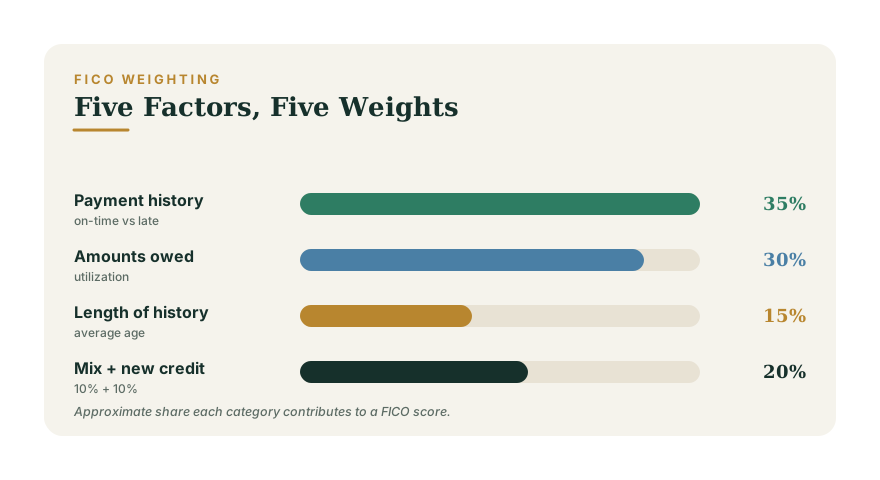
The five factors
The most widely used model, FICO, draws on five categories with roughly these weights:
- Payment history (about 35%) — whether you pay on time. This is the single largest factor. A pattern of on-time payments builds the score steadily; even one payment reported 30 or more days late can cause a meaningful drop.
- Amounts owed (about 30%) — chiefly your credit utilization, meaning the balances on revolving accounts divided by their limits. Lower is generally better.
- Length of credit history (about 15%) — the age of your oldest account and the average age of all accounts. Older histories help.
- Credit mix (about 10%) — having both revolving credit (cards) and installment loans (auto, mortgage, student) can help modestly.
- New credit (about 10%) — recent applications and newly opened accounts. A burst of applications in a short window can ding the score temporarily.
What moves each one
Knowing the weights tells you where attention pays off:
- Because payment history dominates, automating at least the minimum payment on every account is the highest-leverage habit you have.
- Utilization updates roughly monthly when issuers report balances. Paying a card down before the statement date can lower the reported balance and nudge the score, even if you pay in full anyway.
- Length of history rewards patience and penalizes closing old accounts, which can shorten your average age.
- New-credit dings fade. A hard inquiry typically affects the score for about a year and falls off reports after about two.
FICO versus VantageScore
There are two major scoring families. FICO is the one most lenders use for mortgages and many loans. VantageScore, built by the three bureaus, often appears in free credit-monitoring apps. They use similar inputs but weight them differently, so the two numbers rarely match exactly. The free score in your banking app is a useful directional gauge, not necessarily the number a lender will pull.
Both typically run on a 300 to 850 scale. As a rough guide, the mid-600s and below are considered subprime, the 700s are good, and the high 700s and up unlock the best rates. The exact cutoffs vary by lender and product.
Why the same person has several scores
You do not have one credit score. Each bureau holds a slightly different file, multiple FICO versions exist, and lenders sometimes use industry-specific models tuned for auto or card lending. Small differences between your scores are normal and not a sign of error. What matters is the overall trend and the underlying report data being accurate.
The practical takeaway
You do not need to memorize the formula. You need to internalize the priorities: pay on time, keep balances modest relative to limits, let accounts age, and apply for new credit only when you genuinely need it. Do those four things consistently and the score follows. Check your reports for errors and track where you stand using the tools at /assessments.