Most people who try to budget give up within a month. It is not because they lack discipline — it is because the budget they built was never designed for real life. A spreadsheet full of perfectly allocated categories looks great on day one and falls apart the moment an unexpected car repair, a friend's birthday dinner, or a bad week at work enters the picture.
The solution is not to budget harder. It is to build a budget that accounts for how humans actually spend money.
Why Budgets Fail
The classic budgeting mistake is over-categorizing. When you have 30 line items — groceries, dining out, coffee, snacks, household supplies — you spend more mental energy tracking categories than you do actually making decisions. The budget becomes a source of stress rather than clarity.
The second mistake is zero flexibility. Life has irregular expenses: the dentist, a flight for a wedding, your car registration, a new laptop when the old one dies. A budget that ignores these creates a constant feeling of failure every time one appears.
The Three-Account Method
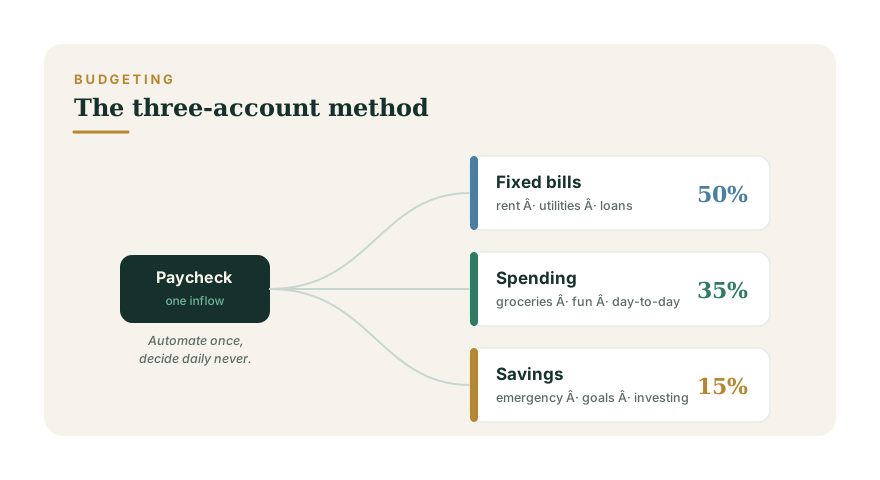
The most reliable budgeting system is based on three bank accounts, not a spreadsheet:
Account 1 — Fixed Bills. Every month, a fixed amount transfers from your paycheck into this account. It covers only recurring, predictable expenses: rent or mortgage, utilities, insurance premiums, subscriptions, loan payments. Because these numbers do not change much from month to month, you know exactly how much to deposit. You never touch this account for anything else.
Account 2 — Variable Spending. This is your daily life account — groceries, dining, entertainment, gas, personal care, and anything else that varies month to month. You give yourself a weekly allowance from this account rather than a monthly one. Weekly allowances are psychologically easier to track. When Friday arrives and this account is low, you know to cook at home. You do not need a category breakdown to make that decision.
Account 3 — Savings and Irregular Expenses. Every paycheck, a fixed amount goes here automatically. This account does two things: it builds your emergency fund and your long-term savings, and it acts as a buffer for irregular expenses. When your car registration comes due, you transfer from here. When the dentist sends a bill, you transfer from here. The money was already set aside — it just has not been assigned a label yet.
How to Set Your Numbers
Start by calculating your after-tax take-home pay — the amount that actually lands in your account each pay period. If you are paid twice a month, use two pay periods as your monthly baseline.
Next, add up your fixed bills. Be thorough: rent, car payment, student loan, phone plan, streaming subscriptions, gym membership, insurance. If a bill is quarterly or annual, divide it by 12 and include that monthly amount in your calculation.
The remainder is what you have for variable spending and savings. A reasonable starting split for most people:
- Fixed bills: 50–60% of take-home pay
- Variable spending: 25–30%
- Savings and irregular expenses: 15–20%
If your fixed bills consume more than 60% of take-home pay, that is the real problem — and no category-level budget will fix it. You either need to reduce a major fixed cost (housing, car payment, loan refinance) or increase your income. Tracking your coffee spending is not the answer when rent is the constraint.
The Irregular Expenses Most People Forget
One of the biggest budget-killers is not overspending — it is failing to anticipate predictable irregular expenses. Make a list of every expense you know is coming in the next 12 months that is not a monthly bill:
- Car registration and inspection
- Annual insurance premiums
- Holiday gifts
- Vacations or travel
- Medical deductibles and dental cleanings
- Home maintenance (HVAC service, lawn care, etc.)
- Professional development, certifications, or courses
Add up all of these, divide by 12, and make sure that monthly amount goes into your savings account. These expenses will happen. The only question is whether you are ready for them.
Automating the Budget
The more decisions your budget requires in the moment, the more likely it is to fail. The goal is to make the right financial choices automatic.
Set up automatic transfers on payday. The moment your paycheck arrives, money flows into your fixed bills account and your savings account before you can spend it. What remains in your main account is what you have available for the week. You do not have to think about it — the structure does the thinking for you.
Most banks allow you to schedule these transfers for a specific date. If you are paid on the 1st and 15th, schedule your transfers for those exact days.
Adjusting Your Budget Over Time
A budget is not a permanent document. Review it every three months. Did you consistently run out of variable spending money? Your allowance might be too low — or your fixed costs might be higher than you realized. Did your savings account barely grow? Your savings contribution might need to increase.
The goal is a budget that does not require willpower to maintain. If you are constantly fighting it, the budget is wrong — not you.
One Metric That Matters
If you track nothing else, track your savings rate: the percentage of your gross income you are setting aside each month. A savings rate below 10% leaves you vulnerable to financial shocks. A savings rate of 20% puts you on track for a comfortable retirement. A savings rate above 30% gives you options — the ability to take career risks, retire earlier, or weather a job loss without panic.
Every budget decision is ultimately a question of whether it moves your savings rate up or down. That single number tells you more about your financial health than any category breakdown ever will.