A sabbatical — a deliberate break from work to travel, care for family, recover from burnout, retrain, or simply reset — is increasingly common and increasingly normal to discuss. What has not changed is that most people wildly underestimate the cost, because they budget only for the months of living expenses and forget everything that an employer was quietly covering. Done right, a career break is not a reckless leap; it is a budgeting project with a clear price tag.
Pricing the true cost
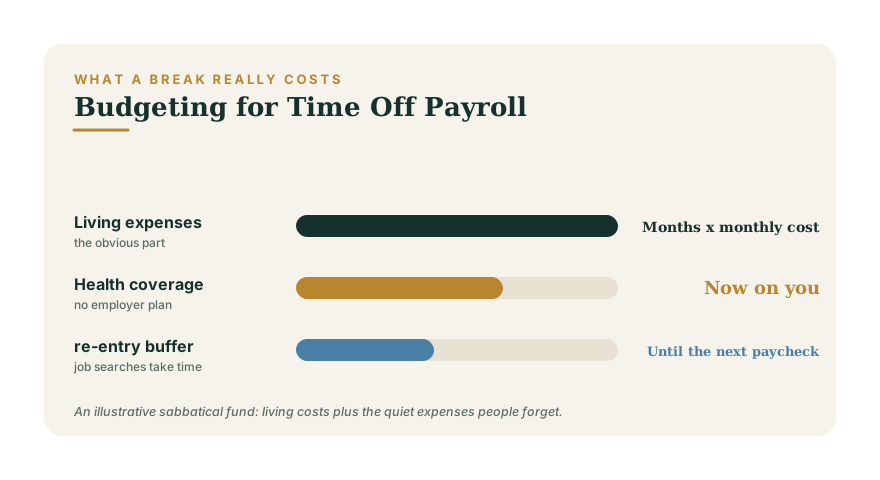
Start with the obvious number: your monthly living expenses times the number of months you plan to be off. But that is only the visible tip. The full cost includes several things payroll used to hide:
- Health insurance. Once you leave a job, the employer subsidy vanishes. You may face COBRA, a marketplace plan, or a spouse's plan. This is often the single most underestimated line — see ACA Marketplace Health Insurance and Understanding COBRA Coverage.
- Lost retirement contributions and match. No paycheck means no 401(k) contributions and no employer match while you are off. That is a real cost to your future, even if it does not show up in your monthly budget.
- The re-entry buffer. Job searches take longer than people plan for. Budget for the gap between your break ending and your first new paycheck arriving, which can be months.
- The break itself. If the sabbatical involves travel or a course, that is a separate cost on top of ordinary living.
The broader logistics of doing this without derailing your finances — leave-of-absence rules, keeping benefits, timing — are covered in How to Take a Sabbatical Without Wrecking Your Finances. This piece is about the money you need to set aside first.
Protect the emergency fund
Here is the mistake that turns a good break into a bad one: draining your emergency fund to pay for the sabbatical. Your emergency fund is for genuine emergencies, and you will need it more than ever during a period with no income. The sabbatical fund is a separate pot — effectively a large sinking fund for a known future expense. Keep the two entirely apart, and size your emergency fund to cover the same essentials it always did, using the Emergency Fund Calculator.
Building the fund
Once you know the target and the date, the math is a short-term savings problem: divide the total by the months you have and automate that transfer. Because the horizon is usually one to three years, the money belongs in safe, liquid places — a high-yield savings account or short CDs, not the stock market. Where short-horizon money should live is covered in The Best Way to Save for Short-Term Goals. To hit the number faster, temporarily redirect discretionary spending; a focused no-spend month or two can meaningfully accelerate the timeline.
Lower your burn rate before you go
The cheaper your life is during the break, the smaller the fund you need. Trimming recurring costs, pausing or cancelling subscriptions, and lowering fixed expenses before you leave reduces the target on both ends. Every hundred dollars a month you cut is a hundred dollars a month you do not have to save for. Use the Budget Analyzer to model your break-period budget, and the Opportunity Cost Calculator to weigh the long-term trade-off of pausing income and investing.
Plan the return, not just the departure
A sabbatical ends. The people who come back on solid footing planned for re-entry from the start: a cash buffer to cover the job search, a resume and network kept warm, and a clear picture of how re-joining a retirement plan and rebuilding savings will work. Think through your overall resilience before you commit with the Financial Resilience assessment, and lay out the full timeline at the planning hub. A career break is entirely achievable on an ordinary income — it just has to be budgeted like the serious goal it is.