When you leave a job — whether you quit, are laid off, or have your hours cut — your employer health insurance usually ends within weeks. A federal law known as COBRA gives you the right to keep that exact same coverage for a limited time. It can be a genuine lifeline, especially if you are mid-treatment or want to keep your doctors. But there is a catch that surprises almost everyone: the price.
What COBRA actually is
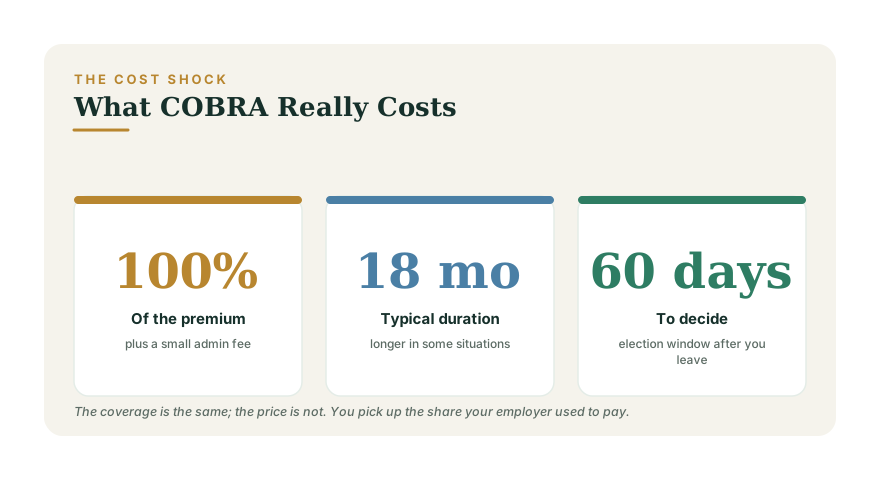
COBRA stands for a 1985 law (the Consolidated Omnibus Budget Reconciliation Act) that requires most employers with 20 or more employees to let departing workers continue their group health plan temporarily. The coverage is identical to what you had — same network, same benefits, same deductible progress you have already built up for the year. Your spouse and dependents who were on the plan can usually continue too. It typically lasts 18 months, though certain events (such as disability) can extend it.
Why the cost is such a shock
While you were employed, your paycheck deduction was only a slice of your plan's true cost. Your employer quietly paid the larger share — often well over half the premium. Under COBRA, that subsidy disappears. You now pay the entire premium yourself, plus a small administrative fee of up to 2%. A plan that cost you a couple hundred dollars a month from your paycheck can suddenly cost many times that. The benefits did not change; you are simply seeing the real price for the first time. This is a core idea in how health insurance actually works — the premium you saw was never the whole story.
The election window
You generally have 60 days after your coverage ends (or after you receive the official COBRA notice, whichever is later) to decide whether to enroll. Importantly, the election is retroactive: if you sign up within the window, coverage backdates to the day your old plan ended, so there is no gap. This creates a useful safety net — some people wait, gambling that they will stay healthy, knowing they can still elect COBRA retroactively if they have a medical event during the window. Just track the deadline carefully.
Comparing COBRA to a marketplace plan
Losing job-based coverage is a "qualifying life event," which opens a special enrollment period on the health insurance marketplace. That makes a marketplace plan the main alternative to COBRA, and it is often cheaper for two reasons:
- Premium subsidies. Marketplace plans offer income-based tax credits. After a job loss, your income for the year may be low enough to qualify for a substantial subsidy that COBRA never offers.
- Plan choice. You can pick a cheaper plan than your old employer's — for instance, a higher-deductible option to cut the premium, a trade-off covered in HDHP vs PPO.
The trade-off is that a marketplace plan may use a different network, so you could lose access to specific doctors, and any deductible you have already met this year resets to zero.
When COBRA still wins
Despite the cost, COBRA can be the better choice when continuity matters most: you are in the middle of treatment with a specific specialist, you have already met most of your annual deductible and out-of-pocket maximum, or you only need a short bridge of a month or two before new employer coverage begins. In those cases, paying the full premium briefly is worth not disrupting your care.
How to decide
Get the exact COBRA premium from the plan administrator's notice, then price comparable marketplace plans for your situation, including any subsidy you would qualify for. Weigh the premium difference against whether your doctors are in-network and how much deductible you have already paid this year. A job loss is stressful, but health coverage is one decision you do not want to skip. Work through the broader checklist in Money Moves After a Job Loss.
Health coverage is too important to let lapse, even briefly. Whichever route you choose, fold the new premium into a leaner post-job-loss budget using the budget analyzer so the cost does not catch you off guard.