A no-spend month is a short, deliberate pause on non-essential spending — usually thirty days where you cover your true necessities and nothing else. It has a reputation as a self-punishment challenge, but that framing misses the point. Done well, it is a diagnostic tool. It is the cleanest way to see which of your purchases are genuine needs, which are habits running on autopilot, and how much quiet leakage your normal months hide.
The goal is not to prove you can suffer. It is to reset a few default behaviors and walk away with a clearer picture of where your money really goes.
Write the rules before day one
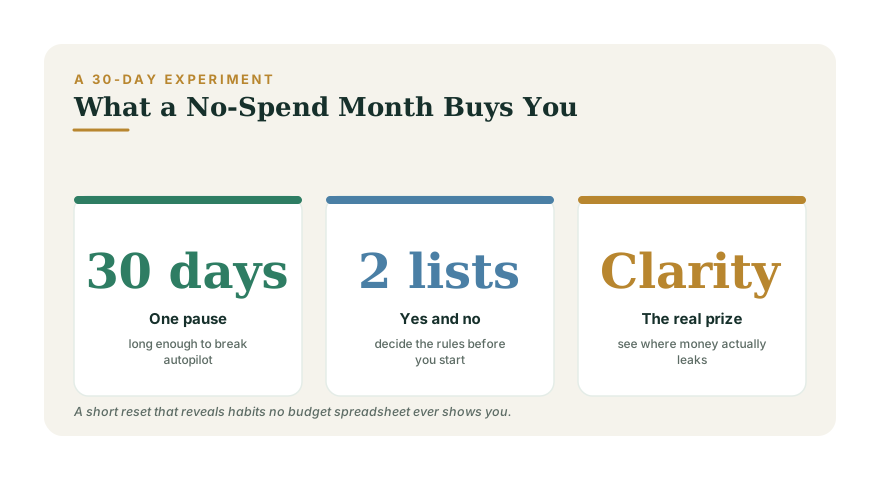
The single biggest mistake is starting without clear rules, because then every purchase becomes a debate you can rationalize. Before the month begins, write two lists.
- The "yes" list — essentials you will still pay for. Rent or mortgage, utilities, groceries, gas or transit, insurance, minimum debt payments, and existing medical needs. These keep your life running; the challenge is not about skipping bills.
- The "no" list — what you are pausing. Restaurants and takeout, coffee out, clothes, gadgets, impulse buys, streaming you can pause, hobbies that cost money, and "treat yourself" purchases.
The line between the lists is personal, and that is fine. The discipline is deciding once, in advance, so you are not negotiating in the checkout line.
What actually counts as essential
Be honest but not absurd. Groceries are essential; a $14 lunch out is not. Replacing worn-out work shoes is essential; buying a third pair you like is not. A useful test: would skipping this purchase create a real problem, or just mild inconvenience? Inconvenience is the whole point — that is where the learning lives. If a genuine necessity comes up mid-month (a car repair, a medication), pay it. The exercise is about discretionary spending, not denying real needs.
Plan for the friction points
No-spend months fail at predictable moments: a friend invites you to dinner, you are bored on a Saturday, or you are tired and takeout is easy. Plan for these before they hit. Suggest a walk or a potluck instead of a restaurant. Make a list of free things you actually enjoy. Cook a few easy meals in advance so the tired-Tuesday trap has an answer. The point is to replace the spending habit with another behavior, not to white-knuckle through cravings.
Use it to surface waste
The most valuable output of a no-spend month is the data. When you stop the constant trickle of small purchases, two things become visible. First, you notice how many of them were autopilot, not desire — you do not actually miss most of them. Second, you finally see your recurring charges clearly, because they keep hitting your account while everything else goes quiet. A no-spend month is the perfect moment to run a subscription audit and cancel what you forgot you were paying for.
It also exposes triggers. Maybe you spend when stressed, when scrolling, or when you walk past a particular store. Naming the trigger is half the fix, and it is something a spreadsheet alone never tells you.
This is a reset, not a lifestyle
A no-spend month is a tool, not a permanent state. Using it forever just trades one extreme for another. The right way to use it is as a periodic reset — once or twice a year, or after a stretch of loose spending — to recalibrate your defaults and break habits that crept back in. It is a strong antidote to lifestyle creep, the slow upgrade of your spending that follows every raise.
When the month ends, do not swing into a spending binge. Bring back the discretionary categories deliberately, keeping the ones that genuinely add to your life and leaving behind the ones you did not miss. That is how a 30-day experiment turns into lasting change.
Turn the savings into something real
Whatever you did not spend should not just dissolve back into checking. Move it — to your emergency fund, a debt payment, or a goal — so the month produces a visible result. For more ways to trim without feeling deprived afterward, see how to cut expenses without misery, and pressure-test your new numbers with the Budget Analyzer.