A sabbatical — an intentional, extended break from work — can reset your health, your relationships, and your sense of direction. It can also quietly drain years of savings if you treat it as a vacation rather than a financial project. The good news is that a well-funded break and a reckless one start to look very different the moment you do the math, and the math is not complicated.
Build a dedicated runway, separate from your emergency fund
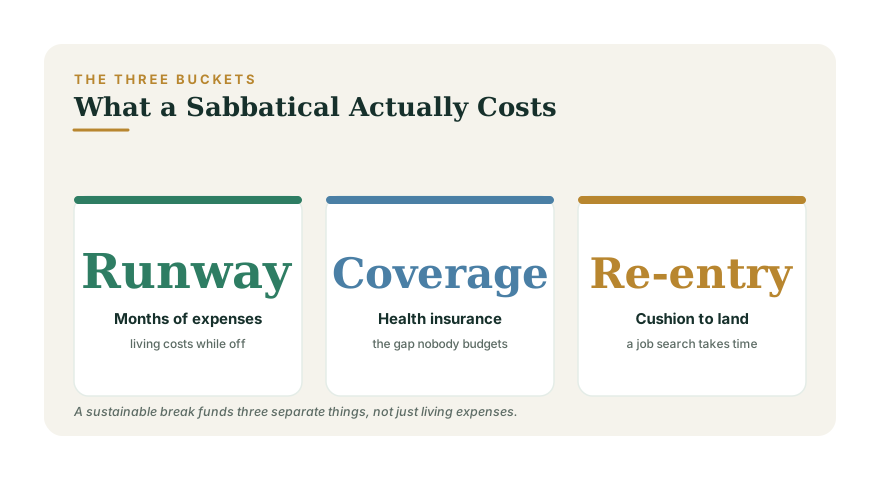
The first rule of a sabbatical is that it gets its own money. Do not spend your emergency fund on a planned break — that cushion exists for the surprises that will still happen while you are off, like a car repair or a medical bill. Instead, build a separate sabbatical fund sized to your real monthly spending times the number of months you plan to be away, plus a margin. Estimate honestly: some costs drop when you stop working (commuting, lunches out), but others appear (travel, hobbies, the full health premium below). A useful target is your planned months plus a couple of extra months of cushion, so a slightly longer break or a slower re-entry does not force a panic.
Plan for the health-insurance gap before anything else
The expense people most often forget is medical coverage. The day you leave a job, your employer plan typically ends, and the full cost of insurance is suddenly visible. Your main options are COBRA to keep your existing plan at full price, an ACA marketplace plan (leaving a job triggers a special enrollment window), or a spouse's plan if available. With little or no income during the break, you may qualify for marketplace subsidies that make coverage far cheaper than COBRA. Skipping coverage to save money is the single riskiest move on a sabbatical — one accident can erase the entire fund you worked to build.
Keep retirement on track while you are off
A year without paychecks is also a year without 401(k) contributions and, usually, without an employer match. That is a real, if invisible, cost of the break. You cannot contribute to a workplace plan with no wages, but you can keep the long-term plan intact in other ways: leave existing retirement accounts invested and untouched, avoid cashing out a 401(k) (the taxes and the lost growth are brutal — see what to do with an old 401(k)), and if you have any earned income during the break, a small IRA contribution keeps the habit alive. The key is to treat the pause as a pause, not a permanent setback, and to resume contributions the moment you are earning again.
Budget like someone with an irregular income
During a sabbatical you are, financially, a person with no income spending from a fixed pool — which is exactly the situation of a freelancer between gigs. The same discipline applies: know your monthly burn rate to the dollar, draw a hard line you will not cross, and check the balance regularly so a slow drift does not become a cliff. The techniques in budgeting on an irregular income translate directly, and a simple spending tracker will keep your runway honest.
Have a re-entry plan from day one
The part that protects your finances most is the one people enjoy least: knowing how the break ends. Decide in advance whether you are returning to a held role, job hunting, or starting something new, and budget for the fact that finding work can take months. A re-entry cushion — money set aside specifically for the search period after the "fun" part ends — is what keeps a great year from turning into a stressful scramble. Line up references and stay loosely in touch with your network before you leave, so re-entry is a warm start rather than a cold one.
Decide if you can afford it — honestly
A sabbatical is affordable when it is fully funded, your coverage gap is solved, your long-term plan survives the pause, and you have a realistic way back. If any of those is missing, it is worth waiting and saving longer rather than borrowing against your future. Run your numbers against the framework in Can You Afford to Quit?, and use the Emergency Fund Calculator and your planning hub to confirm the runway is real before you hand in the notice.