Naming a trustee is one of the most consequential decisions in an estate plan, and one of the most rushed. People spend months deciding how to divide their assets, then pick the person who will actually manage and distribute those assets in a single afternoon. The trustee is the human engine of your trust — without a capable one, even a beautifully drafted document underperforms.
This is a different job from naming an executor, who settles your estate through probate and then finishes. A trustee may serve for years or decades, especially when a trust holds money for young children or a beneficiary with special needs.
What a trustee actually does
A trustee holds legal title to the trust's assets and manages them for the benefit of the people you named. The role is a fiduciary one, the highest standard of care the law recognizes, which means the trustee must put the beneficiaries' interests ahead of their own at all times. In practice the job includes:
- Investing prudently — managing the assets sensibly, neither gambling them away nor letting them sit idle.
- Making distributions — paying out money according to your instructions, which often requires judgment ("for health, education, maintenance, and support" is a common, deliberately flexible standard).
- Keeping records and filing taxes — a trust is its own taxpayer, with its own returns and accountings to beneficiaries.
- Staying impartial — balancing the interests of someone who needs income now against someone who inherits what is left later.
That last duty is where families fracture. A trustee who is also a beneficiary, or who is close to one, can be pulled in ways that breed resentment and lawsuits.
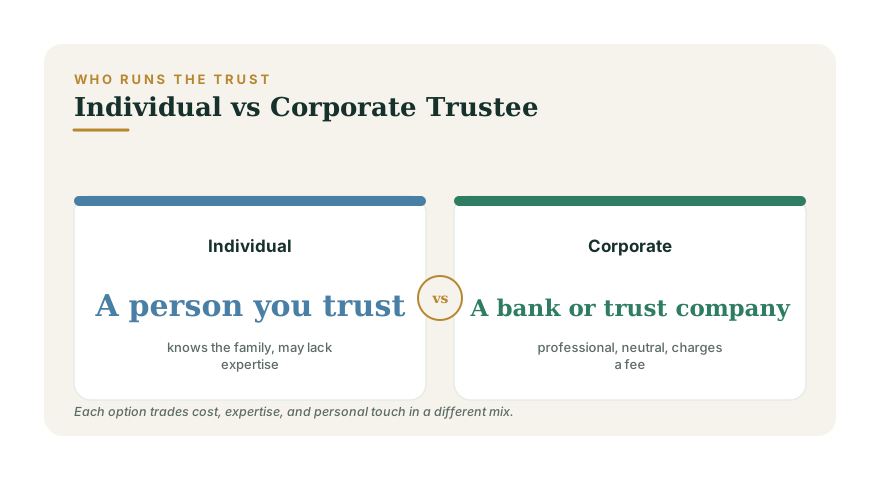
Individual versus corporate trustee
An individual trustee is a person — often a sibling, an adult child, or a trusted friend. The advantages are intimacy and low cost: they know the family, understand the unspoken context, and usually serve without a fee or for a modest one. The risks are real, though. They may lack investment or tax expertise, they can be drawn into family conflict, and they are mortal and fallible. A well-meaning brother is not necessarily equipped to manage a seven-figure portfolio or referee disputes among nieces and nephews.
A corporate trustee — a bank trust department or a dedicated trust company — brings professional administration, continuity, and neutrality. They do not die, move, or take sides at Thanksgiving. The trade-offs are cost (typically an annual fee that is a percentage of the assets) and a more impersonal, by-the-book style. For large or long-running trusts, that professionalism is often worth paying for; for a modest trust meant to last only until a child turns 25, it can be overkill.
Many plans split the difference with co-trustees: a family member who knows the beneficiaries serves alongside a corporate trustee who handles investments and paperwork. You can also separate the roles with a trust protector, a third party with limited power to remove and replace a trustee who is not performing.
Always name a successor
Your first choice can decline, resign, become incapacitated, or die. A trust without a named successor trustee can stall, sometimes requiring a court to appoint one. Name at least one backup, and consider naming two, in order. This is the same logic that applies to every estate role; the same gap that makes choosing an executor so important applies here. If a trust will protect children, coordinate the trustee choice with the guardian you name for minor children — they need not be the same person, and often should not be, so that money and caregiving have separate checks.
The traits that actually matter
Forget the instinct to name your oldest child or your closest friend by default. The traits that predict a good trustee are mundane and powerful:
- Integrity — they will handle money that is not theirs, often with little oversight.
- Organization and follow-through — accountings, tax filings, and distributions do not manage themselves.
- Sound judgment — especially under a discretionary standard, the trustee must say no to unreasonable requests without becoming a tyrant.
- Impartiality — the ability to treat beneficiaries fairly even when one is a favorite.
- Willingness to ask for help — a good trustee hires accountants and attorneys rather than guessing.
Notice that investment genius is not on the list. A trustee can hire advisors; what they cannot outsource is honesty and diligence.
Have the conversation first
Never name a trustee without asking. The job is real work and legal exposure, and a surprised appointee may decline at the worst possible moment. Talk it through, explain your wishes, and tell them where your documents and account information live. If your trust is part of a broader plan, walk through how trusts work beyond the basics together so they understand the structure they are signing up to run.
Choosing the right person — or institution — is the difference between a trust that quietly does its job and one that becomes a source of conflict. Use the Estate Readiness assessment to see whether your plan names the right people in the right roles, with successors in place for each.