The executor (called a "personal representative" in some states) is the person you appoint in your will to carry out your wishes after you die. It is one of the most consequential choices in your entire estate plan, and yet many people pick the obvious name — the oldest child, the closest sibling — without thinking about whether that person is actually suited to the work. The job is part paperwork, part diplomacy, and entirely a matter of trust.
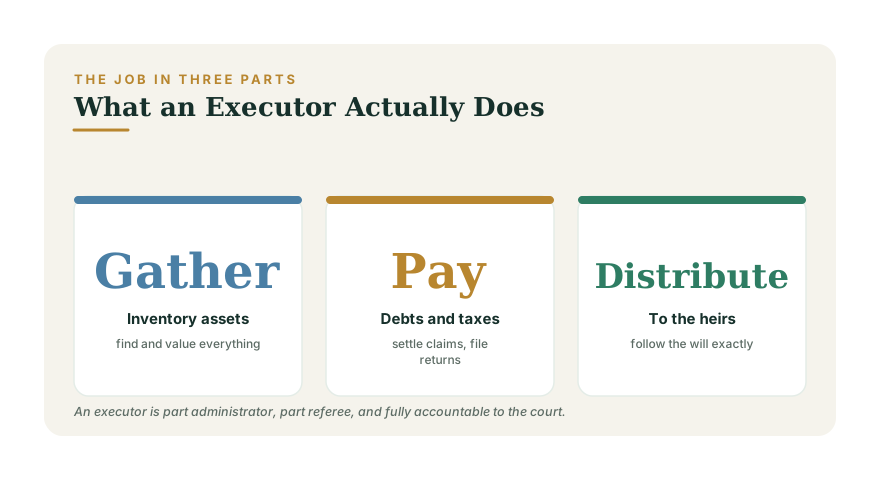
What an executor actually does
Being an executor is a real job with legal responsibility. The core duties usually include:
- Locating and securing assets — finding accounts, property, and documents, then valuing them.
- Navigating probate — filing the will with the court and shepherding it through the process.
- Paying debts and taxes — notifying creditors, settling legitimate claims, and filing the deceased's final tax returns.
- Distributing what remains — passing assets to the beneficiaries exactly as the will directs.
- Keeping records — accounting for every dollar in and out, often to the court and the heirs.
An executor owes a fiduciary duty — a legal obligation to act in the estate's best interest, honestly and carefully. The work can stretch over many months, especially if probate is involved. (For how that process unfolds, see How Probate Works and How to Avoid It.)
Traits that matter more than affection
The right executor is not necessarily the person you love most; it is the person who can do the job calmly. Look for:
- Trustworthiness and integrity — they will handle your money with no one looking over their shoulder day to day.
- Organization and follow-through — this is a long checklist of deadlines, forms, and accounts.
- Level-headedness — grief and family tension run high; an executor who can stay neutral keeps things from boiling over.
- Availability — someone overwhelmed by their own life may not have the time the role demands.
- Geographic practicality — an executor near your property and your state's court has an easier path; some states impose extra hurdles on out-of-state executors.
Financial expertise is helpful but not required — a sensible person can hire an attorney or accountant as needed. Judgment and reliability are harder to outsource.
Have the conversation first
Never name an executor by surprise. Ask the person whether they are willing, explain roughly what is involved, and tell them where your documents and account list live. An executor who learns of the role only after your death, with no map to your affairs, faces a much harder task. This is also a good moment to coordinate with the people holding your other roles — your power of attorney and healthcare proxy — so everyone knows the plan.
Always name a backup
Your first choice may be unable or unwilling to serve when the time comes — they may have died, moved, fallen ill, or simply changed their mind. A will that names only one executor with no alternate can leave the court to appoint someone instead, undoing your careful choice. Name at least one successor executor, and consider a second backup. It costs nothing and removes a real point of failure.
When a professional executor makes sense
Sometimes the best executor is not a relative at all. Consider a professional — an estate attorney, an accountant, or a bank's trust department — when:
- Your estate is large or complicated (a business, multiple properties, complex investments).
- Family relationships are strained and a neutral party would reduce conflict.
- No one close to you has the time, skill, or willingness to serve.
Professionals charge a fee, typically a percentage of the estate or an hourly rate, and they bring experience and impartiality. Co-executors — pairing a trusted family member with a professional — are another option, though requiring two people to agree on everything can slow things down.
Revisit the choice over time
The right executor at 40 may not be the right one at 65. People age, relationships change, and an estate grows more complex. Review your executor naming whenever you update your will or hit a major life event. To see where executor naming fits into the larger picture, start with Estate Planning Basics Everyone Needs, and check your overall gaps with the Estate Readiness assessment so the person you choose has a clear plan to execute.