If you are a parent, naming a guardian is the reason to write a will at all. Everything else in estate planning can wait a little; this cannot. If both parents are gone and no guardian is named, a court chooses who raises your children — and the court does not know your family the way you do.
The decision feels impossible because no one is your equal as a parent. But the goal is not to find a perfect replacement. It is to make sure a thoughtful choice you made beats a stranger's guess in a courtroom.
Two roles, not one
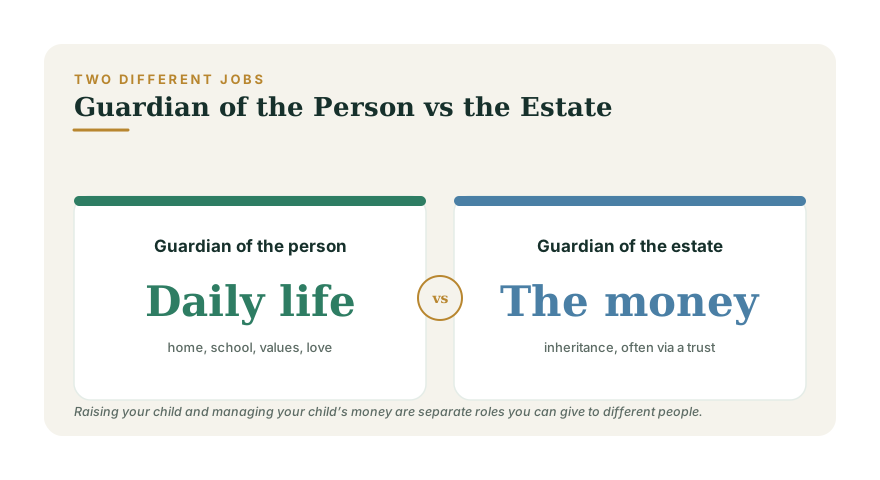
"Guardian" actually covers two distinct jobs, and recognizing that makes the whole decision easier:
- Guardian of the person raises the child day to day — home, school, healthcare, religion, values, love. This is the parenting role.
- Guardian of the estate (or a trustee) manages the money the child inherits — the life insurance payout, accounts, and any property — until the child is old enough to handle it.
The single most useful insight here: these do not have to be the same person. Your warmest, most loving relative may be wonderful with your kids and hopeless with money. You can name them to raise the children and name someone financially careful — or a corporate trustee — to handle the inheritance. Splitting the roles also builds in a quiet check and balance.
How to choose
Filter candidates through a few honest questions rather than chasing perfection:
- Values and parenting style — would they raise your children the way you would on the things that matter most to you?
- Stability and capacity — do they have the health, energy, and life stage to take this on?
- Relationship — do your children already know and trust them?
- Location — would your kids have to leave their school, friends, and community?
- Willingness — have you actually asked? Never name someone who has not agreed.
Grandparents are a natural first thought, but consider whether they will still be able to parent a teenager years from now. Sometimes a sibling or close friend closer to your own age is the better long-term fit.
Always name backups
Your first choice might move away, fall ill, decline, or pass before you do. Name at least one alternate guardian, and ideally a second. A plan with no backup can collapse exactly when it is needed, sending you right back to a judge's discretion. This is the same backup principle that protects every part of an estate plan, covered in Estate Planning for Young Families.
Pair the guardian with a trust for the inheritance
Here is the mistake that quietly undoes good intentions: leaving money to a minor child directly, often through a beneficiary form on life insurance or a retirement account. Minors cannot legally control significant assets, so the court appoints a conservator, the money is supervised until the child turns 18 — and then it is handed over in full. A grieving 18-year-old receiving a large lump sum rarely ends well.
The clean solution is a trust for the benefit of the children. Your will or trust names a trustee to manage the money and spend it on the kids' needs — housing, school, health — and you set the age or milestones at which they receive it outright (say, in thirds at 25, 30, and 35). This avoids court supervision and prevents the lump-sum-at-18 problem entirely. If you are weighing whether a simple will is enough or whether you need a trust, Wills vs Living Trusts compares them, and the beneficiary pitfalls that route money around your plan are detailed in The Beneficiary Mistakes That Derail Estates.
Make it official, then revisit
A guardian named only in conversation has no legal force. The choice has to be written into a valid will (and, where relevant, a trust). Then revisit it as life changes — a candidate's divorce, illness, move, or your own shifting relationships can all make yesterday's pick the wrong one today.
Naming a guardian is hard precisely because it forces you to imagine not being there. But making the choice yourself is one of the most protective things you can do for your kids. Start the broader plan with the Estate Readiness assessment, which flags whether your guardian and inheritance pieces are actually in place.