"Trust" sounds like a tool reserved for the very wealthy, conjuring images of dynasties and tax dodges. In reality a trust is just a legal container: you place assets inside it, name someone (a trustee) to manage them under your written rules, and name the people who benefit. That structure solves a handful of very ordinary problems — avoiding probate, providing for a child with a disability, protecting an heir from their own choices — that a plain will cannot.
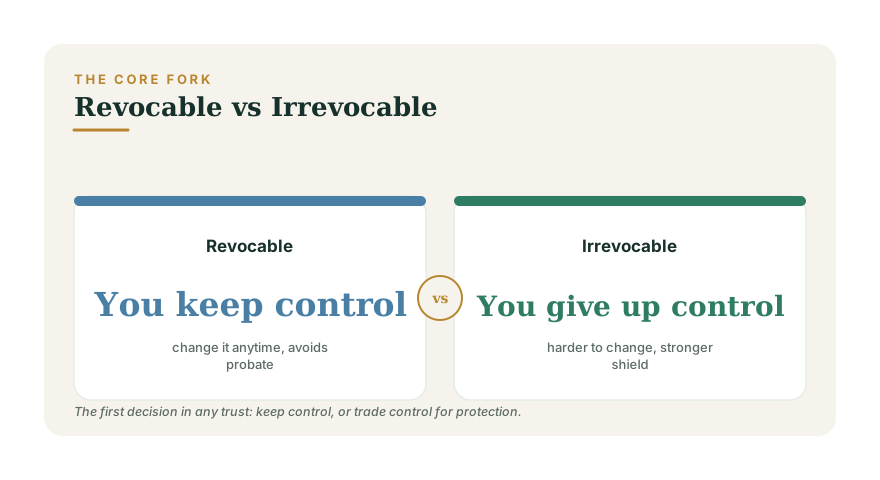
Revocable vs irrevocable: the fork in the road
Nearly every trust decision starts here.
A revocable living trust is the workhorse for everyday estate planning. You retain full control — you can change it, add or remove assets, or dissolve it entirely while you are alive. Its main job is to let assets pass to your heirs without probate, keeping the transfer private and often faster. The trade-off: because you still control the assets, a revocable trust offers little protection from creditors or estate tax. The full comparison with a basic will is in Wills vs Living Trusts.
An irrevocable trust is the opposite bargain. Once funded, you generally cannot change it or take the assets back — you have truly given them away to the trust. In exchange for surrendering control, you gain stronger protection: assets can be shielded from creditors and, in some cases, removed from your taxable estate. The rule of thumb is simple — control and flexibility versus protection. You rarely get both.
Why a trust can beat a plain will
A will only takes effect after you die and must go through probate. A trust can do things a will cannot:
- Avoid probate — assets in the trust skip the court process. See How Probate Works and How to Avoid It.
- Stay private — a will becomes a public record; a trust generally does not.
- Control timing — you can dole out an inheritance over years or at milestones rather than in one lump sum.
- Plan for incapacity — a trustee can manage trust assets seamlessly if you become unable to.
That said, a trust is not automatically better. It costs more to set up, and it only works if you actually fund it — retitling your assets into the trust's name. An unfunded trust is an expensive empty box, and the assets you forgot to move still go through probate.
Special-needs trusts: protecting benefits
If you have a loved one with a disability who relies on means-tested government programs like Medicaid or SSI, leaving them money directly can be a costly mistake — a sudden inheritance can disqualify them from the very benefits they depend on. A special-needs trust (or "supplemental-needs trust") solves this. The money is held in trust and used to supplement — not replace — public benefits, paying for things those programs do not cover while preserving eligibility. This is one of the clearest cases where a trust is essential, and it is worth specialized legal help to get right.
Spendthrift provisions: protection from oneself (and others)
A spendthrift provision is a clause you can add to a trust to protect a beneficiary who might mismanage a windfall — or who has creditors circling. Because the beneficiary cannot simply withdraw the whole balance, the assets are largely shielded from their creditors and from their own impulses. The trustee releases money according to your rules — perhaps a set amount each year, or only for specific purposes like education or housing. It is a common, humane tool for leaving money to someone you love but do not want to hand a lump sum.
Other trusts you may hear about
- Testamentary trust — created by your will, springing into being at death; often used to hold a minor child's inheritance until they are older.
- Irrevocable life insurance trust (ILIT) — owns a life-insurance policy so the payout sits outside your taxable estate.
- Charitable trusts — blend giving with income or tax planning.
These are more specialized and almost always warrant professional advice.
So which fits you?
For most people, a revocable living trust paired with a will (a "pour-over" will catches anything you forgot to fund) handles probate avoidance and incapacity planning well. Reach for an irrevocable trust when protection or estate-tax planning genuinely justifies giving up control, and for a special-needs or spendthrift structure when a specific beneficiary needs it. The honest answer for many modest estates is that a solid will plus good beneficiary designations is enough — a trust is a tool, not a trophy.
Before paying for any of this, get the foundations down with Estate Planning Basics Everyone Needs, then run the Estate Readiness assessment to see whether your situation actually calls for a trust or whether a will already covers you.