Few estate-planning mistakes are as quietly devastating as leaving money directly to a loved one who has a disability. The gift feels generous; the consequence can be the loss of the very benefits that person depends on to live. Understanding how this happens — and the trust that prevents it — is essential for any family caring for a disabled child, sibling, or adult.
How inheriting can disqualify someone
Many critical benefit programs are means-tested — eligibility depends on owning very little. Supplemental Security Income (SSI) provides monthly cash to disabled people with limited resources, and in most states qualifying for SSI is the gateway to Medicaid, which covers medical care, therapies, personal aides, and group-home costs that private insurance rarely touches. These programs typically cap countable assets at just a few thousand dollars.
Now picture a grandparent who lovingly leaves $100,000 to a disabled grandchild. Overnight, the grandchild's countable assets blow past the limit. Benefits stop. The inheritance must be spent down — often on the same care Medicaid was providing — before benefits can resume, and the family may have to navigate a painful, expensive cycle of disqualification and reapplication. The well-meant gift directly harmed the person it was meant to help.
The special needs trust solution
A special needs trust (also called a supplemental needs trust) solves this. Money placed in a properly drafted trust is not counted as the beneficiary's personal resource, because they cannot demand the money directly — a trustee controls it. The benefits keep flowing, and the trust pays for things government programs do not cover: education, travel, therapies, technology, recreation, a personal aide, or simply a better quality of life.
The cardinal rule is that the trust supplements rather than replaces public benefits. The trustee must avoid distributions that count as income or shelter in a way that reduces SSI, which is why these trusts require specialized drafting and a trustee who understands the rules. This is not a place for a do-it-yourself document.
First-party versus third-party trusts
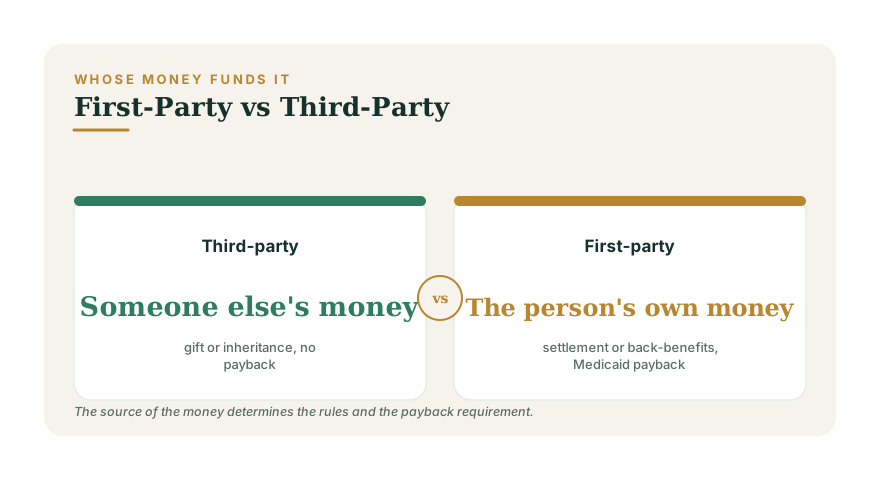
The single most important distinction is whose money funds the trust.
- A third-party trust is funded with someone else's money — a parent's or grandparent's gift or inheritance. This is the trust families set up for a loved one. Its great advantage: when the beneficiary dies, whatever remains can pass to other family members. There is no Medicaid payback. This is why relatives should never leave assets to the disabled person outright; they should leave them to this trust instead, and coordinate it with their other beneficiary designations so nothing slips through.
- A first-party trust is funded with the disabled person's own money — typically a personal-injury settlement, an inheritance that arrived directly, or back-owed benefits. Because the money was legally theirs, the trade-off is a Medicaid payback requirement: when the beneficiary dies, the state is reimbursed from what remains for the Medicaid it provided, before anything passes to family.
The planning lesson writes itself: by funneling gifts into a third-party trust ahead of time, families avoid ever triggering the first-party payback. A common error is a relative who leaves money the right way while a different relative leaves it outright, accidentally creating a first-party problem.
Where ABLE accounts fit
An ABLE account is a tax-advantaged savings account for people who became disabled before a specified age. It works like a 529 plan in spirit: contributions grow tax-free and come out tax-free for qualified disability expenses, and balances up to a set limit do not count against SSI and Medicaid eligibility. ABLE accounts are simpler and cheaper than a trust and give the disabled person direct control over modest funds — groceries, rent, everyday needs — without disqualifying them.
ABLE accounts complement rather than replace a special needs trust. They handle small, flexible spending; a trust handles larger sums and long-term management. Many families use both: the trust holds the bulk of the money, and the trustee funds the ABLE account periodically for the beneficiary's day-to-day independence. Annual contribution limits and the disability-onset age requirement make ABLE a partial tool, not a complete one.
Get the details right
Special needs planning is technical, the rules vary by state, and a small drafting error can cost a beneficiary their benefits. This is the clearest case in all of estate planning for working with an attorney who specializes in it. Pair the legal work with a letter of intent describing your loved one's routines, preferences, and care, so a future trustee or caregiver understands the person behind the numbers.
Done right, this planning protects both an inheritance and the public benefits a loved one needs — neither at the expense of the other. Use the Estate Readiness assessment as a starting point, then bring a specialist in to build the trust correctly.