Short-term rentals — listing a property by the night on platforms like Airbnb and Vrbo — can earn far more per month than a traditional lease. That is the headline, and it is sometimes true. But the headline nightly rate is one of the most misleading numbers in real estate, because it quietly ignores almost everything that actually determines whether you make money.
The trap is simple arithmetic done wrong: multiply a nightly rate by 30 nights, compare it to a long-term rent, and conclude short-term is obviously better. The real math is far less flattering, and understanding the gap between gross and net is the whole game.
Why the nightly rate misleads
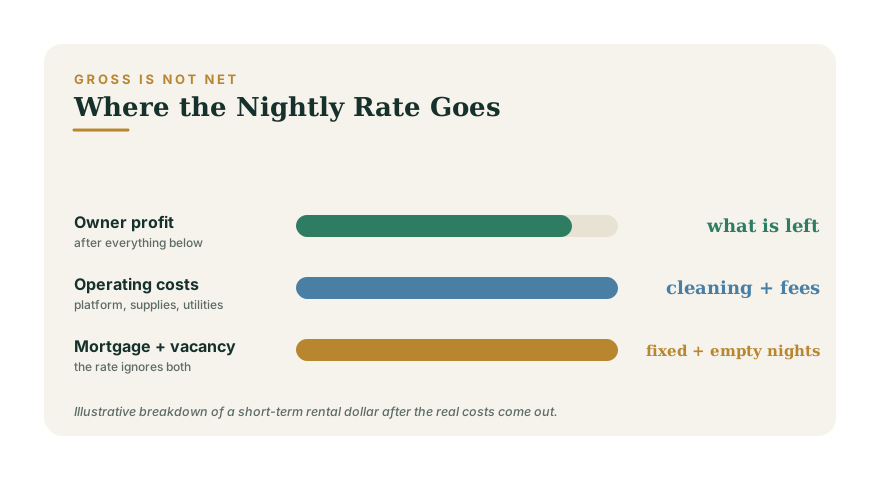
A $200-per-night listing does not earn $6,000 a month. First, it is almost never booked every night — occupancy for a typical market might run 50–70% over a year, and far lower in the off-season. Second, the gross booking revenue is hit by a long list of costs that a long-term landlord never sees, or sees far less of. The nightly rate is a marketing number; your take-home is what survives after all of it.
The costs that eat the gross
- Cleaning and turnover. Every guest stay means a professional cleaning, fresh linens, and restocked supplies. Across many short stays, this is a major, recurring expense — not a once-a-year cost like a long-term lease turnover.
- Platform and payment fees. Booking platforms take a cut, and payment processing adds more. These come straight off the top of every reservation.
- Furnishing and replacement. A short-term rental must be fully furnished and outfitted down to the coffee filters, and guests wear it out faster than a long-term tenant. Furniture, dishes, and decor are ongoing replacement costs.
- Higher utilities and services. You pay for electricity, water, internet, and streaming — costs a long-term tenant usually covers themselves.
- Management. If you do not want to handle guest messages, check-ins, and emergencies at all hours, a short-term-rental manager often charges 20–30% of revenue, far more than a long-term property manager.
- Vacancy. Empty nights are pure lost revenue, and they cluster in slow seasons when your fixed costs keep running.
Stack these up and a property grossing far more than its long-term rent can net surprisingly close to it — sometimes less, once your time is counted. The discipline of separating gross from net is the same one we apply to any investment claim in how to spot a bad investment.
Regulation risk is the wildcard
The biggest difference between a short-term rental and a normal rental is that the rules can change out from under you. Cities and homeowners associations across the country have tightened or banned short-term rentals — requiring permits, capping the number of nights per year, mandating that the owner live on-site, or prohibiting them entirely. A business that pencils out today can be legislated into a regular long-term rental tomorrow.
Before you buy a property specifically as a short-term rental, you have to underwrite that risk. Ask: does this still work as a long-term rental if the short-term rules change? If the only way the numbers work is at nightly rates, you are exposed. Check local ordinances and HOA rules in writing before purchase — the kind of fine print also covered in understanding HOA fees.
The work no one puts in the spreadsheet
A short-term rental is closer to running a small hospitality business than owning a rental. You are managing a calendar, guest communication, cleaning logistics, reviews, dynamic pricing, and the occasional 11 p.m. "the heat won't turn on" message. Even with software and a cleaner, it is real, ongoing work. If you value that time, count its cost; what looks like a great hourly return can shrink once you do.
Running your own real numbers
Short-term rentals can genuinely outperform — in the right market, with the right property, run well, and on the right side of the rules. But the decision should rest on conservative net math, not a nightly rate times thirty. Build a budget that subtracts cleaning, fees, furnishing, utilities, management, and realistic vacancy, and stress-test it against a long-term-rent fallback. Then compare the effort-adjusted return against simpler alternatives in Real Estate vs the Stock Market, and weigh the opportunity cost of your capital with the opportunity cost calculator before you commit.