Most people who lose money to a bad investment did not get fooled by something clever. They got fooled by something familiar, because every con borrows from the same script. A crypto token, a penny stock, a multi-level marketing pitch, and a "guaranteed" annuity sold over a free steak dinner look nothing alike on the surface, but they trip the same handful of wires. Learn the wires and you can spot trouble in two minutes, before any money leaves your account.
The honest truth: the red flags barely change
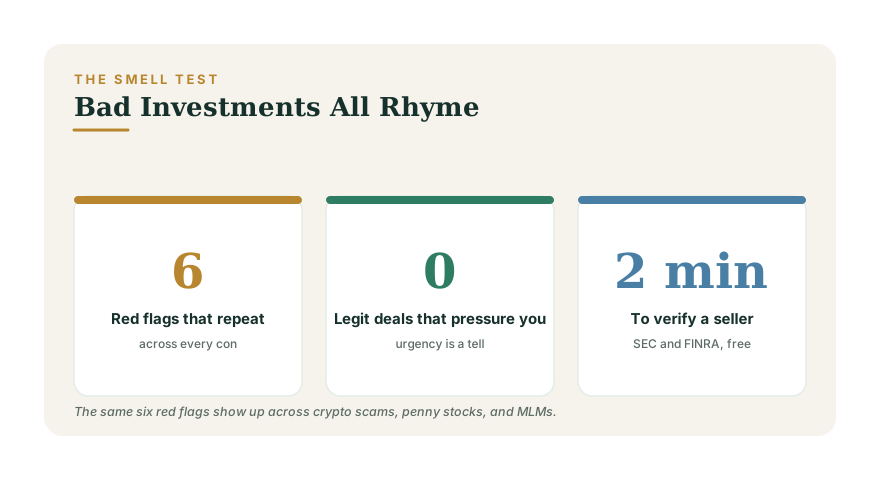
The vehicle changes every few years. The pitch does not. Once you have seen the pattern, the next "once in a lifetime" opportunity looks exactly like the last one. Here are the six tells that show up again and again.
- Guaranteed or too-good returns. Anyone promising a fixed, high return with no risk is either lying or does not understand risk themselves. A genuinely safe US Treasury pays a modest rate. If something promises far more with "no downside," the extra yield is the risk you are not being told about.
- Urgency and pressure. "The window closes Friday." "Only ten spots left." Real investments are still there next week. Manufactured urgency exists to stop you from thinking, asking, or checking.
- Complexity you cannot explain. If you cannot describe in two plain sentences how the thing makes money, you are not investing, you are trusting a stranger's story.
- Unregistered sellers. Licensed brokers and advisors are searchable in public databases. People who are not are usually not by choice.
- Illiquidity you did not sign up for. Being told you cannot withdraw, or that selling requires "recruiting a buyer," is how a lot of money quietly becomes someone else's money.
- Returns that come from recruitment. If your gains depend on bringing in new people rather than on the underlying business earning something, that is the definition of a pyramid.
Follow the money
Ask one question of any pitch: where does the return actually come from? A real investment produces cash from somewhere outside the deal itself. A company sells products and earns a profit. A bond borrower pays interest out of revenue. A rental property collects rent from tenants. When you trace the money in a bad investment, it loops back on itself. The "returns" paid to early participants come from the money put in by later participants, or from your own principal handed back to you in slices to keep you calm. That loop is the engine of every Ponzi and pyramid ever run. The person selling it is paid up front, by commission or by your buy-in, which is why they are so motivated and so cheerful.
A simple smell test
You do not need a finance degree. Run any opportunity through these questions and trust your discomfort if more than one lands wrong.
- Can I explain how this makes money in two sentences, out loud, to a skeptical friend?
- If I say "let me think about it for a week," does the deal survive, or does the seller get aggressive?
- Where do the returns physically come from, and would they still exist if no new investors joined?
- Can I find the seller and the security registered with a regulator?
- If I wanted my money back tomorrow, exactly how would I get it, and how long would it take?
Here is the math that anchors the whole test. Suppose someone promises 3% per month, which sounds modest until you compound it. That is roughly 1.03 to the twelfth power, or about a 43% annual return, sustained. The best investors alive do not reliably clear half that over decades. A return that beats every legend in history, offered to a stranger, is not a gift. It is bait.
How to protect yourself
Verification is free and fast. Before you wire a dollar, do the two-minute checks that scammers count on you skipping.
- Look up the person and firm at the SEC's adviser search and FINRA BrokerCheck. No record, or a record full of disclosures, is your answer.
- Check whether the security itself is registered with the SEC. Most legitimate offerings are, or qualify for a specific, verifiable exemption.
- Search the name plus the words "complaint," "scam," and "lawsuit." Five minutes of reading saves a lot of regret.
- Refuse to be rushed. Sleep on it. Pressure is information.
- Never let anyone discourage you from involving a fee-only advisor or a lawyer who has no stake in the deal.
The honest recommendation
Treat the six red flags as a veto, not a tally. You do not need all six to walk away. One clear hit, a guaranteed return, a seller you cannot verify, money you cannot withdraw, is enough. The boring truth is that wealth gets built by owning broad, low-cost, diversified assets and waiting, not by catching the one secret deal. Anything that frames the boring path as "for suckers" is selling you the opposite of that, and the opposite of that is where the losses live.
Before you commit to anything outside a plain, diversified portfolio, run the seller through SEC and FINRA, then pressure-test the opportunity itself with the tools, or model how the same money would grow in an index fund using the wealth simulator. If you want to learn the patterns more deeply first, the articles walk through how real investments actually work. The best return on a bad investment is the one you never make.