The down payment is the single biggest barrier most people face on the way to owning a home, and a lot of that barrier is a misunderstanding. The widely repeated rule that you must put 20% down keeps would-be buyers renting for years longer than necessary. It is worth knowing what is actually required, what the 20% target really buys you, and how to get there efficiently.
How much do you actually need?
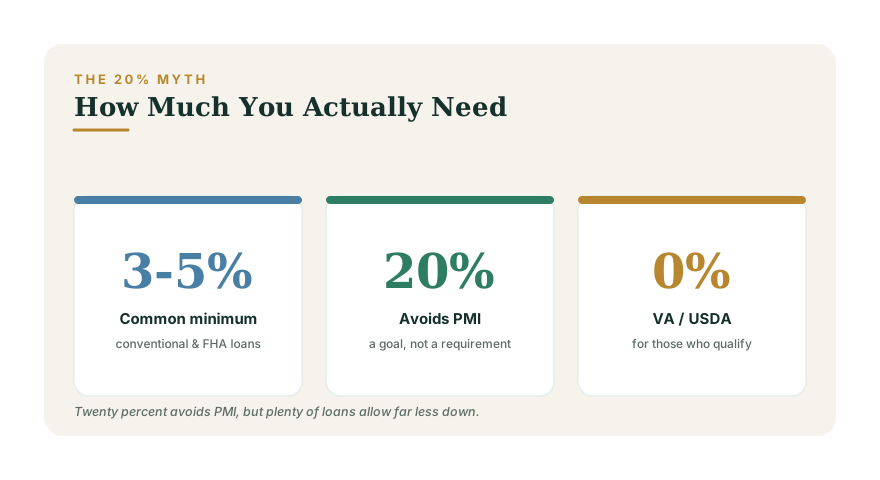
Less than the folklore suggests. Conventional loans are commonly available with as little as 3% to 5% down. FHA loans, designed for buyers with smaller savings or thinner credit, allow around 3.5% down. VA loans (for eligible veterans and service members) and USDA loans (for eligible rural buyers) can require 0% down. On a $350,000 home, 5% is $17,500 — a serious sum, but a fraction of the $70,000 a strict 20% rule implies.
The truth about 20%
Twenty percent is not a legal threshold; it is the point at which lenders stop charging you private mortgage insurance. PMI is an extra monthly cost that protects the lender (not you) when your down payment is small. It typically runs a few tenths of a percent of the loan per year, and it does not buy you any equity.
So the honest framing is a trade-off, not a rule. Putting 20% down means a smaller loan, no PMI, and a lower monthly payment. Putting less down means you buy sooner and keep more cash on hand, but you pay PMI until you build enough equity. The good news: on most loans PMI is not permanent — you can request its removal once you reach about 20% equity, and it usually falls off automatically around 22%. The mechanics are in PMI explained, and how to drop it. For many buyers, waiting years to save the full 20% costs more in rent and missed appreciation than the PMI would have.
Where to keep the money while you save
This depends entirely on your timeline. A down payment is short- to medium-term money, and that horizon should decide where it lives:
- Buying within ~2-3 years: keep it safe and liquid. A high-yield savings account or short CD ladder earns meaningful interest without risking the balance. This is not money to put in the stock market — a downturn the month before closing would be a disaster.
- Buying in 5+ years: you have room for a more growth-oriented mix, but be honest about the date. The closer you get, the more you should shift toward cash.
The mistake to avoid is investing a near-term down payment in stocks chasing a few extra percent, then watching it drop right when you need it. Match the account to the timeline, the same way you would for any goal in setting financial goals that stick.
First-time-buyer programs worth knowing
"First-time buyer" is broader than it sounds — many programs define it as anyone who has not owned a home in the past three years. Common forms of help include:
- Down payment assistance (DPA) — state and local programs offering grants or low-interest second loans to cover part of the down payment or closing costs.
- Mortgage Credit Certificates (MCCs) — a federal tax credit on a portion of your mortgage interest each year.
- State housing finance agency loans — below-market rates and flexible terms for qualifying buyers.
These vary widely by location and income, so it pays to search what is available where you plan to buy.
Build the savings into a system
The reliable way to accumulate a down payment is the same as any large goal: automate a transfer to a dedicated, separate account on every payday so the money is saved before you can spend it. Treat it like a sinking fund with a target and a date. To find the programs you might qualify for and estimate the cash you need, try the Loan Program Finder and the Home Affordability Calculator, then check your overall standing with the Mortgage Readiness assessment. The right down payment is the one that gets you into a home you can comfortably afford — not necessarily the biggest one you can scrape together.