Real estate has an enduring appeal — it is tangible, it produces income, and "they aren't making more land." But becoming a landlord means a down payment of tens of thousands of dollars, a mortgage, tenants, repairs, and a wildly undiversified bet on one property in one place. A REIT (real estate investment trust) lets you own a professionally managed, diversified pool of properties by buying a share, the same way you buy a stock. No toilets, no tenants, no closing costs.
What a REIT actually is
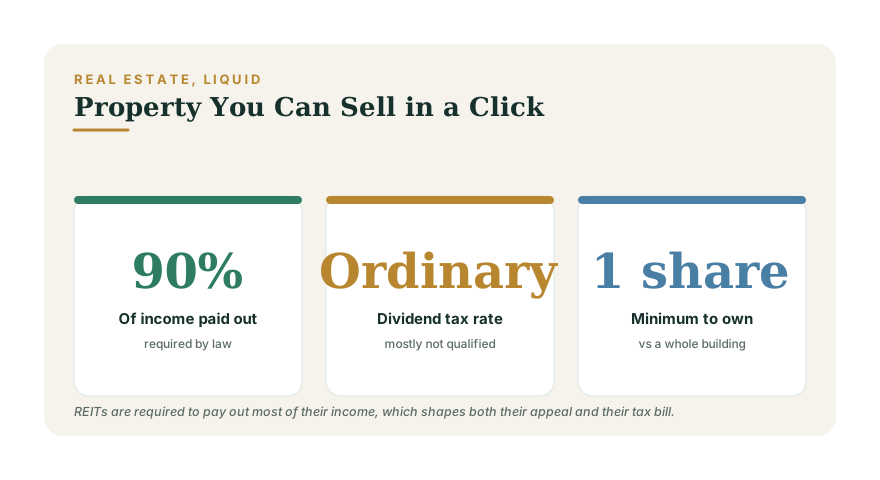
A REIT is a company that owns or finances income-producing real estate — apartment complexes, office towers, warehouses, data centers, cell towers, hospitals, shopping centers. To qualify as a REIT and skip corporate income tax, the company must pay out at least 90 percent of its taxable income to shareholders as dividends. That rule is the key to understanding everything about REITs: they are structurally built to throw off income rather than reinvest it.
Equity REITs versus mortgage REITs
There are two very different animals here, and beginners often buy the wrong one chasing yield:
- Equity REITs own physical buildings and earn money from rent. This is what most people mean by REIT, and it is the more straightforward, durable version.
- Mortgage REITs (mREITs) do not own buildings — they own real estate loans and earn the spread between their borrowing cost and the interest they collect. They often advertise eye-popping yields, but they are highly sensitive to interest rates and can cut dividends or lose value sharply. Treat a double-digit mREIT yield with the same suspicion you would any high-yield dividend trap.
The tax catch most people miss
Because a REIT does not pay corporate tax, its dividends do not get the favorable "qualified dividend" tax treatment that most stock dividends enjoy. The bulk of REIT dividends are taxed as ordinary income — at your regular tax rate, which for many people is higher than the qualified-dividend rate. This single fact drives the most important practical rule about REITs:
- Hold REITs in a tax-advantaged account — a Roth IRA, traditional IRA, or 401(k) — whenever possible, so those ordinary-income distributions are sheltered.
- Holding a REIT in a regular taxable brokerage account means handing a meaningful slice of that generous dividend straight to the IRS every year.
The role they play in a portfolio
REITs add a slice of an asset class — real estate — that does not move in perfect lockstep with the broad stock market, which can smooth returns over time. For most investors a modest allocation, often in the single digits as a percentage of the portfolio, is plenty. You may already own some without realizing it, since broad total-market index funds include publicly traded REITs. There is rarely a need to make real estate a huge concentrated bet.
The warning: public versus non-traded REITs
Stick to publicly traded REITs that trade on a stock exchange — they are liquid, transparent, and cheap to buy through any brokerage or a low-cost REIT index fund. Be deeply skeptical of non-traded REITs pitched by advisors and salespeople. They often carry heavy upfront commissions, high ongoing fees, opaque valuations, and severe restrictions on getting your money back out. The high fees alone tend to gut the returns that make real estate attractive in the first place.
Used well, a publicly traded REIT fund inside a retirement account is a clean way to add real estate to a diversified plan. Decide how it fits your overall mix before you buy — start with Asset Allocation by Age: What the Research Actually Says.