Choosing between a newly built home and an existing one is not just a matter of taste. The two paths have genuinely different cost structures, negotiation dynamics, and hidden surprises. The sticker prices can look similar while the all-in cost diverges sharply. Here is what actually separates them financially.
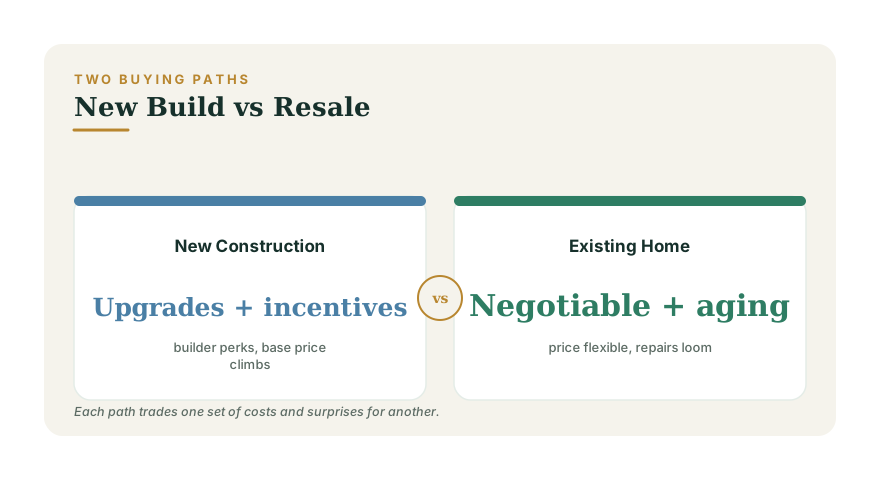
The base price is not the real price (new construction)
The advertised price on a new build is usually the base model — a relatively bare version. The home you actually want, with the better flooring, the finished options, the upgraded kitchen, and a usable lot, can cost meaningfully more once you walk the design center. Builders make real margin on these upgrades, and it is easy to drift well past your budget one selection at a time. Treat the design center like a menu with prices: decide in advance which upgrades are worth it (often the ones hard to change later) and which you can do yourself cheaper down the road.
Builder incentives and the financing catch
Builders often dangle incentives: covering closing costs, free upgrades, or rate buy-downs. These can be genuinely valuable, but they usually come with a condition — you must use the builder's preferred lender and sometimes their title company. That lender is not automatically the cheapest, so compare their rate and fees against outside lenders even after counting the incentive. Sometimes the incentive truly wins; sometimes a better rate elsewhere beats it. Get your own pre-approval so you can tell.
Warranties and condition
A clear advantage of new construction is the builder's warranty, which typically covers workmanship for a year and major structural elements for longer, plus everything is new and under manufacturer warranties. Your near-term repair budget is low. An existing home offers no such cushion — you inherit the age of the roof, HVAC, water heater, and appliances, any of which can fail and cost thousands. That is exactly why a thorough inspection matters more on a resale, and why your reserve fund should be larger.
Negotiation works differently
On an existing home, the price itself is usually negotiable, and inspection findings give you leverage to ask for repairs or credits. On new construction, builders are often reluctant to cut the base price — partly to protect the appraised value of the whole community — but they will frequently negotiate on incentives, upgrades, and closing costs instead. So in both cases there is room to bargain; you just pull different levers. Knowing which lever a seller can move is half the negotiation.
The hidden costs of each
- New construction: landscaping, fencing, window coverings, and a finished backyard are often not included and can add up fast. Homes in new developments may also carry HOA dues or special assessments. And buying in an unfinished community means living amid construction for a while.
- Existing home: deferred maintenance, older systems near the end of their life, dated electrical or plumbing, and immediate updates you want to make. The price may be lower, but the first year can be expensive.
Neither is automatically cheaper. New construction front-loads upgrade and finishing costs but minimizes near-term repairs; an existing home is often more negotiable up front but can demand a bigger maintenance reserve.
Compare the all-in number, not the sticker
The right comparison is total cost of ownership, not the listing price. For a new build, add realistic upgrades, finishing, and any HOA. For a resale, add likely repairs and updates over your first few years. Our guide to the true cost of homeownership walks through every ongoing expense people forget, and the first-time homebuyer roadmap puts the decision in sequence. When you have an honest all-in figure for each option, test it against your budget with the Home Affordability Calculator before you commit.