Ask a new homeowner what their home costs, and most will tell you the mortgage payment. Ask them a year later, after the first surprise repair and the first property-tax reassessment, and the answer gets longer. The mortgage is the headline, but it is far from the whole bill. The ongoing costs of ownership — the ones renters rarely have to think about — routinely add several hundred dollars a month, and underestimating them is the most common reason buying a home feels tighter than expected.
Property taxes never stop
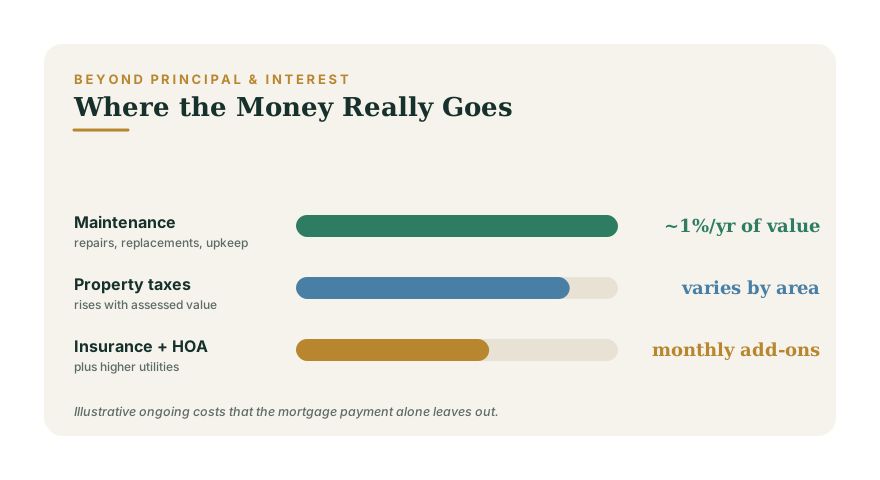
Property taxes are a permanent cost of ownership, charged as a percentage of your home's assessed value and varying widely by location — from well under 1% to over 2% of value per year depending on where you live. On a $400,000 home, even a 1.2% rate is about $4,800 a year, or $400 a month. They are usually escrowed into your mortgage payment, which hides them in plain sight. And they tend to rise over time as assessments climb, so this is not a fixed cost you can ignore after closing.
Homeowners insurance is mandatory and climbing
Your lender requires homeowners insurance, and it protects you too. Premiums have risen sharply in many regions, especially in areas exposed to wildfire, flood, or storm risk. Flood coverage is typically separate and not included in a standard policy. You can manage the premium partly through your deductible choice — a higher deductible lowers your monthly cost but raises your out-of-pocket when you file a claim, a trade-off covered in how to choose a home insurance deductible.
The 1%-a-year maintenance rule
This is the cost renters underestimate most, because as a renter the landlord absorbs it. A widely used planning rule of thumb: budget about 1% of your home's value per year for maintenance and repairs. On a $400,000 home, that is roughly $4,000 a year, or about $330 a month set aside.
Some years you spend nothing; other years a roof, an HVAC system, or a water heater fails and you spend a great deal at once. That lumpiness is exactly why you save steadily into a dedicated repair fund rather than hoping nothing breaks. Treat it like a sinking fund: a small automatic monthly transfer so the money is there when the furnace dies in January. Older or larger homes generally run higher than 1%; newer ones may run lower for a while, then catch up.
HOA dues and special assessments
If your home is in a community with a homeowners association — common for condos, townhomes, and many newer developments — you pay HOA dues, often monthly. These can range from modest to several hundred dollars and cover shared amenities, common-area upkeep, and sometimes part of your insurance. Watch for two things: dues that rise over time, and special assessments — one-time charges the HOA levies when reserves fall short of a big repair like a new roof or elevator. Always review an association's financial health before buying into it.
Utilities are usually higher than you remember
Owning typically means a bigger space than you rented, and you now pay for everything: water, sewer, trash, gas, electricity, and any internet or services that may have been bundled into rent before. Heating and cooling a whole house costs more than a one-bedroom apartment, and you cannot call a landlord when something is inefficient. Budget for a meaningful step up from your renting days.
Why renters underestimate the gap
As a renter, one predictable check covered nearly everything — and repairs, taxes, and most insurance were someone else's problem. Ownership unbundles all of that and hands it to you. This is precisely why a mortgage payment equal to your old rent is not a like-for-like comparison; the all-in cost of owning is higher even when the loan payment looks similar. That full comparison is the heart of rent vs buy: the real math, and these ongoing costs are the reason you should set your purchase budget conservatively when deciding how much house you can afford.
Budget for the whole picture
None of this means buying is a bad deal — it means the true cost is the mortgage plus taxes, insurance, maintenance, HOA, and utilities, and a sound budget accounts for all of them before you buy. Add roughly 30% to 50% on top of principal and interest as a rough planning cushion, then refine it with real local numbers. The Buy vs Rent Calculator lets you model these ongoing costs side by side with renting, and the Home Affordability Calculator folds taxes, insurance, and HOA into the monthly figure so the payment you plan for is the one you will actually face.