It is easy to fixate on the sale price when selling a home, but that number is not what you walk away with. Several costs come out before you get paid, and a tax rule can either protect your gain or cost you a chunk of it. Knowing the full math ahead of time lets you set expectations, price correctly, and avoid an unpleasant surprise at the closing table.
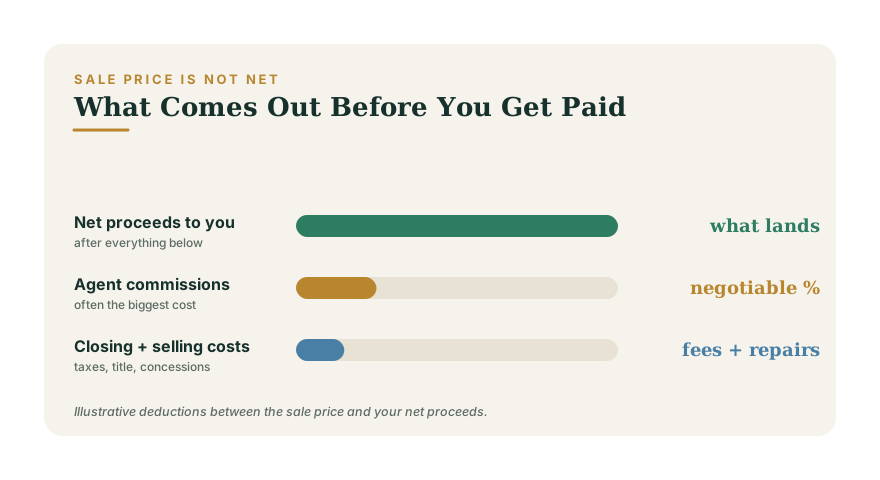
Agent commissions: usually the biggest cost
The largest line item is typically the real estate commission. Historically a seller paid a combined commission split between their agent and the buyer's agent, often in the range of 5-6% of the sale price — though commissions are negotiable and recent industry changes have made who pays the buyer's agent more open to negotiation. On a substantial sale, even a percentage point is real money, so it is worth discussing the rate and the services included rather than accepting a default. If you sell without an agent, you save the commission but take on the marketing, paperwork, and negotiation yourself.
Closing and selling costs
Beyond commission, sellers usually cover a cluster of smaller costs:
- Title and settlement fees, transfer taxes, and recording fees — these vary widely by state and locality.
- Prorated property taxes — you pay your share up to the closing date.
- Seller concessions — buyers sometimes negotiate for you to cover part of their closing costs or fund repairs found during inspection.
- Prep and repairs — staging, paint, fixes that come up in the inspection, and any outstanding mortgage payoff.
For the buyer's side of the same table, see closing costs explained; many of the categories overlap.
The capital gains exclusion: a major break
Here is the rule that saves most home sellers from a tax bill. If the home was your primary residence for at least two of the last five years, you can generally exclude up to $250,000 of gain from federal taxes if single, or up to $500,000 if married filing jointly. Gain is roughly your sale price minus selling costs minus your cost basis — what you paid plus qualifying improvements over the years.
For most owners, this exclusion wipes out the tax entirely. It matters mainly if your gain is very large, if the property was a rental or second home (which does not qualify the same way), or if you have not lived there long enough. Keep records of major improvements, since they raise your basis and shrink any taxable gain. The mechanics of gains and basis are covered in our capital gains tax guide.
Timing the sale
Timing affects both taxes and proceeds. Selling before you hit the two-year residence mark can forfeit the exclusion (with limited exceptions for job moves, health, or unforeseen events that may allow a partial break). Local market seasonality can also influence how fast you sell and at what price. And if you are buying a new home at the same time, the sequence — sell first, buy first, or bridge between them — has cash-flow and risk consequences worth planning deliberately.
Doing the net proceeds math
To estimate what you actually keep, start from a realistic sale price and subtract, in order: the mortgage payoff, agent commissions, closing and transfer costs, any concessions and repairs, and prorated taxes. What remains is your net proceeds — the real number for your next move. Run this calculation early, because it determines your down payment on the next home and whether the move pencils out at all.
If your next step is buying again, line up the proceeds with what you can afford using the Home Affordability Calculator, and if you are weighing a brand-new build against a resale, compare them in new construction vs an existing home. The headline price is only the start of the story; the net is what funds your future.