When you own a stock or fund that pays dividends, you face a small recurring choice: take the cash, or use it to buy more shares. A dividend reinvestment plan, or DRIP, automates the second option. Instead of a few dollars landing in your account each quarter, that money is immediately and automatically used to purchase more shares of the same investment, usually with no commission and often in fractional amounts.
It is one of the quietest, most effective wealth-building habits available, and you can usually switch it on with a single checkbox in your brokerage settings.
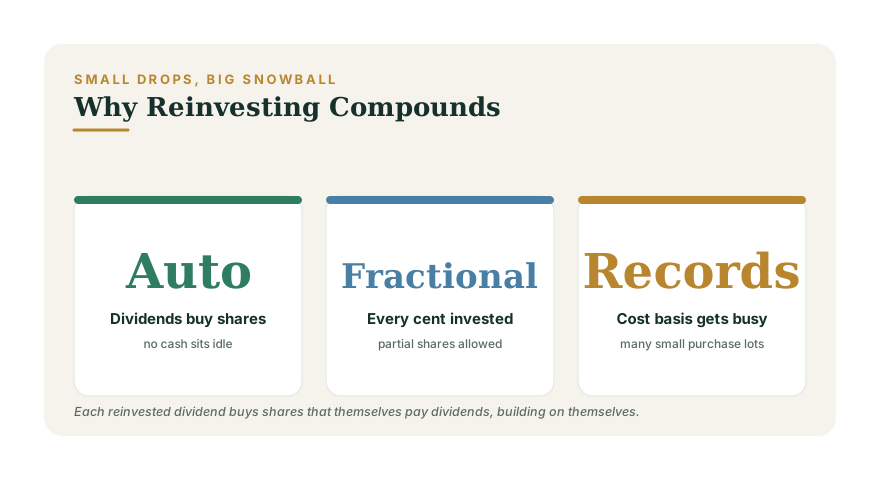
How automatic reinvestment compounds
The power of a DRIP is the snowball. Every dividend you reinvest buys more shares. Those new shares then pay their own dividends next quarter, which buy still more shares, which pay still more dividends. Your share count grows even if you never add another dollar of your own — this is compound growth applied to stock ownership.
The effect is easy to underestimate over short periods and easy to be amazed by over long ones. A meaningful portion of the stock market's total long-run return has historically come from dividends being reinvested rather than spent. Reinvesting also enforces a useful discipline: the money never sits as idle cash tempting you to spend it, and because purchases happen automatically every quarter, you are dollar-cost averaging in — buying a few more shares when prices are low and fewer when they are high, without having to think about timing.
The cost-basis bookkeeping catch
There is one practical wrinkle, and it matters in taxable accounts: reinvested dividends create a tax-record headache.
First, the dividends are still taxable in the year you receive them, even though you never touched the cash — you will owe tax on them as if they were paid out. Second, every single reinvestment is a new purchase at a new price, which means a new cost-basis lot. Reinvest quarterly for a decade and you create dozens of tiny tax lots, each with its own purchase date and price.
Why does this matter? When you eventually sell, your taxable gain is the sale price minus your cost basis. Each reinvested dividend already added to your basis, so forgetting them means you would overstate your gain and overpay tax. The good news: brokerages now track this automatically for most investments. But if you ever transfer shares between firms, hold older positions, or do your own records, the lots can get messy. A refresher on the mechanics is in Understanding Your Cost Basis. This complexity is one more reason DRIPs are cleanest inside tax-sheltered accounts like an IRA, where none of it is taxable and the lots never matter.
When to take dividends as cash instead
Automatic reinvestment is an excellent default, but it is not always the right call. Consider taking dividends as cash when:
- You are retired and living off the income. The whole point of a dividend-paying portfolio in retirement is often to spend the dividends. Funneling them to cash is exactly how you create a retirement paycheck.
- You want to rebalance. Pooling dividends as cash lets you direct new money toward whatever part of your portfolio has fallen below target, rather than mechanically buying more of what already pays the dividend. This supports thoughtful portfolio rebalancing.
- You are over-concentrated. If a single stock has grown into too large a slice of your holdings, reinvesting its dividends only makes the concentration worse. Taking cash and deploying it elsewhere is healthier.
- You would rather chase total return. Whether a company pays a dividend or reinvests in itself, what matters is total return, not the dividend itself — a point worth absorbing in Dividend Investing vs Total Return.
The bottom line
For most people in the accumulation phase, turning on automatic dividend reinvestment is a simple, powerful default — it keeps your money working and removes a recurring decision. Just be aware of the cost-basis bookkeeping in taxable accounts, and switch to cash dividends when you need income or want to steer new money deliberately. To see how reinvested dividends change your long-term trajectory, run your numbers through the Lifetime Wealth projector.