Say you inherit 50,000 dollars, or finally clear your debt and have a pile of cash to invest. The question lands immediately: do you invest it all today, or feed it in slowly over months? This is the lump-sum versus dollar-cost-averaging debate, and it is one of the few investing questions with a genuinely clear answer from the data — plus an important asterisk about human behavior.
What dollar-cost averaging actually means
Dollar-cost averaging (DCA) means investing a fixed amount on a regular schedule regardless of price. There are really two versions, and people confuse them constantly:
- Investing money as you earn it — 500 dollars from every paycheck into an index fund. This is not really a strategy choice; it is just how investing works when you do not have a lump sum. It is the right default for almost everyone.
- Deliberately spreading out a lump sum — taking 50,000 dollars you already have and investing it over, say, 12 months instead of all at once. This is the version the debate is actually about.
The research: lump sum usually wins
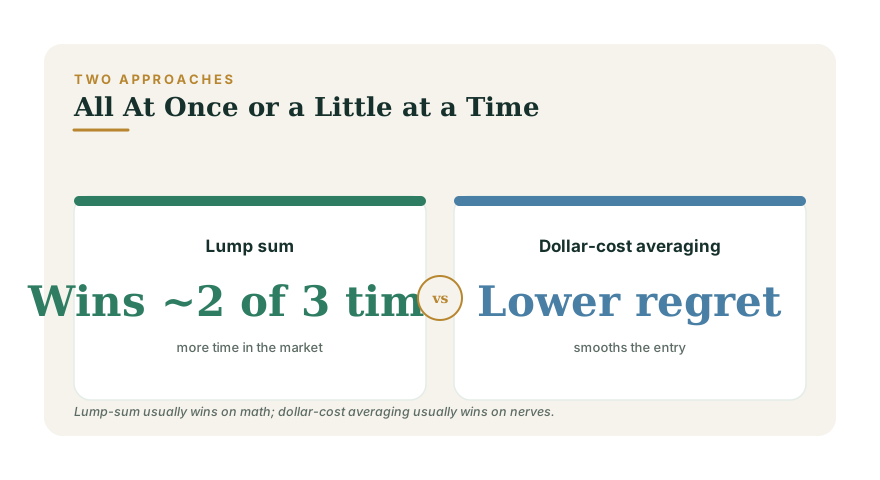
Multiple large studies have looked at this, and the finding is consistent: investing a lump sum immediately beats spreading it out roughly two-thirds of the time, and on average produces a meaningfully larger ending balance. The reason is simple and hard to argue with — markets rise more often than they fall, so the longer your money is invested, the more time it has to compound. Holding cash on the sidelines while you drip it in means a chunk of your money is earning little while the market generally climbs.
The math is just an extension of why trying to time the market tends to fail: time in the market beats waiting for a better moment, and DCA-ing a lump sum is a soft form of waiting.
Why dollar-cost averaging still makes sense
So why would anyone choose the strategy that loses two-thirds of the time? Because investing is not only a math problem; it is an emotional one. Consider the one-third of the time DCA wins — those are the cases where the market drops right after you would have invested the lump sum. If you put 50,000 dollars in on Monday and the market falls 20 percent by Friday, the spreadsheet says you will likely recover, but the human says "I just lost 10,000 dollars and it is my fault." That regret can drive people to panic-sell, which is far more destructive than the modest expected cost of DCA.
Dollar-cost averaging is, in effect, insurance against your own worst behavior and against terrible timing. You pay a small expected cost (slightly lower average returns) to buy a smoother ride and a lower chance of a gut-wrenching immediate loss.
How to choose
A practical way to decide:
- If you can invest the lump sum and genuinely sleep at night, do it. The odds favor you.
- If a big immediate drop would make you abandon the plan, spread it over a defined window — typically 6 to 12 months — and then stop. Endless DCA just means perpetually under-invested.
- For ongoing contributions from income, automate them and ignore the debate entirely. That is DCA by nature, and it is the single best habit in investing.
The worst outcome is not picking the slightly suboptimal strategy. It is freezing, holding cash for years out of fear, and missing the growth entirely. Pick a method you can stick to and start. If you have not set up the automatic plumbing yet, begin with How to Start Investing: A Step-by-Step Guide for Beginners.