For decades, the entire job was to accumulate — pile money into accounts and watch it grow. Retirement reverses the whole challenge. Now you have a lump sum and no paycheck, and the task is to convert that nest egg into reliable monthly income that lasts as long as you do. This is a genuinely different skill, and doing it well can add years to how long your money lasts.
Start with your guaranteed income floor
Before touching the portfolio, map the income that arrives no matter what the market does: Social Security, any pension, and any annuity. This is your income floor, and it covers part of your spending automatically. Your portfolio only needs to fill the gap between that floor and your total spending. When you claim Social Security shapes that floor enormously — delaying it raises the guaranteed amount for life — so it is worth getting right; see Social Security Claiming Strategies.
The bucket strategy: organize money by when you'll need it
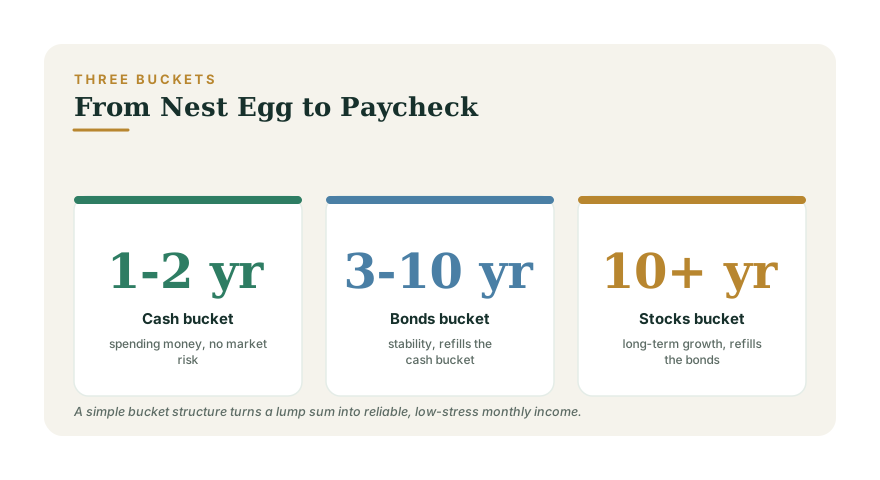
One of the most intuitive frameworks is the bucket strategy, which sorts your portfolio by time horizon:
- Bucket 1 — Cash (1–2 years of spending). Held in savings, money market, or short CDs. This is the money you actually live on, immune to market swings.
- Bucket 2 — Bonds (3–10 years). More stable and income-producing; its job is to refill Bucket 1 as you spend it down.
- Bucket 3 — Stocks (10+ years). Your long-term growth engine, which over time refills Bucket 2.
The beauty is psychological as much as financial: when stocks crash, you spend from cash and bonds and simply do not sell stocks at a loss — the direct defense against sequence-of-returns risk. You refill the cash bucket from stocks in good years, not bad ones.
Withdrawal sequencing: which account to tap first
Most retirees hold three tax types of accounts, and the order you draw from them changes your lifetime tax bill significantly:
- Taxable brokerage accounts, where you owe tax only on gains and dividends.
- Tax-deferred accounts (traditional 401(k)/IRA), where every withdrawal is taxed as ordinary income.
- Tax-free Roth accounts, where qualified withdrawals are not taxed at all.
A common, sensible default is to spend taxable first, tax-deferred next, and Roth last, which lets the tax-free Roth keep compounding the longest. But the smartest plans are more nuanced: in low-income early-retirement years, it can pay to draw from (or convert) tax-deferred accounts to "fill up" low brackets before required minimum distributions force large taxable withdrawals later. Blending account types each year to control your tax bracket usually beats draining one account at a time.
Pick a withdrawal rate and stay flexible
How much can you pull out? The well-known starting point is roughly 4% of your portfolio in year one, adjusted for inflation after — the logic and the criticisms are in The 4% Rule. The modern refinement is to stay flexible: give yourself a small raise after great market years and trim discretionary spending after bad ones. This "guardrails" approach lets you spend a bit more on average while sharply lowering the risk of running dry.
Don't forget RMDs
Eventually the IRS forces your hand. Starting in your seventies, required minimum distributions compel you to withdraw a set amount from tax-deferred accounts each year whether you need it or not, with steep penalties for missing them. Smart sequencing in your earlier retirement years — drawing down or converting tax-deferred balances while your income is low — can shrink these forced withdrawals and the tax shock that comes with them.
Build your paycheck on paper first
Turning savings into income is a system, not a one-time decision: a guaranteed floor, a bucket structure to weather downturns, a tax-aware withdrawal order, a flexible spending rate, and a plan for RMDs. Sketch yours before you retire, then revisit it yearly. Model the moving parts with the Retirement Planner and confirm you are ready with the Retirement Readiness assessment, so your first month without a paycheck feels like a transition, not a leap.