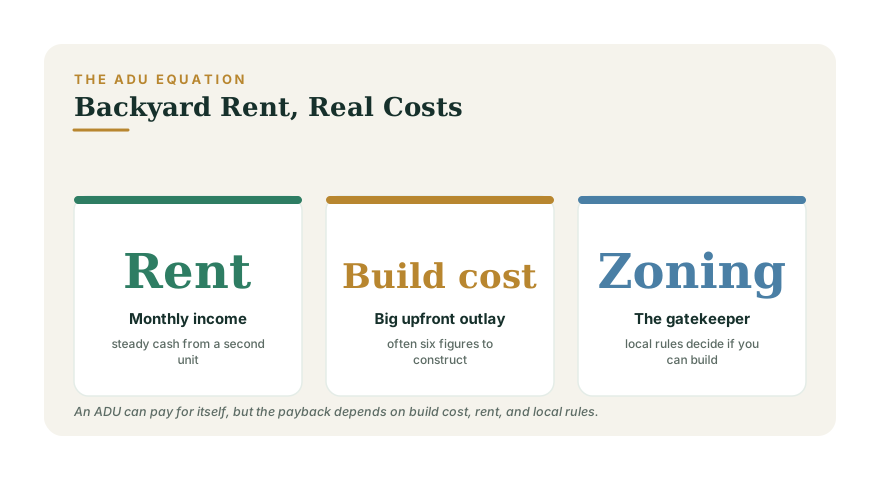
An accessory dwelling unit, or ADU, is a smaller, self-contained home on the same lot as your main house — a converted garage, a basement apartment, or a freestanding cottage in the backyard. As many cities loosen zoning to ease housing shortages, ADUs have become a popular way to generate rental income, house family members, and add value to a property. Done well, an ADU can pay for itself and then some. Done without planning, it can become an expensive, slow-to-permit money pit.
Why owners build ADUs
The appeal is straightforward. An ADU produces rental income from land you already own, without buying a separate property. It can house aging parents or adult children while keeping some independence, and it often raises the resale value of the whole property. For owners who already live on-site, renting an ADU is a gentler form of the strategy in House Hacking, Explained — you keep your home and add an income stream in the backyard.
Zoning is the first gate
Before anything else, find out whether your locality even allows an ADU, and under what conditions. Rules vary enormously by city and state: some now permit ADUs by right on most residential lots, while others impose size caps, owner-occupancy requirements, off-street parking rules, or setback limits that make a project impractical. Homeowner association rules can add another layer. Never assume you can build until you have confirmed it with your local planning department, because the zoning answer determines whether the rest of the math even matters.
The cost side is bigger than people expect
Building an ADU is a construction project, and costs run high. Converting an existing garage is cheaper than a new detached unit, but a ground-up ADU can easily reach into six figures once you account for foundation, utilities, permits, and finishes. Financing usually means tapping home equity through a cash-out refinance or a HELOC, or a renovation loan. Factor in the borrowing cost, not just the build cost, when you estimate returns.
Doing the return math
The honest question is how many years of rent it takes to recover your investment, and whether that beats other uses of the money. Estimate your all-in cost, subtract the added property value the ADU creates, and divide the net by your expected annual rent after expenses. If a $150,000 ADU adds $80,000 of home value and nets $18,000 a year in rent, the remaining $70,000 pays back in under four years — attractive. If it adds little value and rents thin, the payback stretches out. The general framework for evaluating rental economics applies here and is covered in Is a Rental Property Worth It?. Compare the return against simply investing the money using the Opportunity Cost Calculator.
The tax angle cuts both ways
Renting an ADU makes it a business activity with tax consequences. On the plus side, you can deduct a proportional share of expenses and depreciate the ADU. On the minus side, the rent is taxable income, and depreciation you claim is recaptured when you sell. If the ADU is attached to your primary home, part of your property may lose some of the personal-residence capital-gains exclusion when you sell, since the rented portion is treated as investment property. The construction itself, however, adds to your cost basis and reduces your eventual taxable gain — the mechanics are in Home Improvements and Cost Basis. The IRS explains how residential rental income and expenses are reported in its rental income and expenses guidance.
Being a landlord in your backyard
An ADU tenant lives feet from you, which is both convenient and complicated. You handle repairs, tenant screening, lease terms, and the reality that a difficult tenant is now your neighbor. Local rules on short-term rentals may push you toward a long-term lease. Budget for vacancies, maintenance, and the time cost of management, and hold a reserve for the second unit's upkeep just as you would for your own home.
Build it as an investment, not an impulse
An ADU can be one of the best returns available to a homeowner — income, added value, and flexible space on land you already own — but only after you clear zoning, run realistic build-cost and rent numbers, and account for the tax treatment. Confirm the rules locally, get firm construction bids, and treat it like the six-figure investment it is. Run the payback with the Opportunity Cost Calculator and check your financing capacity with the Home Affordability Calculator, then map the project at the planning hub and confirm your footing with the Financial Resilience assessment.