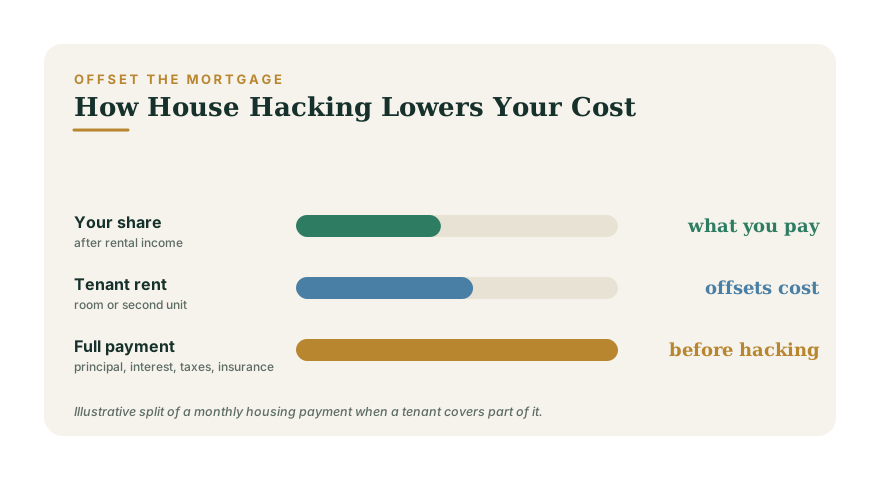
House hacking is a plain idea with an unfortunate name: you buy a home, live in part of it, and rent out the rest so your tenants help cover the mortgage. Done well, it can cut your housing cost — often your largest expense — dramatically, sometimes to nearly zero, while you build equity and learn to be a landlord on training wheels.
It is one of the few strategies that works especially well for younger buyers, because it can make a first home affordable that otherwise would not be, and it turns the roof over your head from a pure cost into a partial investment.
The two common forms
House hacking comes in a few flavors, but two cover most cases:
- Renting a room (or rooms). You buy a single-family house and rent out spare bedrooms to roommates or tenants. This is the cheapest way in, since you may not need a special property, but you trade privacy — you share the kitchen and living space.
- A small multi-unit property. You buy a duplex, triplex, or fourplex, live in one unit, and rent the others. You get your own private space, and a property with more income-producing units. Owner-occupied multi-unit homes up to four units are often eligible for the same low-down-payment, owner-occupant mortgages as a regular house — a major advantage over buying a pure rental.
Why the financing is the secret weapon
The biggest reason house hacking works is the mortgage. When you live in the property, lenders treat it as a primary residence, which usually means a smaller down payment and a lower interest rate than an investment-property loan. Buy a duplex as a pure rental and you might need 20–25% down; buy the same duplex to live in, and depending on the loan program you may put down far less. Lenders can sometimes even count a portion of the expected rental income toward qualifying you. Before you shop, run the numbers through our home affordability calculator so you know what payment the rental income actually unlocks.
The tax wrinkles people miss
Renting out part of your home changes your taxes in ways that are mostly good but easy to mishandle. When you rent a portion of your home, you generally must report the rental income — but you can also deduct the rental share of expenses, including a portion of mortgage interest, property taxes, insurance, utilities, and repairs, typically based on the square footage or number of rooms rented.
You can also take depreciation on the rented portion, which lowers your taxable rental income. The catch worth knowing in advance: depreciation can be "recaptured" and taxed when you sell, and renting part of your home can complicate the home-sale capital-gains exclusion on that portion. None of this is a reason to avoid house hacking; it is a reason to keep good records and talk to a tax preparer. For the broader picture of how a home sale is taxed, see our capital gains guide.
The insurance wrinkle
A standard homeowners policy assumes you live in the home and do not run a rental out of it. The moment you take on tenants, you may need to adjust your coverage — often a landlord or "dwelling fire" endorsement, plus enough liability protection for having renters on the property. Call your insurer and tell them honestly what you are doing. A policy that does not match reality can leave a claim denied at the worst possible time, a risk explored in how insurers deny claims. Many house hackers also carry an umbrella policy for extra liability cushion.
The real trade-off
House hacking is not free money; you are taking on the duties of a landlord while sharing your home or your building with tenants. Screening, repairs, and the occasional awkward conversation all come with the territory — the same responsibilities covered in Becoming a Landlord. The payoff is that your housing cost shrinks for a few years, often during the exact stretch of life when cash is tightest, and you come out the other side with equity, landlord experience, and a much faster path to your next goal.
Is it worth it for you?
If you value privacy above all and can comfortably afford your housing on your own, house hacking may not be worth the hassle. But if your rent or mortgage is squeezing every other goal, having tenants cover part of it can free up enormous savings power. Model the numbers — your payment, realistic rent, and the costs — before deciding, and check it against the full picture of homeownership in the true cost of owning a home.