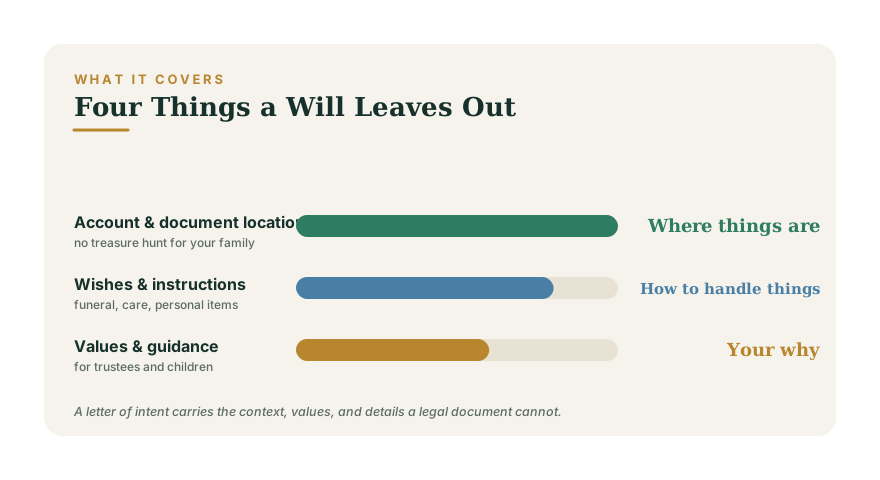
A will is a powerful document, but it is a narrow one. It says who gets what and who is in charge, and then it stops. It cannot tell your family where you bank, why you structured a trust the way you did, what you hope your children do with their inheritance, or how you want to be remembered. A letter of intent fills that silence — a plain-language companion to your legal documents that carries the context a court-bound will cannot.
What a letter of intent is — and is not
A letter of intent (sometimes called a letter of instruction) is an informal, non-binding document you write to the people who will manage your affairs and inherit from you — your executor, your trustee, your family. It is not signed before witnesses, it is not filed with a court, and it does not override your will. If it ever conflicted with a legal document, the legal document wins. That informality is its strength: because it carries no legal weight, you can write it in your own voice, update it whenever you like, and say things a formal document never could.
Think of your will as the law and your letter as the guide. One distributes the assets; the other explains how to actually do the job and why you made the choices you did.
Account and document locations: end the treasure hunt
The most immediately practical part of a letter of intent is a map of your financial life. When someone dies, the family often spends weeks playing detective — hunting for accounts, passwords, insurance policies, and the will itself. You can spare them that. List:
- Financial accounts — banks, brokerages, retirement accounts, and how to access them.
- Insurance policies — life, disability, and long-term care, with policy numbers and contacts.
- Debts and recurring bills — mortgages, loans, and subscriptions to cancel.
- Key documents — where the will, trust, deeds, and titles physically live.
- Professional contacts — your attorney, accountant, and financial advisor.
- Digital life — guidance on accessing important online accounts and your digital estate.
This overlaps with the broader discipline of organizing your important documents; the letter is where you point to all of it in one place. For security, keep sensitive passwords in a dedicated password manager and simply tell your executor how to reach it, rather than writing credentials into a document that may circulate.
Wishes and instructions: the personal logistics
A will is a clumsy place for personal wishes, and many never make it into one at all. The letter is where they belong:
- Funeral and final arrangements — burial or cremation, the kind of service you want, any religious observances.
- Personal property — who you would like to receive specific sentimental items the will does not itemize.
- Care instructions — for dependents, aging parents, or pets that rely on you.
- People to notify — friends and contacts your family might not know.
None of this is legally binding, but a grieving family is overwhelmingly likely to honor clearly stated wishes — and grateful to be told what you wanted instead of guessing.
Values and guidance: the part that lasts
This is where a letter of intent becomes something more than logistics. You can explain the why behind your decisions: why one child received more, why a trust releases money in stages, what you hope an inheritance is used for. When you have set up a trust for young children with staggered distributions, the letter is where you tell the trustee how to exercise discretion — what you would approve, what you would not, and the spirit behind the rules. A document that says "for health, education, maintenance, and support" reads very differently when accompanied by a parent's note explaining what those words mean to them.
Many people also use the letter to pass on something money cannot: values, life lessons, and words for the people they love. This is the closest most of us come to writing an ethical will — a tradition of leaving behind not just assets but the beliefs and hopes you want to outlive you.
How to write one
Keep it simple and current. Write in plain language, organize it with clear headings, date it, and store it where your executor can find it alongside your will. Revisit it once a year or whenever life changes — a new account, a new child, a move — and replace the old version. Because it is informal, updating it is as easy as opening a document, which is exactly why it stays useful when rigid legal documents go stale.
A letter of intent costs nothing and asks for no lawyer, yet it spares your family confusion at the hardest possible moment and lets your voice guide them when you no longer can. To see how it fits alongside your will, trusts, and beneficiary forms, run the Estate Readiness assessment and fill the gaps it surfaces.