A generation ago, a person's records lived in a filing cabinet and a shoebox of photos. Today they live behind dozens of passwords. If you died this week, could anyone reach your email, your photos, your bank logins, or — if you own any — your cryptocurrency? For most people the honest answer is no, and that gap is what digital estate planning closes. It is the part of estate planning that traditional wills were never designed to handle.
What counts as a digital asset
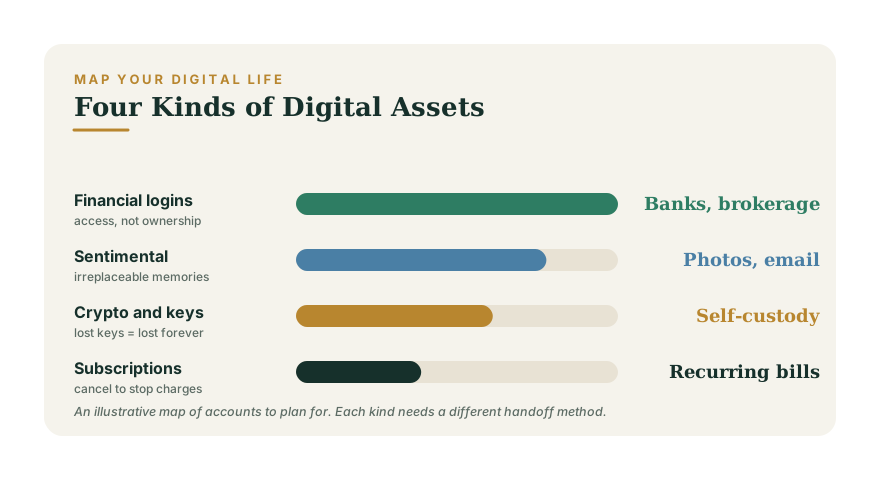
Your digital estate is broader than you might think. It includes financial logins (banks, brokerages, payment apps), sentimental accounts (email, photos, cloud storage, social media), things of real value (cryptocurrency, domain names, online businesses, loyalty points), and recurring subscriptions that keep charging a card long after you are gone. Some of these have monetary value; others are irreplaceable memories. All of them can become inaccessible the moment no one knows the password.
The access problem nobody plans for
Here is the trap: simply writing your passwords into your will is a bad idea. A will becomes a public court document during probate, so anything in it is exposed. And passwords change constantly, making a static list stale within months. Worse, accessing someone else's accounts — even a deceased loved one's — can run afoul of terms of service and computer-access laws if you have no legal authority to do so. Good planning grants lawful access, not just a sticky note of passwords.
Start with a password manager
A reputable password manager is the cornerstone of a modern digital estate. It stores all your logins behind a single master password and stays current automatically. The key feature for estate purposes is an emergency access or trusted-contact function: you designate someone who can request access to your vault, and after a waiting period you set, they receive it. This hands over a living, up-to-date set of credentials without ever writing them into a will. Store the master password and recovery instructions somewhere genuinely secure — a sealed letter in a safe, or with your estate attorney — not in an email draft.
Use the platforms' built-in legacy tools
Major services now offer their own succession features, and they are worth setting up:
- Legacy Contact on Apple and Legacy Contact on Facebook let you pre-name someone to manage or memorialize your account.
- Inactive Account Manager on Google can automatically share or delete your data after a chosen period of inactivity.
- Many platforms have a process for a verified next of kin to request memorialization or closure.
These take minutes to configure and spare your family from begging customer support for access during grief.
Crypto: where planning is not optional
Cryptocurrency held in self-custody is the most unforgiving digital asset of all. If you hold the private keys or seed phrase yourself, then those keys are the money — lose them, and the coins are gone permanently, with no bank to call and no password reset. A meaningful amount of the world's crypto is already lost this way.
Plan for it deliberately: ensure a trusted person can locate your seed phrase and knows how to use a hardware wallet, ideally through written instructions stored securely (some people split a seed phrase across two safe locations). Crypto on an exchange behaves more like a normal account and may pass to a named beneficiary or through the estate, but it still requires your heirs to know it exists. Either way, settling it also has tax consequences — see Crypto Taxes Explained.
Give your executor legal authority
Most states have adopted a version of the Revised Uniform Fiduciary Access to Digital Assets Act (RUFADAA), which lets you authorize your executor or agent to access your digital assets — but only if your estate documents say so. Ask your attorney to include digital-asset authority in your will and power of attorney. Pair that with up-to-date beneficiary designations for the financial accounts that pass outside your will, and your core estate plan finally covers your online life too.
A simple starting checklist
- Set up a password manager and name an emergency or trusted contact.
- Configure legacy/inactive-account tools on your major platforms.
- Write secure, clear instructions for any crypto self-custody.
- List recurring subscriptions so they can be canceled.
- Have your attorney add digital-asset authority to your documents.
Locking down your accounts also reduces fraud risk for survivors; pairing this with a credit freeze closes a common identity-theft gap. When you are ready to fold this into the wider plan, the Estate Readiness assessment will flag what is still missing.