For a stretch of recent years, cash finally paid well. Savings accounts, money market funds, and Treasury bills all rode elevated short-term rates, and holding cash felt almost rewarding. But that yield is a direct function of the Federal Reserve's policy rate — and when the Fed begins cutting, the generous rates on variable accounts fall with it, often within weeks. If you have meaningful cash, the start of a rate-cutting cycle is the moment to be deliberate about where it sits.
The goal is not to panic or to lock up money you might need. It is to protect the return on the cash you can afford to commit, before the falling-rate environment quietly erodes it.
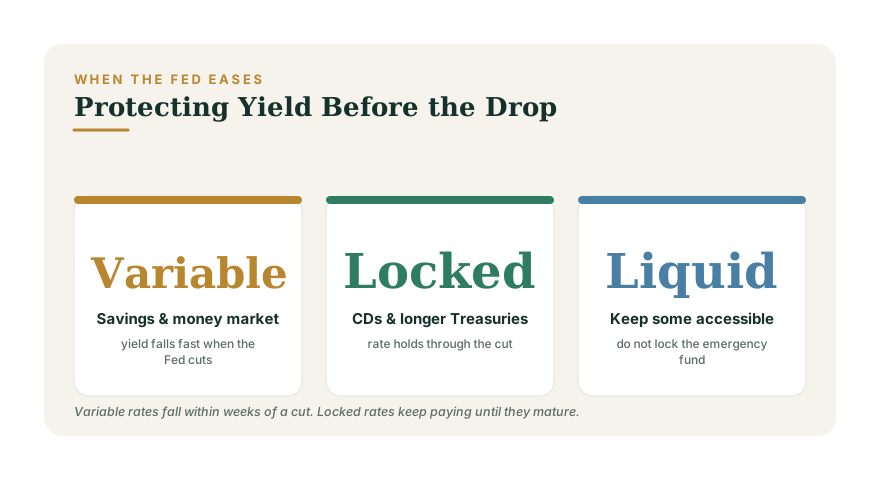
Why falling rates hit cash first
Anything with a variable rate — a high-yield savings account, a money market fund — reprices almost immediately when the Fed cuts, because those yields float with short-term rates. The difference between variable and locked instruments is the whole game in a falling-rate world, and it is spelled out in Money Market Funds vs High-Yield Savings. The fix is to shift a portion of cash from floating rates into fixed ones before the cuts land, so you keep earning today's rate for longer.
Lock in rates with CDs and Treasuries
The cleanest way to hold onto a good rate is to lock it. A certificate of deposit fixes your yield for its whole term regardless of what the Fed does next, and a Treasury note or longer Treasury bill does the same with government backing. When you expect cuts, extending duration — moving from very short instruments into somewhat longer ones — locks the higher rate before it disappears. The disciplined version of this is a CD ladder, which lets you lock rates while keeping money coming due each year, covered in Building a CD Ladder Now That Rates Have Shifted. For a government-backed alternative, a ladder of Treasury bills works similarly, compared with inflation-protected I bonds in I Bonds vs Treasury Bills in 2026.
Do not lock the money you actually need
The mistake in the other direction is over-committing. Chasing a locked rate does no good if you have to break a CD early and forfeit interest to cover a surprise. Your emergency fund and any cash you might need within the next several months should stay liquid — in a high-yield savings account or money market fund — even as their rates drift down. A lower yield on accessible money is a feature, not a bug: liquidity is the job that cash is doing. Size that liquid reserve first, using High-Yield Savings Accounts in 2026 and The Emergency Fund Guide, then lock only what is left over.
Consider whether cash still belongs in cash
A falling-rate environment is also a prompt to ask a bigger question: are you holding more cash than your goals justify? When savings yields drop, the opportunity cost of parking long-term money in cash rises. Money you will not touch for many years generally belongs in a diversified portfolio, not a savings account — the line between the two is drawn in The Best Way to Save for Short-Term Goals. Falling rates on cash do not mean you should reach for risk with your emergency fund, but they are a good reason to make sure your investable money is actually invested.
A simple playbook when cuts are coming
- Right-size liquid cash. Keep your emergency fund and near-term needs in an accessible, insured account. Do not lock these.
- Lock the middle tier. Move cash you will not need for one to five years into a CD ladder or Treasury ladder to hold today's rates.
- Hedge inflation with a slice. If you worry about prices, direct some medium-term money into I bonds for their inflation adjustment.
- Invest the long-term money. Cash you will not touch for years likely belongs in a portfolio, not a shrinking savings rate.
- Avoid rate-chasing churn. Do not constantly switch accounts for tiny differences; the friction usually costs more than it saves.
Act before the drop, not after
The advantage of locking a rate exists only until the cut happens — once rates fall, the good CDs and Treasuries are gone too. That does not mean rushing or predicting the exact timing; it means having a tiered plan so your cash is already positioned. Compare a locked rate against a falling variable one with the Opportunity Cost Calculator, confirm your liquid cushion with the Emergency Fund Calculator, and check that your whole cash setup is resilient with the Financial Resilience assessment. Build the full plan at the planning hub.