A certificate of deposit pays you a fixed interest rate in exchange for leaving your money untouched for a set term. The tradeoff is simple: you give up easy access, and in return your rate is locked no matter what the Federal Reserve does next. That lock is valuable when rates look likely to fall — but the obvious risk is guessing wrong and tying up all your cash at the wrong moment. A CD ladder is the classic answer to that dilemma.
Instead of putting one lump sum into a single CD, you split it across several with staggered maturity dates. Part of your money is always coming due soon, while the rest keeps earning the higher rates that longer terms tend to pay. You stop having to predict the future and let the structure handle it.
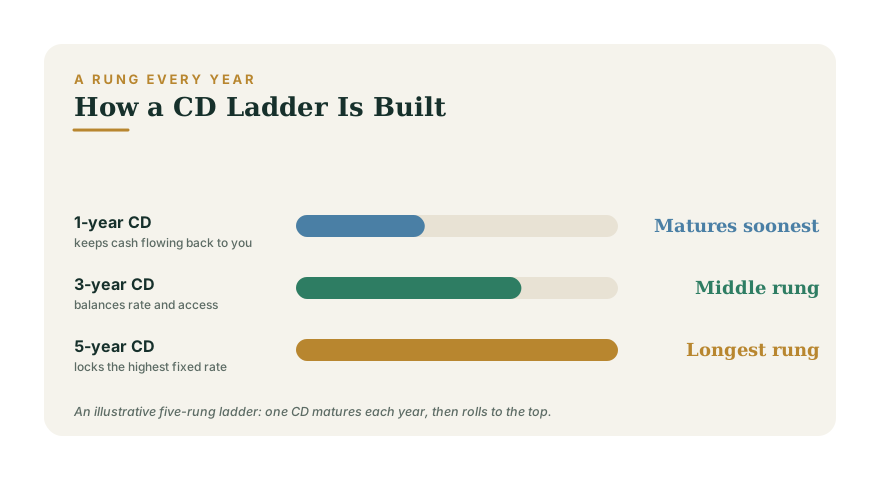
How a ladder works, step by step
Say you have a sum of cash you will not need for emergencies and want it earning a solid fixed rate. A five-rung ladder looks like this:
- Divide the money into five equal parts.
- Put one part each into a 1-year, 2-year, 3-year, 4-year, and 5-year CD.
- When the 1-year CD matures, reinvest it into a new 5-year CD — the highest rung.
- Repeat every year. After the initial setup, one CD matures annually and you always hold five-year money at five-year rates.
The result: once a year you get access to a chunk of cash without penalty, and if you do not need it, it rolls back to the top at whatever the best long rate is then. You are never fully locked in and never fully exposed.
Why the ladder shines when rates have shifted
In 2026, after the Fed's rate changes of recent years, the future direction of rates is genuinely uncertain — and that is exactly when a ladder earns its keep. If rates fall, you are glad you locked the longer rungs before the drop. If rates rise, the rung maturing this year lets you reinvest at the new, higher level. A ladder is a deliberate refusal to bet everything on one guess about the Fed. It quietly outperforms both "lock it all long" and "keep it all in savings" across most rate environments. When you specifically expect cuts, locking in today's rates is one of the moves detailed in Where to Park Cash When Interest Rates Start Falling.
Bank CDs vs brokered CDs
You can build a ladder two ways. Bank CDs are opened directly with a bank or credit union, are simple, and are FDIC-insured up to the limit per depositor — verify any bank through the FDIC. Brokered CDs are bought through a brokerage account, often let you shop many banks' rates in one place, and can be sold before maturity on a secondary market (though at a price that can move against you). The full comparison, including the early-exit differences, is in Brokered CDs vs Bank CDs. For most people building a first ladder, plain bank CDs are the cleaner choice.
Watch the early-withdrawal penalty
A CD's power comes from the commitment, so breaking it early usually costs you several months of interest — occasionally more. That is why a ladder should hold money you will not need before its rung matures, and why your true emergency fund belongs in a liquid account instead. Keep the emergency cash in a high-yield savings account and use the ladder for the tier of money that is safe but not urgent. The distinction between liquid and semi-liquid cash is drawn in The Best Way to Save for Short-Term Goals.
A few practical choices
- Rung count and spacing. Five annual rungs is standard, but a shorter ladder (three rungs, or even every six months) gives you more frequent access if your horizon is shorter.
- Where to hold it. Online banks and credit unions often pay the best CD rates for the same reasons they pay the best savings rates.
- Taxes. CD interest is taxable as ordinary income each year, even before a multi-year CD matures — factor that into where you keep large balances.
- Automate the roll. Set maturing CDs not to auto-renew blindly; review the best available rate each year before reinvesting.
Build the ladder, then leave it alone
A CD ladder is one of the few cash strategies that works without you having to be right about the Fed. Set the rungs, let one mature each year, and reinvest at the top. Compare a ladder's fixed return against a variable savings rate with the Opportunity Cost Calculator, and make sure your liquid emergency fund is sized before you lock anything up using the Emergency Fund Calculator. Check that your overall cash cushion holds together with the Financial Resilience assessment, then map the bigger picture at the planning hub.