Losing a job is stressful enough without a stack of documents you are asked to sign quickly. A severance package is the set of pay and benefits an employer offers when your employment ends, usually in exchange for you signing a release. The common mistake is to treat the first offer as fixed. It is often a starting point, and understanding what is inside it puts you in a far stronger position.
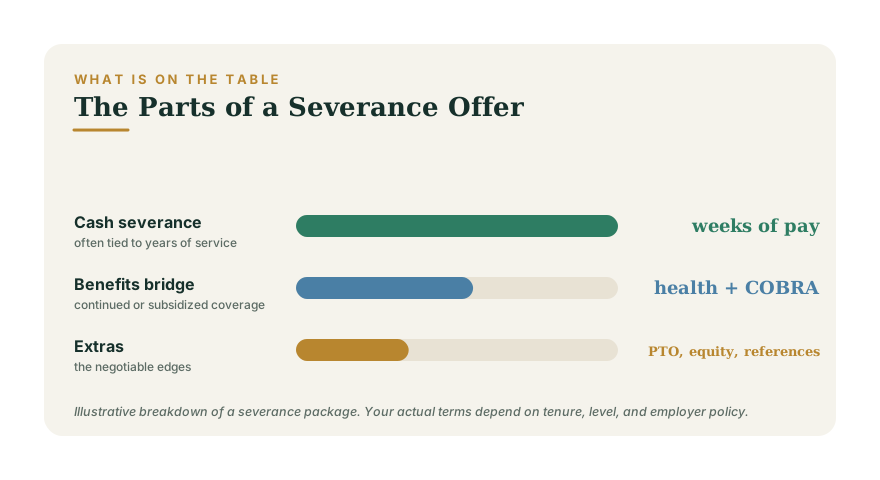
What a severance package typically includes
There is no law requiring most private employers to pay severance at all, so packages vary widely. That said, common components include:
- Cash severance — often expressed as a number of weeks of pay per year of service (for example, one or two weeks per year), paid as a lump sum or as salary continuation.
- Continued benefits — health coverage for a defined window, or an employer subsidy toward COBRA premiums so your medical insurance does not stop abruptly.
- Accrued PTO — payout of unused vacation, which in many states is owed regardless of severance.
- Equity treatment — whether unvested stock or options accelerate, and how long you have to exercise vested options.
- Outplacement and references — job-search support and an agreed reference, which matter more than people expect.
The levers you can actually negotiate
You usually cannot negotiate the formula the company applies across a whole layoff, but the edges are more flexible than they look. Realistic asks include a few more weeks of pay, extending the benefits bridge, a longer window to exercise vested options, converting a "for cause" framing to a neutral one, keeping a work laptop or phone number, and a written, agreed reference. If you have leverage — a specialized role, knowledge transfer the company needs, or a potential legal claim — say so calmly and in writing. The same composure that helps when negotiating a job offer applies here: ask for specific items, give a reason, and stay professional.
The release you sign — read it before anything else
Severance is almost always conditioned on signing a release (sometimes called a separation or waiver agreement). In plain terms, you accept the money and in return give up your right to sue the employer over your employment or termination. That is a real trade, not a formality. Watch for clauses that go beyond a simple release: non-disparagement language, confidentiality about the agreement itself, non-compete or non-solicit terms, and how you are allowed to describe your departure. If you are over 40, federal law generally gives you a minimum period to consider the agreement and a window to revoke after signing — do not let anyone rush you past it. For anything material, a one-hour consult with an employment attorney is money well spent.
Health coverage: mind the gap
Losing a job usually ends your employer health plan at the end of the month or your last day. You typically have a few paths: continue the same plan through COBRA (you pay the full premium, which can be a shock), buy a plan on the ACA marketplace — where a job loss is a qualifying event that opens a special enrollment window — or join a spouse's plan. Marketplace coverage is often cheaper than COBRA, and any COBRA subsidy in your severance changes the math. Decide before coverage lapses, because a gap is exactly when an expensive medical event is most likely to wreck your finances.
Timing, taxes, and unemployment
Severance is taxable wages, and a lump sum can have a large amount withheld up front. How and when it is paid can also affect unemployment benefits: in some states a salary-continuation arrangement delays when you can start collecting, while a lump sum may not. Rules differ by state, so check yours before assuming a start date. File for unemployment promptly regardless — there is often a waiting week, and benefits are not retroactive to before you apply.
Put the offer into your bigger picture
A severance package is income against a runway you now have to manage carefully. Map the cash against your monthly expenses, decide how long it buys you, and protect the foundation first — your emergency fund and health coverage. The broader playbook is in Money Moves After a Job Loss, and you can pressure-test how many months your severance plus savings actually covers with the Emergency Fund Calculator before you make any big decisions.