When an offer arrives, most people fixate on a single number — the base salary — and either accept it on the spot or panic. Both are mistakes. An offer is a package, and the salary line is only one part of it. The moment between receiving an offer and accepting it is the point of maximum leverage in your entire relationship with an employer; they have chosen you and want you to say yes. Used well, that window can be worth far more than the salary alone, and not only in dollars.
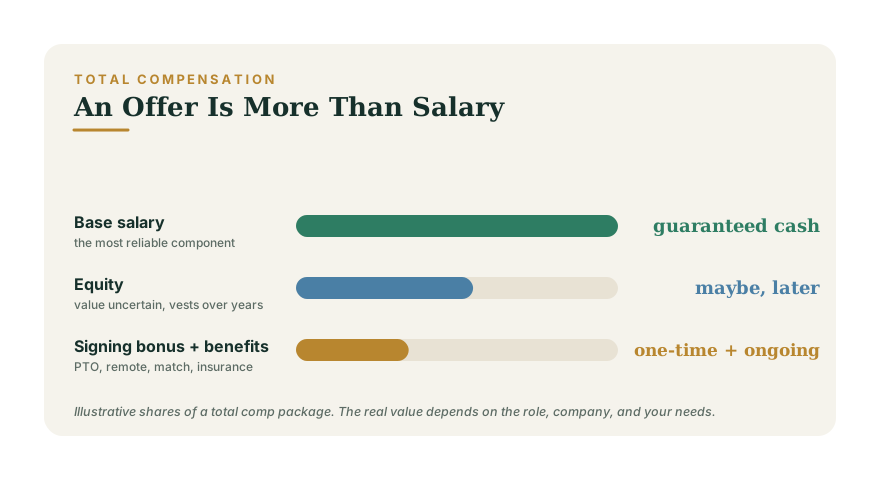
Base, equity, and signing bonus are not equal
The three headline components of an offer differ enormously in reliability:
- Base salary is guaranteed cash, paid every period, and it is the number future raises and your 401(k) match are calculated from. Dollar for dollar, it is the most valuable component, so it is usually worth pushing here first.
- Equity — stock options or restricted units — can be life-changing or worthless. At a public company it has a knowable value; at a startup it is a lottery ticket that typically vests over four years and may never pay off. Treat it as a bonus, not a substitute for salary you can live on.
- A signing bonus is one-time cash, often used to bridge a gap when the company cannot move on base. It is real money, but remember it does not repeat and does not lift your base.
A higher headline number built mostly on speculative equity can be worth less than a lower offer that is mostly guaranteed base pay. Always ask what the components actually are.
The non-cash levers people forget
Compensation is bigger than the paycheck, and many of the most valuable items never appear in the salary figure:
- Retirement match and benefits — a generous 401(k) match, strong health insurance, and an HSA-eligible plan are real money. The components are worth understanding before you compare offers; see your first job's benefits explained.
- Paid time off — extra vacation days are compensation you take in time. A week of additional PTO has a concrete dollar value.
- Remote or flexible work — eliminating a commute can save thousands a year and hours a week. For many people this outranks a modest salary bump.
- Other terms — a sign-on guarantee, an earlier review date, relocation help, professional-development budget, or a better title that raises your value at the next job.
These are often easier to win than base salary, because they do not all hit the same budget line a manager has to defend.
How to counter professionally
Negotiating an offer rarely costs you the job — a rescinded offer over a polite, reasonable counter is genuinely rare. The keys are tone and evidence. A clean approach:
- Express genuine enthusiasm first. "I'm excited about this role and the team" sets a collaborative tone before you ask for anything.
- Anchor with market data and your value, the same way you would when you ask for a raise. "Based on my experience and what comparable roles pay, I was hoping for X" is a business case, not a demand.
- Ask for a package, not just a number. "Can we get base to X? If that's not possible, I'd value additional equity, a signing bonus, or extra PTO." This gives them several ways to say yes.
- Get the final offer in writing before you resign from anything.
One more rule: never accept on the very first call. "Thank you, this is exciting — can I take a day or two to review the details?" is completely normal and gives you room to think, compare, and prepare a counter without the pressure of the moment. Employers expect it, and the short pause almost never works against you.
Get competing leverage when you can
Nothing strengthens a negotiation like a genuine alternative. A second offer, even a weaker one, transforms the conversation from "please pay me more" to "I have options, and I'd prefer you." You do not have to be aggressive about it; simply mentioning that you are weighing another opportunity signals that your time is limited and your value is validated by the market. If you do not have a competing offer, your track record and clear market data are the next best anchors. Either way, leverage comes from being genuinely willing to walk — which is far easier when your finances give you room to say no.
Know your floor and your walk-away
Before negotiating, decide two numbers: the package you would happily accept, and the minimum you would walk away below. Knowing your walk-away point keeps you calm and prevents you from talking yourself into a bad deal out of fear. Your leverage is strongest when you can genuinely say no — which is far easier when you have an emergency fund and, ideally, a second income source, as covered in building multiple income streams.
Decide on total value, then plan around it
Once the dust settles, compare offers on total value — base plus realistic equity, benefits, time, and flexibility — not on the salary headline alone. When you have accepted, build the new compensation into your bigger picture: prioritize where the money goes using the financial order of operations, and pressure-test the long-term impact at the planning hub.