The U.S. tax code rewards saving for retirement, health, and education by letting you shelter that money from tax — but it does so through a confusing pile of accounts with names like 401(k), IRA, Roth, HSA, 529, and FSA. They are not interchangeable. Each one solves a specific problem, and the difference between using them well and ignoring them is measured in tens of thousands of dollars over a lifetime.
The good news: once you see the three underlying tax treatments, the whole lineup snaps into focus.
The three flavors of tax break
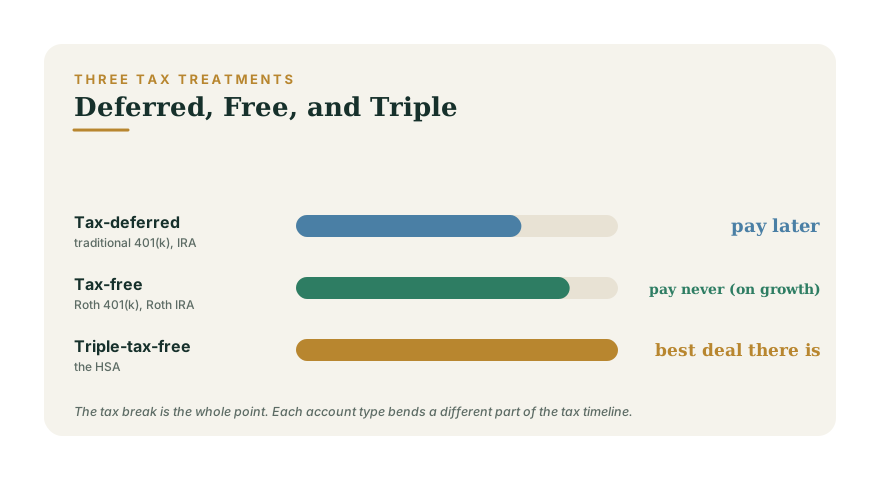
Almost every tax-advantaged account is one of three types:
- Tax-deferred — you contribute pre-tax dollars (lowering this year's taxable income), your money grows untaxed, and you pay ordinary income tax when you withdraw in retirement. This is the traditional 401(k) and traditional IRA. The bet: you are in a lower tax bracket later.
- Tax-free — you contribute after-tax dollars (no deduction today), but growth and qualified withdrawals are never taxed. This is the Roth 401(k) and Roth IRA. The bet: paying tax now at a known rate beats paying later at an unknown one.
- Triple-tax-free — the rare HSA gets all three breaks at once: deductible going in, tax-free growth, and tax-free withdrawals for medical costs.
If you are torn between the deferred and tax-free versions, that decision has its own deep dive in Roth vs Traditional IRA: Which One Wins.
The accounts, one by one
- 401(k) — an employer-sponsored retirement plan, often with an employer match. High contribution limit. Comes in traditional and Roth versions.
- IRA — an individual retirement account you open yourself at a brokerage. Lower contribution limit than a 401(k), but you control the investments. Traditional or Roth.
- HSA — a Health Savings Account, available only if you have a high-deductible health plan. The triple-tax account, and a stealth retirement vehicle. The full case is in The HSA: The Most Powerful Tax-Advantaged Account You're Ignoring.
- 529 plan — for education. After-tax contributions grow tax-free and come out tax-free for qualified school costs; many states add a deduction.
- FSA — a Flexible Spending Account for medical or dependent-care costs, funded pre-tax. The catch is "use it or lose it" — unspent money is mostly forfeited at year-end, so you fund it carefully.
A sane order to fill them
You rarely have enough money to max everything, so sequence matters. A widely used order for most people:
- 1. 401(k) up to the employer match. A match is an instant, guaranteed return. Never leave it behind.
- 2. HSA, if you are eligible. No other account is taxed this lightly.
- 3. Max your IRA (Roth if you qualify) for low-cost, flexible investing.
- 4. Go back and max the 401(k) beyond the match.
- 5. Then taxable investing in a regular brokerage account once the sheltered space is full.
This is the heart of the financial order of operations, and a 529 slots in alongside once retirement is on track — never ahead of it, because you can borrow for school but not for retirement.
Limits, deadlines, and the fine print
Each account has an annual contribution limit set by the IRS, and most adjust upward over time, so check the current year's number rather than memorizing one. A few timing rules matter: IRA and HSA contributions can usually be made up until the tax-filing deadline for the prior year, while 401(k) contributions must come out of paychecks during the calendar year. High earners hit income limits on the Roth IRA — there is a legal workaround in The Backdoor Roth IRA, Step by Step.
Put the lineup to work
The accounts are tools; the win comes from filling them in the right order with money you actually have. Map your own sequence with the Retirement Planner, and get a quick read on whether you are leaving tax breaks on the table with the Tax Health assessment.