A reverse mortgage is one of the most misunderstood products in personal finance — pitched as free money by some, dismissed as a scam by others. The truth sits in between. For the right homeowner in the right situation, it is a legitimate way to tap home equity in retirement. For the wrong one, it can quietly drain the largest asset a family has.
The most common version, and the one this article focuses on, is the federally insured Home Equity Conversion Mortgage (HECM), available to homeowners aged 62 and older.
How a reverse mortgage actually works
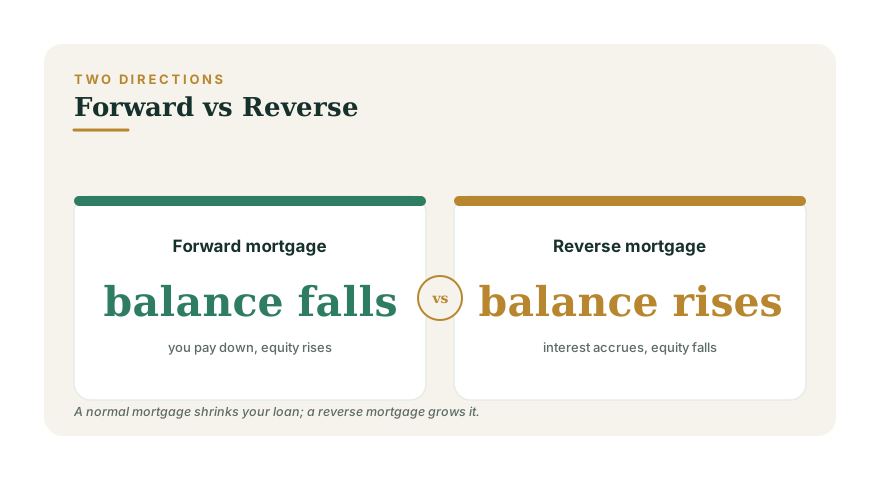
With a normal "forward" mortgage, you borrow a lump sum and make monthly payments that shrink the balance until you own the home outright. A reverse mortgage flips this. You borrow against the equity you have already built, and instead of making payments, the loan balance grows over time as interest and fees are added to it. You receive the money as a lump sum, a line of credit, fixed monthly payments, or a combination.
You keep the title and continue living in the home. The loan does not come due until a triggering event: you sell, move out for more than a year (often for a move into care), or pass away. At that point the loan — original draw plus all accrued interest — is repaid, usually from selling the house.
Why the balance grows, and what that means
Because you make no payments, interest compounds on a rising balance. Over ten or twenty years, the amount owed can grow substantially, steadily eating into the equity that would otherwise pass to your heirs. This is the central trade-off: you gain cash and stay in your home, but the asset shrinks for whoever inherits it.
A protection worth knowing: HECMs are non-recourse loans. If the balance ever grows larger than the home is worth, neither you nor your heirs owe the difference — the FHA insurance covers it. Your heirs will never inherit a debt, only a smaller (or zero) inheritance.
The fees are real
Reverse mortgages are not cheap to set up. Expect an origination fee, an upfront FHA mortgage-insurance premium, ongoing insurance premiums added to the balance, plus the usual closing costs. These costs are typically rolled into the loan, which means they too accrue interest. The high upfront expense is exactly why a reverse mortgage rarely makes sense for someone who expects to leave the home within a few years — there is not enough time to justify the cost. If a short stay is likely, compare it honestly with the math in Downsizing in Retirement: The Real Numbers.
What it does to your heirs
When you pass away, your heirs have options: repay the loan (often by refinancing) and keep the house, sell the house and keep any remaining equity, or walk away and let the lender sell it. Because of the non-recourse rule, they are never on the hook for a shortfall. But families are sometimes blindsided to learn that the home they expected to inherit now carries a large balance. Talking it through in advance avoids that shock — see How to Talk to Parents About Their Finances.
When it actually helps
- You want to age in place and need income, but most of your wealth is locked in the house.
- You have no heirs who need the home, so spending the equity during your lifetime is the point.
- As a standby line of credit — opening a HECM line of credit early and letting its borrowing limit grow can serve as a buffer against bad investment years, a sophisticated but legitimate use.
The traps to avoid
- Forgetting you still owe property taxes, insurance, and upkeep. Fall behind on these and the loan can be called due, putting your home at risk.
- High-pressure sales, especially pitches that bundle the proceeds into an annuity or investment. Be very skeptical.
- Putting a non-borrowing younger spouse at risk if the loan is structured carelessly.
Federal rules require independent counseling before you can take a HECM — take it seriously and bring questions. A reverse mortgage is a serious, often irreversible decision. Before committing, compare it with simpler options like a home equity loan or HELOC and the cost of selling and moving. Run your full retirement income picture through the Retirement Planner first, so you know whether you actually need to tap the house at all.