Few conversations feel more uncomfortable than asking your parents about their money. It can sound like you are angling for an inheritance or implying they can no longer manage. But the alternative — finding out nothing until a crisis hits — is far worse. When a parent has a stroke or a sudden decline, the family that already knows where the documents are and who has authority can act. The family that does not ends up in court.
This conversation is not about how much your parents have. It is about making sure that, if they cannot manage their own affairs, someone they chose can step in smoothly.
Start small, and start before you need to
The worst time to have this talk is in a hospital hallway. The best time is an ordinary afternoon, years early. Lower the stakes by opening sideways rather than head-on:
- Use your own planning as the doorway: "I just set up my will and powers of attorney — it got me wondering whether yours are current."
- Use a third party: a friend's family crisis, an article, a financial planner's recommendation.
- Make it about helping them, not inheriting from them: "If you ever couldn't handle the bills for a stretch, who would you want to step in?"
Lead with respect. The goal is a partnership, not an intervention. One conversation rarely covers everything; treat it as the first of several.
The documents to locate
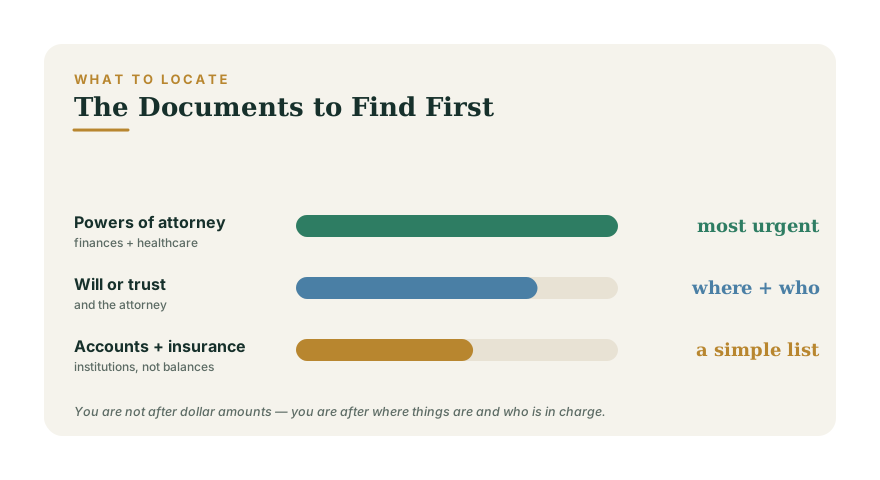
You do not need balances. You need to know these exist and where they are:
- Durable financial power of attorney — lets a named person manage money if a parent cannot.
- Healthcare directive and healthcare proxy — medical wishes, plus who decides.
- Will and/or living trust — who inherits, and the attorney who drafted it.
- A simple inventory — banks, brokerages, retirement accounts, pensions, insurance policies, and any debts. Institutions and contacts, not dollar figures.
- Beneficiary designations — and whether they are current.
Why powers of attorney matter most
People assume a will is the key document. For a living parent who becomes incapacitated, the will does nothing — it only takes effect at death. The documents that matter while they are alive are the durable power of attorney and the healthcare proxy. Without them, if a parent can no longer make decisions, no one in the family automatically has authority — you may have to petition a court for guardianship, which is slow, expensive, and public. Confirm these exist and are durable; the details are in Power of Attorney and Healthcare Directives.
Avoiding family conflict
Money brings out old sibling dynamics. A few practices keep this from fracturing a family:
- Be transparent. Loop siblings in early. Secret conversations breed suspicion later.
- Separate the roles. The person who handles finances and the one who makes medical calls do not have to be the same — and naming both reduces the sense that one child is "in control."
- Follow the parents' wishes, not the children's preferences. Your job is to carry out what they want, not to relitigate it.
- Put it in writing. Clear documents prevent the "but Mom told me" arguments that erupt after a death.
Understanding how probate works also helps the family see why getting these documents in order now saves enormous friction later. And if your parents have never set up the basics, the same checklist in Estate Planning for Young Families applies just as well to them.
What good looks like
You do not need to walk away knowing your parents' net worth. You need to know the documents exist, where they are kept, who the attorney and key contacts are, and who holds authority if a parent cannot act. Write that down somewhere a trusted family member can find it.
If you are unsure whether your own affairs are in order before you raise the topic with your parents, the Estate Readiness assessment is a clear-eyed starting point you can then share with them.