Every year, borrowers with federal student loans see private lenders advertising lower interest rates and wonder whether they should refinance. The pitch is straightforward: swap your federal loans for a private loan at a better rate and save on interest. What the ads rarely emphasize is that this is a one-way door. Once you refinance federal loans into a private loan, you permanently give up the entire federal safety net, and there is no way to convert back.
This decision depends on rules that change and on your personal risk tolerance. Confirm current federal options at the US Department of Education's studentaid.gov and read private-lender terms carefully before committing.
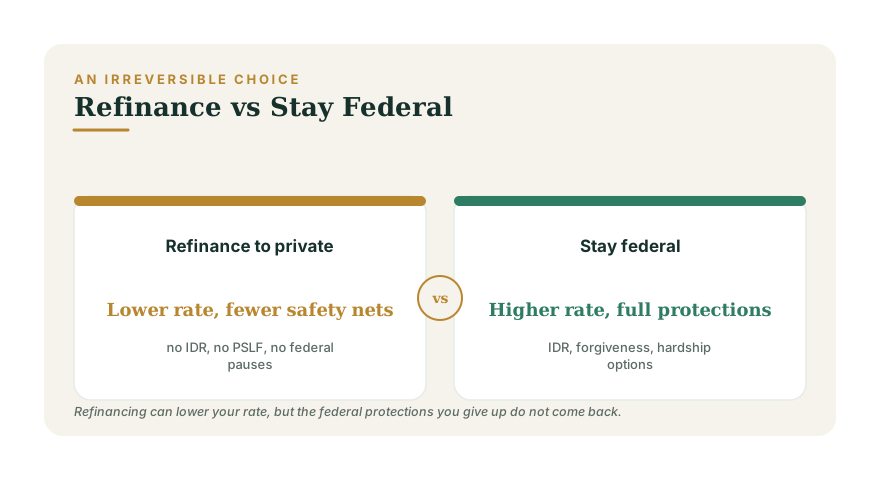
What you give up by refinancing
Refinancing federal loans converts them to private debt, which means you forfeit protections that only federal loans carry:
- Income-driven repayment. Private lenders do not offer plans that cap payments as a percentage of your income when times are tight.
- Loan forgiveness. You lose eligibility for PSLF and for income-driven forgiveness — a dealbreaker for anyone in or near public service, as covered in PSLF in 2026: Where It Stands.
- Federal pauses and hardship options. Deferment, forbearance, and the broad administrative pauses the government has used in recent years apply only to federal loans.
- Death and disability discharge. Federal loans are typically discharged if the borrower dies or becomes permanently disabled; many private loans are not, or are far more restrictive.
The recurring ways this decision goes wrong are catalogued in The Student-Loan Refinancing Trap.
When refinancing can make sense
Despite all that, refinancing is a legitimate move for a specific profile. It tends to make sense when you have a stable, comfortable income, a solid emergency fund, and no interest in forgiveness — and when a private lender genuinely offers a meaningfully lower rate than your federal loans. In that case you are trading protections you are unlikely to need for guaranteed interest savings. The stronger your financial footing, the less the federal safety net is worth to you and the more attractive a lower rate becomes.
When to stay federal
Stay federal if any of these are true: you might pursue PSLF or income-driven forgiveness; your income is variable, early-career, or uncertain; you lack a robust emergency fund; or the rate savings are small. In 2026 specifically, the volatility around plans and forgiveness argues for caution — keeping the option to use income-driven repayment or a hardship pause has real value when the ground keeps shifting, as it did when the SAVE plan was blocked (see Federal Student-Loan Repayment After the SAVE Plan).
Run the actual numbers
Do not decide on the advertised rate alone. Compare your current federal rate and remaining term against the private offer's rate, term, and whether it is fixed or variable — a low variable rate can climb. Then quantify the interest you would save and honestly weigh it against the protections you would lose. The Debt Payoff Planner and the Refinance Analyzer let you see the lifetime-cost difference rather than guessing from a monthly figure. If you carry mixed debt, coordinate the payoff order using Debt Avalanche vs Snowball.
Decide with your eyes open
Refinancing is neither a trap nor a trick — it is a tool that fits a narrow situation and backfires outside it. If you have stable income, no forgiveness ambitions, and a real rate advantage, it can save money. If any of those are shaky, the federal protections are usually worth keeping, especially in an uncertain policy year. Whatever you choose is largely irreversible, so run it through the Refinance Analyzer, map the full picture at the planning hub, and confirm your safety net with the Financial Resilience assessment first.