Public Service Loan Forgiveness (PSLF) is one of the most valuable programs in the federal student-loan system: after 120 qualifying monthly payments while working full-time for the government or a qualifying nonprofit, your remaining federal loan balance is forgiven, and the forgiven amount is not treated as taxable income at the federal level. For teachers, nurses, public defenders, and countless others, it can wipe out tens of thousands of dollars. It has also been one of the most turbulent programs to rely on, and 2026 is no exception.
PSLF rules and processing have changed repeatedly, and further changes are possible. Nothing here should be read as a promise about your specific balance. Verify your status and the current rules at the US Department of Education's studentaid.gov.
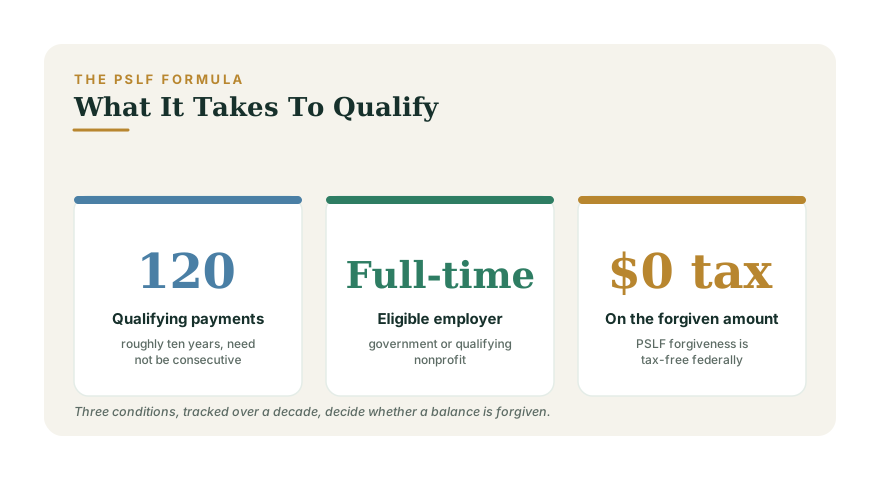
How PSLF is supposed to work
The formula has three pillars. You must make 120 qualifying payments — they need not be consecutive, but they must be on-time, full payments under a qualifying repayment plan. You must make those payments while employed full-time by a qualifying employer: federal, state, local, or tribal government, or a 501(c)(3) nonprofit. And when you reach 120, the remaining balance is forgiven free of federal income tax. The payments generally must be made under an income-driven plan or the standard 10-year plan, which is why your choice of repayment plan is inseparable from PSLF.
Why 2026 feels uncertain
Two forces have unsettled borrowers. First, the collapse of the SAVE plan disrupted which payments count: borrowers parked in the SAVE-related forbearance generally were not accruing qualifying PSLF payments, stalling progress for people who thought the clock was still running. The background is in Federal Student-Loan Repayment After the SAVE Plan. Second, periodic proposals to narrow which employers qualify, or to change program mechanics, have made borrowers nervous about whether the deal they signed up for will hold. Existing qualifying payments you have already earned are generally protected, but future rules can shift, which is exactly why keeping proof of your progress matters so much.
Protect your progress
You cannot control policy, but you can make your record bulletproof:
- Certify employment regularly. Submit the PSLF employment certification form annually and whenever you change jobs, rather than waiting until year ten. This keeps an official count of your qualifying payments and surfaces errors early.
- Confirm your loan and plan types. Only Direct Loans qualify, and only certain repayment plans count. If you have older FFEL loans, a Direct Consolidation may be required — but consolidating can reset progress, so get guidance first.
- Keep your own records. Save every certification, payment confirmation, and servicer message. Borrowers have repeatedly had to correct servicer miscounts, and the Consumer Financial Protection Bureau offers a complaint channel when a servicer gets it wrong.
- Recertify income on time. Missing an income-driven recertification can cause a payment not to count.
Should you count on PSLF?
If you genuinely work in qualifying public service, PSLF is usually too valuable to walk away from, and the right move is to stay federal and protect your count — not to refinance into a private loan that would forfeit eligibility. That trade-off is central to Refinance or Stay Federal?. But if PSLF is only a maybe — you are unsure you will stay in public service for a decade — do not over-optimize your whole financial life around it. Keep saving and investing in parallel, and treat forgiveness as upside rather than the plan. Model both outcomes with the Debt Payoff Planner.
A cautious, documented approach
PSLF remains real and remains generous, but it rewards borrowers who treat it like a compliance project: certify early and often, keep every record, choose a qualifying repayment plan, and verify your count directly at studentaid.gov. Because the rules can move, build a financial plan that works even if the timeline slips. Map yours at the planning hub and check your cushion with the Financial Resilience assessment.