When mortgage rates fall, refinancing — replacing your current loan with a new one at a better rate — can save real money. But a refinance is not free. You pay closing costs all over again, and those costs have to be earned back through lower payments before you see any benefit. The whole decision comes down to one number: your break-even point.
What a refinance actually costs
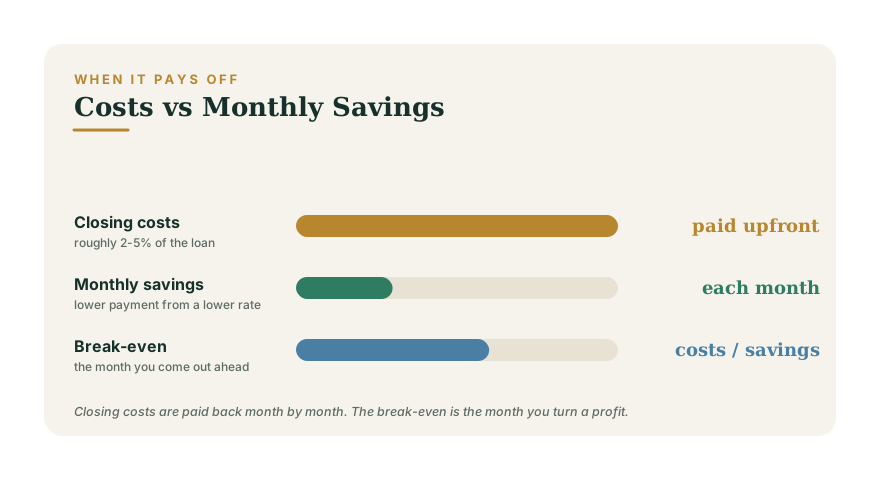
A refinance is a brand-new mortgage, so it carries most of the same fees you paid when you bought the home: lender origination charges, an appraisal, title insurance, recording fees, and sometimes points. Together these typically run 2% to 5% of the loan amount. On a $300,000 loan, that is roughly $6,000 to $15,000. Some of it can be rolled into the new loan balance, but rolling costs in does not make them disappear — it just means you finance them and pay interest on them.
The break-even formula
The math is simple. Take your total closing costs and divide by your monthly payment savings:
- Break-even (months) = total closing costs / monthly savings.
Say your refinance costs $7,500 and your monthly payment drops by $250. Your break-even is $7,500 / $250 = 30 months, or two and a half years. If you stay in the home and keep the loan past month 30, the refinance comes out ahead. Sell or refinance again before then, and you lose money on the deal. This is the same logic behind deciding when to refinance your mortgage in the first place.
The reset-clock trap most people miss
A lower monthly payment can be misleading because refinancing usually restarts the loan term. If you are five years into a 30-year mortgage and refinance into a fresh 30-year loan, you have stretched your payoff to 35 years total. The lower rate saves on interest per dollar, but the longer term can mean you pay more interest over the full life of the loan even at the lower rate.
Two ways to avoid this: refinance into a shorter term (say, a 20- or 15-year loan) so you do not extend your payoff date, or keep the new 30-year loan but continue paying the old, higher amount so the extra goes to principal. Always compare total interest paid, not just the monthly payment.
When refinancing is worth it
A refinance generally makes sense when several of these are true:
- The new rate is meaningfully lower — there is no magic threshold, but a drop large enough to recover costs within a few years is the test.
- You plan to stay in the home well past your break-even month.
- You are not significantly extending your payoff timeline, or you will keep paying the old amount.
- Your credit and income still qualify you for the best available pricing.
Refinancing can also serve goals beyond rate — switching from an adjustable to a fixed rate for stability, or dropping mortgage insurance once you have enough equity, which connects to how PMI works and how to drop it.
When it is not worth it
Skip the refinance when the rate improvement is small, when you might move before break-even, or when a cash-out refinance is really just borrowing against your home to fund spending. Pulling equity out to consolidate debt or remodel can make sense, but it converts unsecured or short-term costs into a 30-year obligation secured by your house — a serious trade-off worth weighing carefully, much like the choices in home equity loans versus HELOCs.
No-cost refinances are not free
A lender may offer a refinance with no out-of-pocket closing costs. The costs do not vanish — they are paid through a slightly higher interest rate or added to your balance. This can be a reasonable choice if you are not sure how long you will stay, since there is little upfront money to recover, but compare the lifetime cost against a standard refinance before assuming it is the better deal.
Run your own numbers
Before committing, gather a written loan estimate from each lender so you can see the true closing costs, then test the trade-off yourself. The Refinance Analyzer computes your break-even month and lifetime interest, and the mortgage credit impact tool helps you see how your credit affects pricing. If the break-even comfortably beats how long you plan to stay, the refinance is likely a win; if not, keep the loan you have.