If you are lucky enough to have a traditional pension, retirement may come with a one-time decision that is nearly impossible to reverse: take a single lump sum now, or a monthly check guaranteed for the rest of your life. It is one of the largest financial choices many people ever make, and the sales materials rarely make it clear which is better for you. The honest answer is that it depends — but on a small set of factors you can actually reason through.
What each option really gives you
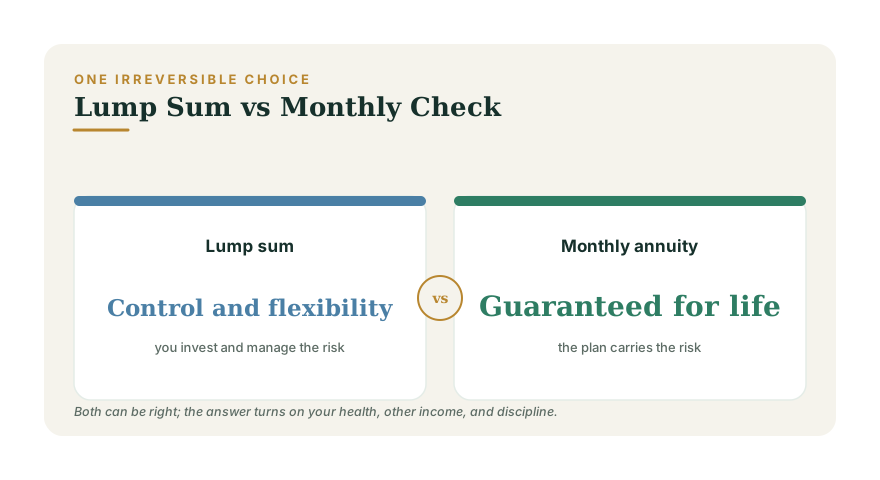
The monthly annuity is a paycheck for life. The pension plan bears all the risk — investment risk, and the risk you live to 100 — and simply keeps paying. The lump sum hands you a large pile of money that you roll into an IRA, invest, and manage yourself. You gain control and flexibility and the chance to leave whatever is left to your heirs, but you also take on the risk of bad markets, bad timing, and outliving your money. Neither is inherently better; they are different distributions of risk.
Run the payout math first
Start with the numbers you can measure. Divide the annual pension payment by the lump sum to get a rough payout rate. If the monthly option pays, say, 6 to 7 percent of the lump sum every year for life, that is a hard rate to safely replicate on your own, which favors the annuity. If it pays only 4 percent or less, the lump sum may be competitive with what you could prudently withdraw yourself. Compare the annuity's payout to what a commercial immediate annuity would cost to buy — if your pension pays more than the open market, that is a strong point in its favor.
The factors that tip the decision
- Your health and longevity. The annuity is a bet on a long life. If you are healthy with long-lived parents, the lifetime check gets more valuable. Serious health issues tilt toward the lump sum.
- Your other guaranteed income. If Social Security and other pensions already cover your essential expenses, you may not need another guarantee and can take the lump sum for growth. If not, the annuity backstops your basics — see How to Create a Retirement Paycheck.
- Inflation protection. Many private pensions pay a fixed dollar amount that never rises, so inflation quietly erodes it over decades. A lump sum invested in stocks can grow. Check whether your annuity has a cost-of-living adjustment.
- Your discipline and desire to manage money. A lump sum only wins if you invest it sensibly and do not overspend. If managing a large portfolio sounds stressful, the annuity removes that burden entirely.
- Legacy goals. A single-life annuity dies with you; a lump sum can pass to heirs. Survivor options on the annuity protect a spouse but lower the monthly amount.
Do not forget insurance and taxes
A monthly pension is only as secure as the plan and its backstop. Private pensions are generally insured up to federal limits by the Pension Benefit Guaranty Corporation, but very large pensions can exceed the guaranteed amount, adding a sliver of risk — you can review the agency at pbgc.gov. On taxes, both options are usually fully taxable, but a lump sum handled wrong is a trap: take it as a check and you may owe tax and penalties immediately, so it should almost always go via a direct rollover into an IRA — see How to Roll Over a 401(k) for the same mechanics. The IRS covers the taxation of pensions and annuities at irs.gov/retirement-plans.
A workable middle ground
You do not always have to choose all or nothing. Some plans let you split the benefit, and even when they do not, you can take the lump sum and voluntarily buy a smaller commercial annuity with part of it — covering your essential expenses with a guaranteed floor while keeping the rest invested for growth and heirs. This "annuitize the basics, invest the rest" approach captures much of what each side offers. The deeper trade-offs are in Pension Lump Sum vs Annuity.
Make the call with your eyes open
Because the choice is usually irreversible, run the payout rate, weigh your health, other income, inflation, and temperament, and consider whether a partial approach fits. When the numbers are close, the guaranteed check often wins on peace of mind; when you have ample other guaranteed income or health concerns, the lump sum earns its keep. Model both paths with the Retirement Planner, coordinate with your Social Security timing, and confirm your footing with the Retirement Readiness assessment before you decide at the planning hub.