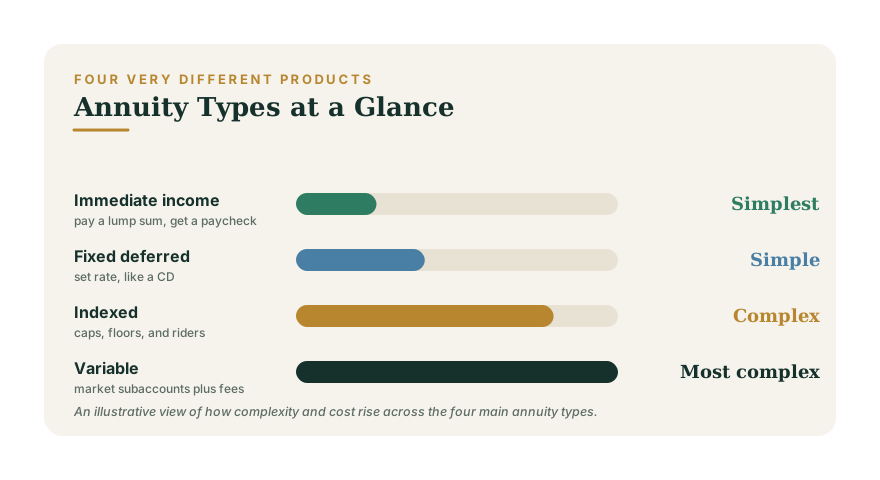
An annuity is a contract with an insurance company: you hand over money, and in return you get either a guaranteed stream of payments or a place to grow money tax-deferred. That single sentence hides enormous variety. Salespeople lean on the word to describe products that behave almost nothing alike, which is how a retiree looking for a simple lifetime paycheck can end up in a complex, high-fee contract they never wanted. The fix is to know the four main families and what each one is really for.
Immediate annuities: the pure paycheck
A single-premium immediate annuity (SPIA) is the simplest and, for many retirees, the most useful. You give the insurer a lump sum and it starts paying you a fixed amount right away, usually for life. There is no cash value, no market exposure, and almost no complexity — you are essentially buying a private pension. The trade-off is that the money is gone and irreversible, so you buy one only with a slice of your savings, not all of it. Because the payout partly depends on interest rates and your life expectancy, immediate annuities look most attractive when rates are higher and when you buy later in life. They are the cleanest way to guarantee you cannot outlive part of your income, a concept explored further in How to Create a Retirement Paycheck.
Fixed deferred annuities: the tax-deferred CD cousin
A fixed annuity credits a guaranteed interest rate for a set period, growing tax-deferred until you withdraw. In practice it behaves much like a bank CD, except the growth is not taxed each year and there is often a surrender period during which early withdrawals cost you a penalty. A multi-year guaranteed annuity (MYGA) locks a rate for, say, five years. These are genuinely simple products, and they can make sense for conservative money you will not touch for a while — though you should compare the rate against a plain CD ladder or Treasury, since the tax deferral is only valuable if you are in a higher bracket now than later.
Indexed annuities: simple pitch, complex reality
A fixed indexed annuity ties your return to a market index like the S&P 500, with a promise that you cannot lose money in a down year (a "floor" of zero) in exchange for a cap on your gains in an up year. The pitch — market upside without market risk — is seductive. The reality is a thicket of moving parts: participation rates, caps, spreads, and optional income riders that each carry a fee. Insurers can often change the caps year to year. These are among the most heavily marketed and most misunderstood products in retirement, and the details determine whether you get a fair deal or a mediocre one. Read the contract, not the brochure. Our broader take on when any of these fits is in Annuities: When They Make Sense.
Variable annuities: market exposure plus layers of fees
A variable annuity lets you invest the money in mutual-fund-like "subaccounts," so your value rises and falls with the market. Growth is tax-deferred, and you can bolt on guarantees like a minimum income or death benefit. The catch is cost: variable annuities often stack a mortality-and-expense charge, subaccount fees, and rider fees that together can run well above what you would pay in a plain brokerage account. For most investors, maxing out a 401(k) and IRA first is cheaper and more flexible — see The Complete 401(k) Guide. Variable annuities earn their keep only in narrow cases, usually after other tax-advantaged space is exhausted.
How to compare them without getting sold
- Separate the goal from the product. If you want guaranteed lifetime income, an immediate annuity does that most cheaply. If you want tax-deferred growth, compare against accounts you already have.
- Find the total cost. Ask for every fee in writing — base charges, rider charges, and surrender terms. Complexity usually hides cost.
- Check the insurer's strength. A lifetime guarantee is only as good as the company behind it, so favor highly rated insurers.
- Mind the surrender period. Many contracts lock your money for years with penalties for early exit.
The IRS explains the tax treatment of annuity payments and the general rules for pensions and annuities at irs.gov/retirement-plans, which is worth a look before you sign anything.
The bottom line
Annuities are tools, not villains, but the four types serve very different purposes and carry very different costs. A plain immediate or fixed annuity can be a sensible piece of a retirement-income plan; a complex indexed or variable contract demands real scrutiny. Decide what job you are hiring the product to do, then buy the simplest, cheapest thing that does it. Model how guaranteed income fits your overall plan with the Retirement Planner, gauge your readiness with the Retirement Readiness assessment, and map the full picture at the planning hub.