If you are lucky enough to have a traditional pension, you may face one of the biggest single decisions of your financial life: take a one-time lump sum, or accept a monthly annuity — guaranteed income for as long as you live. There is no universally right answer. The best choice depends on your health, your other savings, your spouse, and your comfort with managing money.
The core trade-off
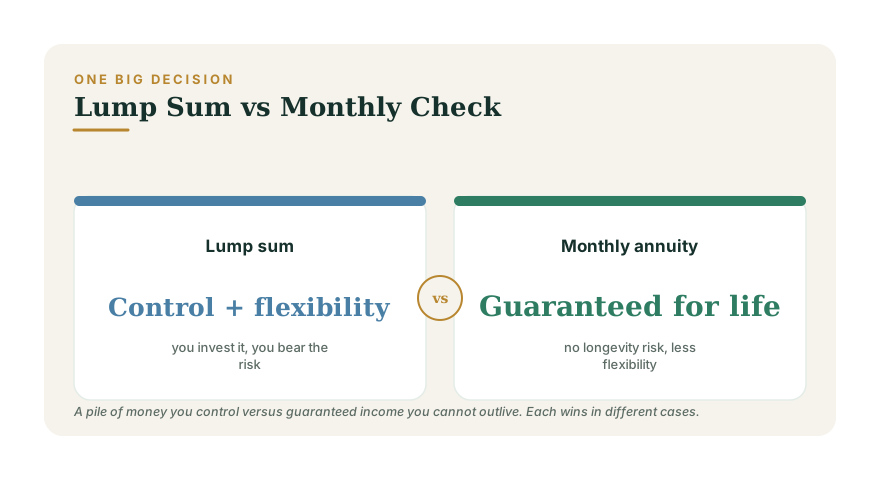
The lump sum hands you a large amount of money you control. You can invest it, spend it on your own schedule, and pass whatever remains to heirs. In exchange, you take on the risks: market downturns, the temptation to overspend, and the possibility of running out if you live a long time.
The monthly annuity reverses that. The plan keeps the money and promises you a fixed check every month for life. You give up flexibility and the chance to leave a large inheritance, but you eliminate longevity risk — you cannot outlive the income. It is, in essence, a paycheck that never stops.
Longevity risk: the biggest variable
The single most important factor is how long you expect to live. The annuity is most valuable for people who live a long time, because they collect those guaranteed checks for decades. Someone in poor health or with a family history of shorter lifespans may get more value from the lump sum.
This is the same logic behind delaying Social Security, and the two decisions interact — see spousal and survivor Social Security benefits, because a pension survivor option and a Social Security survivor benefit together determine what a surviving spouse lives on.
Inflation risk: the annuity's weak spot
Most private pensions pay a fixed monthly amount that does not rise with inflation. Over a 25- or 30-year retirement, even mild inflation can cut the purchasing power of a fixed check roughly in half. A lump sum you invest has at least a chance to grow and keep pace, whereas a non-adjusting annuity slowly loses ground. If your pension offers a cost-of-living adjustment, that materially strengthens the annuity's case.
How to compare the two offers
To compare apples to apples, translate the monthly annuity into an implied annual return on the lump sum. Divide the annual pension income by the lump-sum amount. For example, a 60,000-dollar-a-year annuity on a 1,000,000-dollar lump sum is a 6% payout rate.
Then ask: could you safely generate that same income by investing the lump sum yourself? A common sustainable withdrawal benchmark is around 4% a year. If the pension's implied rate is comfortably above what you could prudently withdraw on your own, the annuity is offering a strong deal. If it is well below, the lump sum may serve you better. The retirement drawdown strategy explains why a sustainable withdrawal rate matters so much.
Two safety points are worth checking. First, private pensions are backed by a federal guarantor up to certain limits, so a monthly benefit is not entirely without protection if the company fails. Second, if you take a lump sum, roll it directly into an IRA to keep it tax-deferred — taking it as cash triggers a large tax bill.
When each option tends to win
- The annuity tends to win if you expect a long life, you have little other guaranteed income, you would worry about managing a large sum, and the implied payout rate is generous.
- The lump sum tends to win if you are in poor health, you already have ample guaranteed income from Social Security or other sources, you want to leave money to heirs, or the implied payout rate is low.
Many people also split the difference where the plan allows it — taking a partial lump sum and a partial annuity to get both some flexibility and some guaranteed income. If you go the annuity route and are married, the joint-and-survivor option (which continues payments to a surviving spouse) is usually worth the slightly lower monthly amount.
Make the call with the numbers in front of you
This decision is usually irreversible, so it is worth modeling carefully. If you are leaning toward buying guaranteed income, the trade-offs of annuities in general are covered in when annuities make sense. Test how each option affects your long-term security with the Retirement Planner, and gauge your overall footing with the Retirement Readiness assessment before you sign anything.