A year-end bonus is one of the few moments when a large sum lands at once, giving you a rare chance to make a single move that meaningfully improves your finances. The problem is that bonuses also have a way of vanishing — absorbed into spending without anyone deciding where they went. Two things prevent that: clearing up a common tax myth, and deciding how the money will be split before it arrives.
The bonus withholding myth
Your bonus hits your account looking smaller than expected, and a rumor spreads every December: "bonuses are taxed at a higher rate." That is not true. A bonus is not taxed differently from your salary; it is just withheld differently.
The IRS classifies bonuses as supplemental wages, and employers commonly withhold federal tax on them at a flat rate — often 22% — instead of using your regular paycheck formula. If your true tax bracket is lower than the withholding rate, you will get the excess back as a refund when you file. If your bracket is higher, you may owe a bit more. Either way, the actual tax owed is based on your total annual income, not a special "bonus rate." So do not let the shrunken deposit fool you into thinking the money was specially penalized — and do not plan around the gross figure when the net is what you can actually deploy. (For the parallel mechanic with stock pay, see how RSUs are taxed.)
Decide the split before the money lands
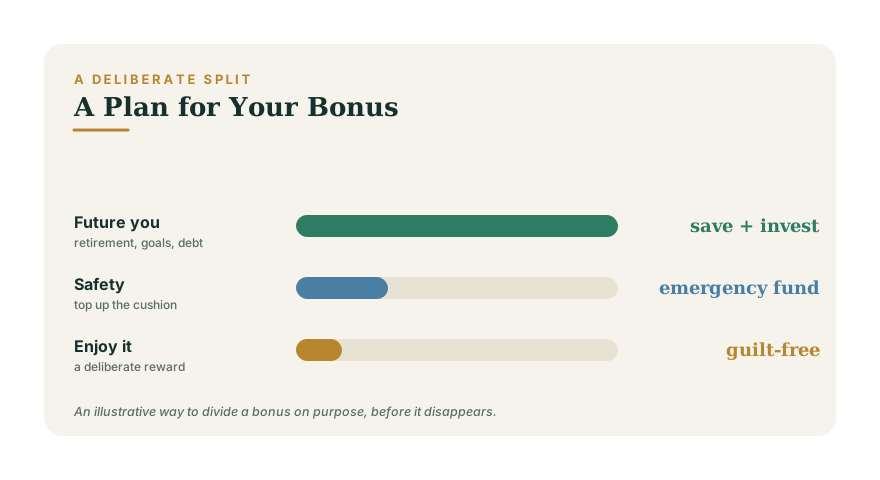
The single most effective bonus habit is to assign every dollar a job in advance, while it is still abstract and easy to be disciplined. Once a five-figure sum is sitting in checking, it feels like "extra," and extra money gets spent. A simple, deliberate split works well for most people:
- Most of it to future you — paying down high-interest debt, topping up retirement and goal accounts, or investing. This is where a bonus does its real work.
- A slice to safety — bringing your emergency fund up to a full three-to-six months if it is short. A bonus is the easiest time to fix this.
- A deliberate, guilt-free reward — a deliberately chosen amount to enjoy. Spending none of a bonus is a recipe for resentment; spending all of it is the mistake. Naming the fun portion up front lets you enjoy it without quietly blowing the whole thing.
The exact percentages matter less than the act of choosing them on purpose. A bonus is essentially a small windfall, and the same discipline applies — see how to handle a windfall.
Top up tax-advantaged accounts first
Before a bonus drifts toward lifestyle, point it at the accounts that grow tax-free or tax-deferred. A bonus is an ideal way to:
- Increase your 401(k) contributions toward the annual limit — many plans let you direct a bonus straight into it, sometimes capturing additional employer match.
- Fund an IRA for the year if you are eligible, or contribute to an HSA if you have a qualifying health plan.
- Knock out high-interest debt, which is a guaranteed, tax-free return equal to the interest rate you erase.
Following a sensible sequence keeps you from optimizing the wrong thing — the financial order of operations lays out which dollar should go where first. You can pressure-test the trade-offs with the opportunity cost calculator to see what a one-time investment could become over time.
Beat lifestyle creep to the punch
The quiet enemy of every raise and bonus is lifestyle creep — the tendency for spending to rise to meet any new income, so that a bigger paycheck leaves you no better off. Bonuses are especially vulnerable because they feel like "fun money" by default. The antidote is the plan above: by deciding in advance that most of the bonus funds your future and only a defined slice funds fun, you let yourself enjoy the reward without letting it permanently inflate your baseline costs. More tactics are in how to fight lifestyle creep.
Make it automatic and repeatable
The cleanest approach is to move the saving and investing portions out of checking the same week the bonus arrives — before they can be reabsorbed into spending. Do that consistently, year after year, and bonuses become a reliable engine for building wealth rather than a brief lifestyle bump you cannot quite remember. Decide your split, automate it, and check it against your goals in the planning hub.