Long-term care — help with everyday activities like bathing, dressing, eating, and moving around — is one of the biggest financial risks in retirement, and one of the least insured. It is not medical care in the usual sense, which is exactly why the coverage most people count on falls short. Long-term care insurance exists to fill that gap, but it is expensive, complicated, and has burned both buyers and insurers over the years. Whether it is worth the cost depends heavily on your assets, your family situation, and your tolerance for uncertainty.
The gap Medicare leaves
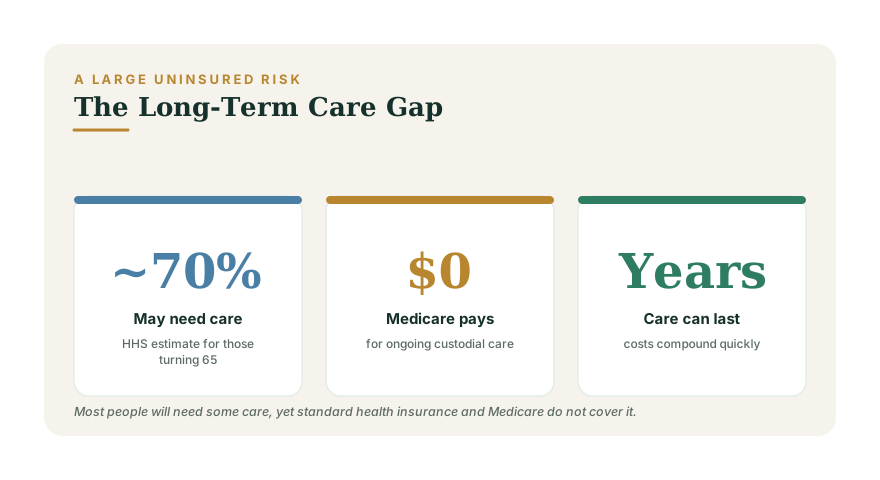
The single most common misunderstanding is that Medicare covers long-term care. It does not. Medicare pays for short, skilled recovery after a hospital stay, not for the ongoing custodial care — help with daily living — that most people eventually need. The Department of Health and Human Services has estimated that roughly 70% of people turning 65 will need some form of long-term care during their lives. With extended care running into serious money, and often lasting years, the potential bill can consume a retirement nest egg. This is a core piece of Healthcare Costs in Retirement.
How the insurance works
A long-term care policy pays a daily or monthly benefit toward care once you can no longer perform a set number of daily activities (or have a cognitive impairment like dementia). Key levers determine both the price and the value:
- Benefit amount and period. How much per day, and for how many years (or a total pool of dollars).
- Elimination period. A waiting window — often 90 days — during which you pay out of pocket before benefits begin, similar in spirit to the concept explained in Disability Insurance Elimination Periods.
- Inflation protection. Care costs rise over decades, so a rider that grows your benefit is often essential — and a major driver of premium.
The full mechanics of triggers, riders, and payout structures are in Long-Term Care Insurance, Explained.
The honest problems with the product
This is not a clean story. Traditional standalone policies have been plagued by steep, repeated premium increases: many insurers underpriced early policies and later raised rates sharply on people already retired, forcing hard choices between paying more, cutting benefits, or dropping coverage they had funded for years. The product is also use-it-or-lose-it in its traditional form — pay premiums for decades, never need care, and the money is gone. And underwriting is strict, so applying while healthy matters. These are real reasons to be skeptical, not just marketing caveats.
When it tends to make sense
Long-term care insurance fits a middle band of wealth. The very wealthy can often self-insure — absorb even a long, costly stay from their own assets. Those with modest assets may end up relying on Medicaid, the main public payer for long-term care, after spending down; the planning around that is covered in Medicaid and Long-Term Care Planning. The people with the most to gain sit in between: enough savings to lose, but not so much that a multi-year care bill is trivial. Coverage can also protect a healthy spouse from being impoverished by the other's care. Buying in your fifties or early sixties, while premiums are lower and health is better, generally beats waiting.
The alternatives worth weighing
Traditional standalone policies are no longer the only option. Hybrid life-insurance-or-annuity policies with a long-term care rider have grown popular precisely because they solve the use-it-or-lose-it complaint: if you never need care, a death benefit goes to your heirs, and premiums are typically locked. They cost more upfront and are not perfect, but the guaranteed pricing appeals to people scarred by rate hikes on old policies. Self-funding through a dedicated investment pool, and leaning on family caregiving, are also legitimate parts of a plan — usually in combination rather than alone.
A measured verdict
Long-term care insurance is neither a scam nor a must-buy. It is a genuine solution to a genuine, large risk that Medicare ignores — bought at a real price with real drawbacks. Estimate your exposure honestly, decide whether you fall in the self-insure, insure, or Medicaid band, and if you insure, favor buying earlier and consider a hybrid for pricing certainty. Model how a care event would hit your plan with the Insurance Needs Calculator and the Retirement Planner, then take the Financial Resilience assessment and map next steps at the planning hub.